Modified Starch Market Analysis & Forecast: 2026-2033

Modified starch market is estimated to be valued at USD 15.69 Bn in 2026 and is expected to reach USD 22.82 Bn in 2033, exhibiting a compound annual growth rate (CAGR) of 5.5% from 2026 to 2033.
Modified starch, also called starch derivatives, are prepared by physically, enzymatically, or chemically treating native starch to change its properties. Modified starch finds application in various end-use industries such as food & beverages, animal food, pharmaceuticals, textiles, paper and packaging, personal care, and others. Increasing demand for modified starch from end-use industries is expected to propel growth of the global modified starch market.
|
Current Event |
Description and its Impact |
|
Regulatory and Environmental Policy Changes |
|
|
Technological Innovations and Industry Transformation
|
|
Uncover macros and micros vetted on 75+ parameters: Get instant access to report
|
Trend |
Description |
|
Clean-label starches |
Label-friendly innovations from Roquette and Avebe are reshaping consumer preferences. |
|
Biodegradable packaging |
Starch-based films and sachets are replacing petroleum-derived plastics. |
|
Functional starches |
Resistant starches for gut health and nutraceuticals are gaining traction. |
|
Nanotechnology integration |
Brazil’s starch sachets reinforced with nanoparticles show advanced agricultural applications. |
Uncover macros and micros vetted on 75+ parameters: Get instant access to report
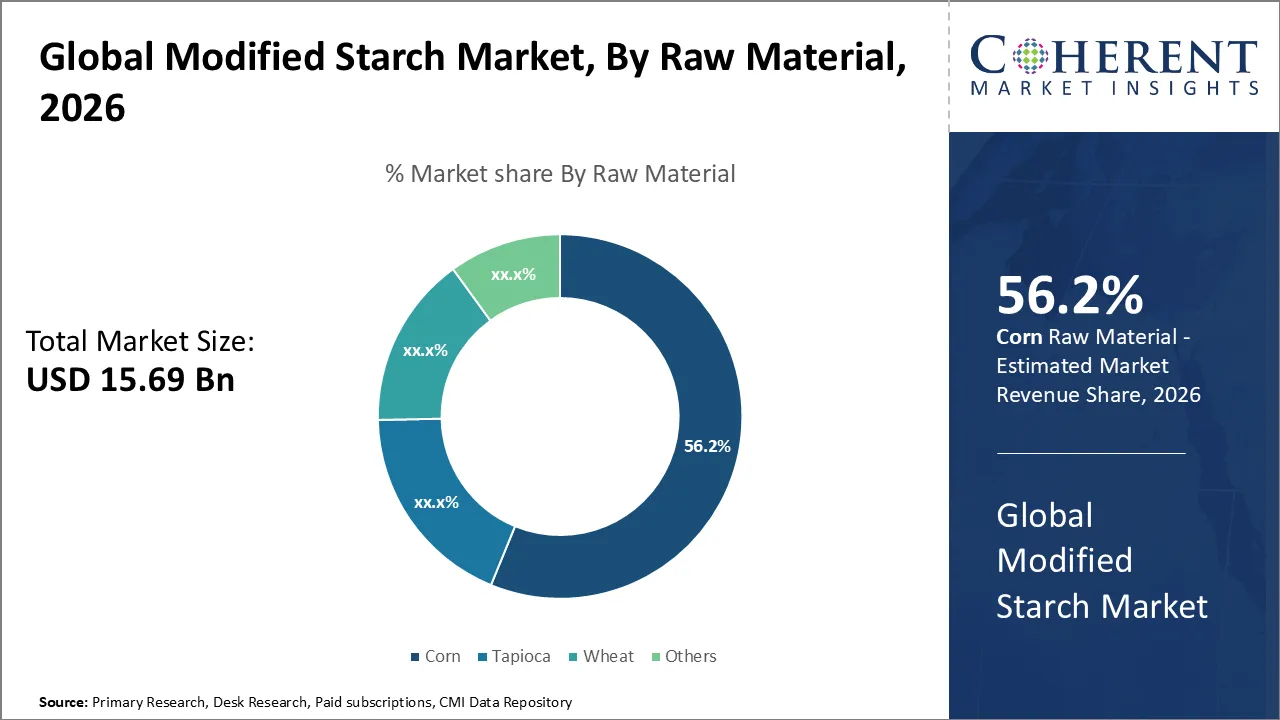
In terms of raw material, the corn segment is projected to capture 56.2% share of the market in 2026, due to its global availability, relatively inexpensive, and can be used in many ways. Since it is used frequently in food, drinks, and industry, supply chains stay steady and demand stays steady across regions, especially in North America and Asia-Pacific.
In November 2025, for example, Rustark stated it would build a new plant to make modified starch. This will make it better at making things and help it meet the growing demand around the world. The facility will improve the supply of food, pharmaceuticals, and packaging, which shows the company's dedication to growth, sustainability, and new ideas.
In terms of process type, the cationization segment is expected to hold 37.6% share in 2026, valued for its role for making paper and packaging, textiles, and adhesives. It makes things stick better, stronger, and work better, so it's a must-have in industries that want long-lasting, eco-friendly solutions. It has a strong share of the modified starch market since it can be used in many ways.
In terms of end user industry, the food and beverages segment is expected to lead the market with 58% share in 2026, because modified starch makes bakery, dairy, and convenience foods more stable, longer-lasting, and better textured. This part of the market continues to be at the top because growing numbers of individuals prefer processed and ready-to-eat foods. It makes up most of the world's consumption.
For instance, in November 2025, Soledits and Lyckeby are getting prepared to launch CRISPR-edited potatoes that can be stored without chemicals. This new idea is meant to make people less dependent on synthetic treatments, which is better for both growers and consumers. The breakthrough shows how biotechnology can help make potatoes safer, better quality, and better for the environment.
To learn more about this report, Download Free Sample
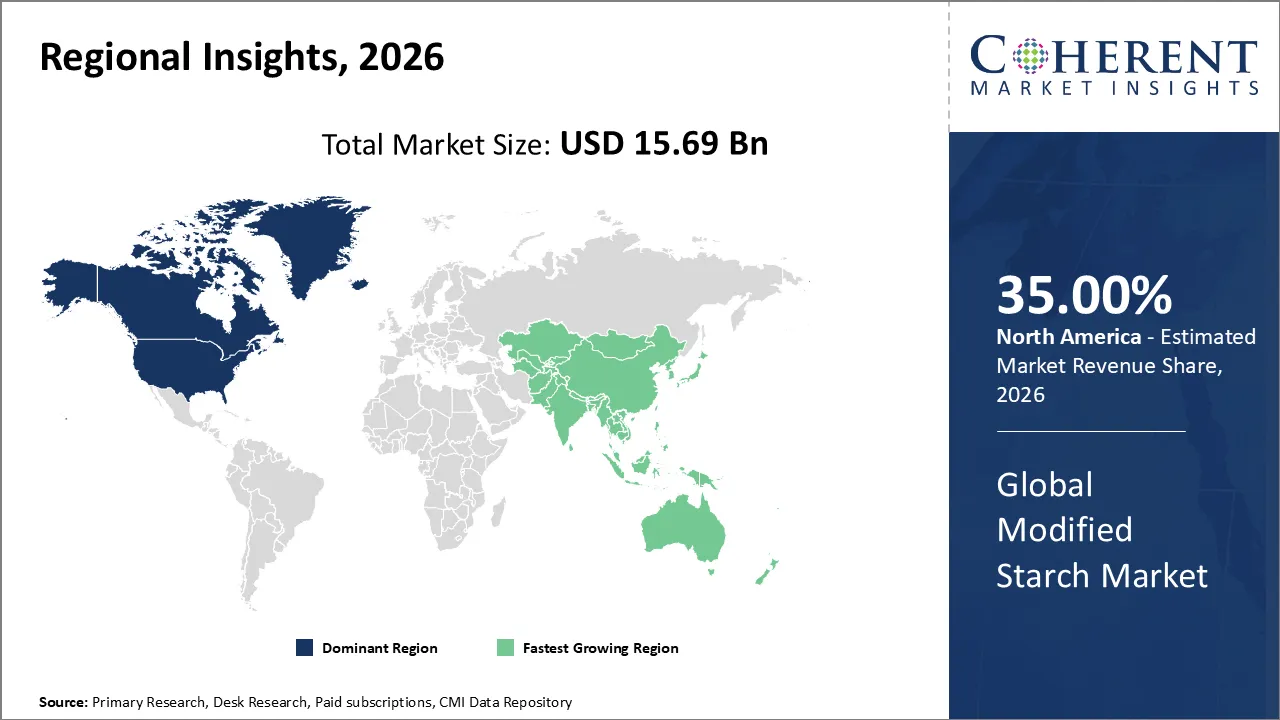
North America is expected to dominate the modified starch market with 35% share in 2026, as individuals eat an increasing quantity of processed foods, baked goods, and convenience meals. The market is also growing with its use in pharmaceuticals and biodegradable packaging. New ideas in clean-label formulations make it even easier to adopt, which helps the region keep its top market share.
For example, in July 2025, Brenntag Specialties and Royal Avebe expanded their distribution deal in the US to include the food and nutrition markets. The partnership makes it easier to get potato-based ingredients, which helps with innovation and sustainability. This change makes it easier for customers to get high-quality solutions.
Asia Pacific is expected to exhibit the fastest growth, owing to rapid urbanization, growing disposable incomes, and people are consuming more processed and convenience foods. The pharmaceutical and nutraceutical industries are growing, and there are many varieties of raw materials available, like cassava and corn. This makes the region more appealing, which leads to big market growth.
For instance, in March 2025, Cargill has opened a new corn milling plant to increase its production capacity to meet the growing global demand. The facility makes supply chains stronger for food, drinks, and industrial uses, and it also helps new ideas for eco-friendly ingredients.
The modified starch market is strong in the US in 2026 since individuals eat a lot of processed and convenience foods, the bakery and beverage industries are growing, and the use of modified starch in drugs is going up. The US market is still the largest due to new clean-label, eco-friendly starches and more ways to use biodegradable packaging.
Brazil's Modified Starch Market is doing well in 2026 due to there is an increase of cassava production, people are eating more processed foods, and exports are going up. Plant-based, eco-friendly solutions fit with global trends, and new uses in paper, textiles, and adhesives make industrial use stronger. These things make Brazil an important nation in the development of new starches.
In January 2026, researchers in Brazil started using new starch-based sachets that slowly let out fertilizer. This reduces waste and damage to the environment. Because they are made with nanoparticles and copper-rich zeolite, the biodegradable sachets are better at taking in nutrients, keeping microbes from growing, and storing water. This breakthrough gives modern agriculture a long-lasting alternative to polymers made from petroleum.
| Report Coverage | Details | ||
|---|---|---|---|
| Base Year: | 2025 | Market Size in 2026: | USD 15.69 Bn |
| Historical Data for: | 2020 To 2024 | Forecast Period: | 2026 To 2033 |
| Forecast Period 2026 to 2033 CAGR: | 5.5% | 2033 Value Projection: | USD 22.82 Bn |
| Geographies covered: |
|
||
| Segments covered: |
|
||
| Companies covered: |
Archer Daniels Midland Company, Cargill, Ingredion Incorporated, Tate & Lyle, Emsland-Starke GmbH, Agrana Beteiligungs-AG, Grain Processing Corporation, Roquette Frère, and others. |
||
| Growth Drivers: |
|
||
| Restraints & Challenges: |
|
||
Uncover macros and micros vetted on 75+ parameters: Get instant access to report
Modified starch is essential in the food and drink industry as it thickens, stabilizes, and emulsifies foods like sauces, soups, and baked goods, making them taste better and last longer. As convenience and ready-to-eat meals become more popular, manufacturers are using modified starch to meet customer needs. Also, the growing demand for gluten-free and low-fat options is helping it become more popular, which is an essential component of the modified starch market share around the world.
Modified starch is commonly utilized in pharmaceuticals as a binder, disintegrant, and stabilizer in tablets and capsules, facilitating effective drug formulation and patient adherence. The growing need for superior drug delivery systems and nutraceuticals has made its role in healthcare applications greater. Modified starch is an important ingredient as it is flexible and reliable. As the industry moves toward new formulations and functional supplements, it is becoming increasingly vital. The growing use of modified starch in different parts of healthcare is a major reason for modified starch market demand. This shows the significance it is for the growth of the global pharmaceutical industry.
modern consumers are moving toward healthier lifestyles and prioritizing on food choices that are clear and long-lasting. This trend has made demand accelerate for natural and plant-based ingredients that are free of any artificial additives. Modified starch comes from renewable sources and is a perfect fit for this movement since it works without breaking clean-label rules. As sustainability becomes a global priority, the modified starch market forecast shows strong growth as more people are aware of and prefer eco-friendly, plant-based solutions in many industries.
For instance, in October 2025, Roquette has launched with a new starch that is easy to read on labels. This is in response to the growing demand from consumers for clean-label products. The new product improves texture and stability in food applications while also helping to reach sustainability goals. This launch strengthens Roquette's position in the global market by giving manufacturers plant-based options that fit with the trend toward natural and clear ingredients.
The modified starch market is growing quickly since there is an enormous amount of demand for it in food, industrial, and specialty uses. Modified starch is highly valued for its improved functional properties, such as its ability to thicken, stabilize, emulsify, and hold moisture. These qualities make it essential in food processing, paper and textile manufacturing, pharmaceuticals, and new fields like biodegradable materials. Food and drink applications always make up a large part of total use, as the ingredient helps improve the texture and consistency of baked goods, dairy products, sauces, and ready-to-eat foods. Individuals that want clean labels are using more physically or enzymatically modified starches that meet their expectations for natural ingredients.
Overall, the modified starch market is supported by its wide range of uses in industry, ongoing improvements in its functional properties, and changing consumer and regulatory trends toward clean-label ingredients and sustainability.
Share
Share
About Author
Yash Doshi is a Senior Management Consultant. He has 12+ years of experience in conducting research and handling consulting projects across verticals in APAC, EMEA, and the Americas.
He brings strong acumen in helping chemical companies navigate complex challenges and identify growth opportunities. He has deep expertise across the chemicals value chain, including commodity, specialty and fine chemicals, plastics and polymers, and petrochemicals. Yash is a sought-after speaker at industry conferences and contributes to various publications on topics related commodity, specialty and fine chemicals, plastics and polymers, and petrochemicals.
Missing comfort of reading report in your local language? Find your preferred language :
Transform your Strategy with Exclusive Trending Reports :
Frequently Asked Questions
Joining thousands of companies around the world committed to making the Excellent Business Solutions.
View All Our Clients
 Schedule a meeting with report Author