all report title image

Cervical Cancer Vaccines Market Analysis & Forecast: 2026-2033

Cervical Cancer Vaccines Market, By Product Type (Cervarix, Gardasil, and Gardasil 9), By Distribution Channel (Hospitals, Clinics, and Government Entities), By Geography (North America, Latin America, Europe, Asia Pacific, Middle East & Africa)

  • Published In : 02 Feb, 2026
  • Code : CMI2931
  • Page number :151
  • Formats :
      Excel and PDF :
  • Industry : Biotechnology
  • Historical Range : 2020 - 2024
  • Forecast Period : 2026 - 2033

Cervical Cancer Vaccines Market Size and Forecast – 2026 to 2033

The Cervical Cancer Vaccines Market is estimated to be valued at USD 14.78 Bn in 2026 and is expected to reach USD 53.6 Bn by 2033, exhibiting a compound annual growth rate (CAGR) of 17.2% from 2026 to 2033.

Key Takeaways

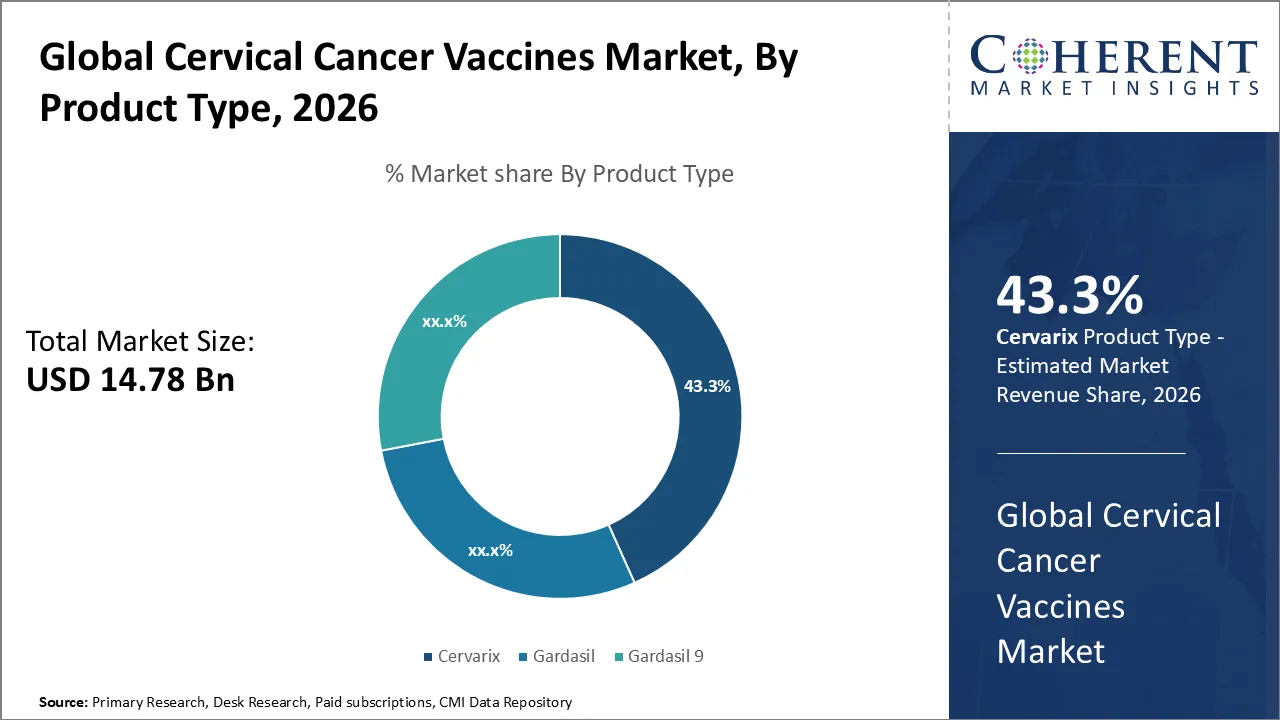
  • By Product Type, Cervarix hold the largest market share of 43.3% in 2026 owing to the rising prevalence of HPV & cervical cancer.
  • By Distribution Channel, Hospitals acquired the prominent market share of 41.1% in 2026 owing to its integration with overall preventive care services.
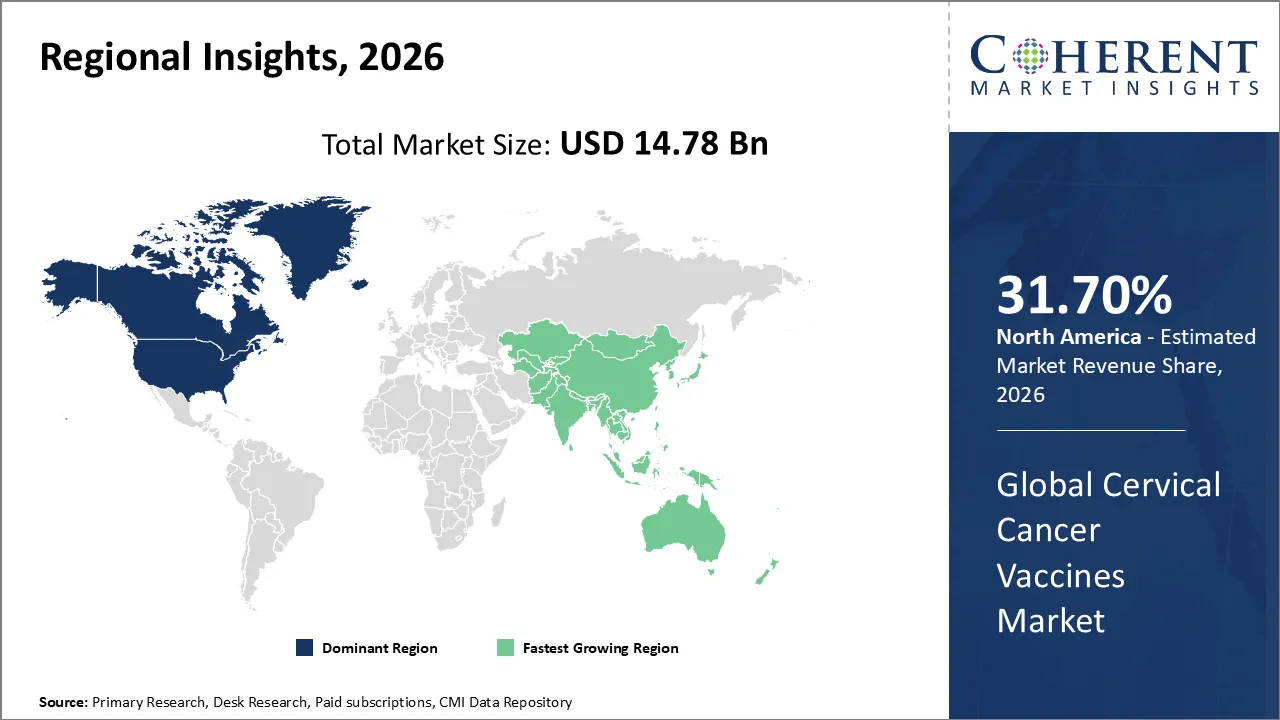
  • By Region, North America dominates the overall market with an estimated share of 31.7% in 2026 owing to the high prevalence of HPV-related diseases.

Market Overview

The cervical cancer vaccine market prevents HPV infections, driven by rising awareness, expanding immunization programs, and government support. Targeting adolescents and young adults through hospitals, clinics, and public health initiatives, the market grows with ongoing research, improved healthcare access, and a focus on preventive care, supporting steady global adoption and long-term growth.

Current Events and Its Impacts on the Cervical Cancer Vaccines Market 

Current Events

Description and its impact

Regulatory and Policy Developments

  • Description: Expansion of National Immunization Programs in Low- and Middle-Income Countries
  • Impact: Increases vaccine accessibility and adoption, driving market growth in emerging regions.
  • Description: Introduction of Government Subsidies and Reimbursement Policies in Europe and North America
  • Impact: Enhances vaccine affordability and uptake, further stimulating market penetration in developed countries.

Technological and Innovation Advancements

  • Description: Development of Next-Generation Cervical Cancer Vaccines with Broader HPV Strain Coverage
  • Impact: Improves vaccine effectiveness and market differentiation, potentially capturing larger patient segments.
  • Description: Emergence of Single-Dose Vaccines in Clinical Trials
  • Impact: Simplifies administration logistics and increases patient compliance, positively impacting market growth.

Economic Factors and Funding Dynamics

  • Description: Increased Public and Private Investment in Cancer Prevention Programs
  • Impact: Fuels research, development, and marketing efforts, accelerating market innovation and expansion.
  • Description: Economic Downturns in Key Markets Impacting Healthcare Spending
  • Impact: Potentially limits government and consumer spending on prophylactic vaccinations, restraining growth.

Uncover macros and micros vetted on 75+ parameters: Get instant access to report

Segmental Insights 

Cervical Cancer Vaccines Market By Product Type

To learn more about this report, Download Free Sample

Cervical Cancer Vaccines Market  Insights, By Product Type: Cervarix contribute the highest share of the market owing to its product approvals & expanded indications.

Cervarix hold the largest market share of 43.3% in 2026. Cervarix leads the cervical cancer vaccine market with strong protection against high-risk HPV, long-lasting immunity, and a proven safety record. High demand is driven by public health programs, physician trust, and use in cost-sensitive regions. Awareness campaigns and inclusion in national immunization schedules further support market growth, reinforcing its widespread adoption and role in preventing cervical cancer.

For instance, in February 2024, from Cervarix to Cervavac, the central government has announced plans to promote HPV vaccination against cervical cancer for girls aged 9 to 14 years in India

Cervical Cancer Vaccines Market  Insights, By Distribution Channel: Hospitals contribute the highest share of the market owing to its cold chain & supply management capabilities.

Hospitals acquired the prominent market share of 41.1% in 2026. Hospitals are the main places where people get the cervical cancer vaccine because they have skilled staff and the right storage. Doctors actively suggest immunizations, and combining vaccination with regular care makes people more likely to follow through. Being a part of public health initiatives helps reach more people, and their safe atmosphere, big patient base, and on-site pharmacy services all help with distribution. Together, these things help the market grow and more people use cervical cancer prevention.

 For instance, in December 2025, CK Birla Hospitals has launched a multi-city cervical cancer initiative to vaccinate 5,000 women with the HPV vaccine, alongside expert-led awareness sessions in schools and communities.
Regional Insights 

Cervical Cancer Vaccines Market By Regional Insights

To learn more about this report, Download Free Sample

North America Cervical Cancer Vaccines Market Trends

North America dominates the overall market with an estimated share of 31.70% in 2026. In North America, public awareness and government vaccination programs drive the cervical cancer vaccine market. Healthcare providers promote vaccination for teens and young adults alongside preventive care. Advances in vaccine technology, expanded indications, and ongoing research boost adoption, while strong healthcare infrastructure, broad insurance coverage, and public-private partnerships improve access, positioning the region as a leader in cervical cancer vaccine distribution and innovation.

Asia Pacific Cervical Cancer Vaccines Market Trends

In the Asia Pacific, government and healthcare initiatives expand HPV vaccination for teens and young women, boosting the cervical cancer vaccine market. Rising awareness, improved urban and rural healthcare access, and collaboration between local and global producers enhance availability and affordability. Providers integrate vaccination with screenings, while public health campaigns and education increase acceptance, positioning the region as a rapidly growing market for cervical cancer prevention. For instance, in October 2025, Tajikistan has added the HPV vaccine to its national immunization program, offering protection against cervical cancer to all girls aged 10–14 years.

United States Cervical Cancer Vaccines Market Trends

In the U.S., healthcare providers drive cervical cancer vaccine growth by promoting HPV vaccination for teens through schools, clinics, and community programs. Government support, awareness campaigns, and public health initiatives boost adoption, while research and new vaccines improve safety and effectiveness. Broad healthcare access, insurance coverage, routine preventive care, and public-private partnerships enhance distribution, positioning the U.S. as a leading market for cervical cancer prevention.

For instance, in August 2025, Teal Health has launched its Teal Wand at-home cervical cancer screening kit with virtual telehealth services in California, marking the first FDA-authorized self-collection device available in the U.S.

India Cervical Cancer Vaccines Market Trends

In India, government and private initiatives boost the cervical cancer vaccine market by promoting HPV vaccination for teenage girls. Growing awareness, expanding healthcare infrastructure, and collaboration between local and global manufacturers improve access and affordability. Providers integrate vaccination with routine screenings, while public awareness campaigns support early prevention, positioning India as a rapidly growing market for cervical cancer vaccines.

For instance, in January 2026, The AAPI India Foundation launched its HPV vaccination drive at MKCG Medical College and Hospital in Berhampur, strengthening efforts to prevent cervical cancer in India.

End-User Feedback and Unmet Needs in the Cervical Cancer Vaccines Market

  • Awareness and Education: End-users said that more needs to be done to raise awareness about HPV and how to prevent cervical cancer. A lot of teens and parents say they don't know much about the benefits, scheduling, and safety of vaccines. To help people understand, get vaccinated on time, and stop being hesitant in different groups, we need more educational programs and clearer communication from healthcare providers.
  • Accessibility and Affordability: Users typically have trouble getting immunizations because they are too expensive or not available in rural and underdeveloped areas. To make sure that cervical cancer vaccinations reach more people and are available to everyone who needs them, we need to lower prices, improve supply chains, and support immunization initiatives by the government.
  • Vaccine Schedule and Compliance: End-users say that multi-dose vaccine schedules are hard for them to follow, and they have trouble keeping up with their follow-ups. To raise completion rates, which will provide full protection against HPV and increase overall satisfaction with vaccination services, we need simpler dose schedules, reminder systems, and healthcare assistance.

Cervical Cancer Vaccines Market Trend

Increasing HPV Awareness and Education

More people are learning about HPV infections and how they can lead to cervical cancer, which is changing market trends. Governments, non-profits, and healthcare providers all run educational programs to get teens and young people to be vaccinated. Schools and initiatives that reach out to the community are very important for encouraging preventative care. People's understanding of the advantages, scheduling, and safety of vaccines affects how many people get them. This increases demand and shows how important it is to get vaccinated early as a main way to prevent cervical cancer around the world.

Expansion of Immunization Programs

Governments and public health groups are boosting immunization programs for teens and catch-up programs for elderly people. National immunization efforts make HPV vaccines a part of regular preventive care, which increases coverage. Working with private healthcare providers, schools, and community centers makes it possible to reach more people. This integrated strategy makes it easier for people to get vaccines, helps people stick to the prescribed dose schedules, and supports steady market growth by covering a wide range of people, including those who don't have easy access to healthcare, such as people in rural areas.

Cervical Cancer Vaccines Market Opportunity

Development of Next-Generation Vaccines

New vaccine technologies, such as those that cover more strains of HPV, boost the immune response, and make administration easier, open up new markets for growth. Companies can make vaccines that are safer and last longer, which will ease the worries of end users. These improvements make it possible to reach age groups who were previously underserved, boost doctors' trust, and expand global acceptance. This gives producers the chance to set their products apart and acquire a competitive edge in the cervical cancer vaccination market.

Market Report Scope 

Cervical Cancer Vaccines Market Report Coverage

Report Coverage Details
Base Year: 2025 Market Size in 2026: USD 14.78 Bn
Historical Data for: 2020 To 2024 Forecast Period: 2026 To 2033
Forecast Period 2026 to 2033 CAGR: 17.2% 2033 Value Projection: USD 53.6 Bn
Geographies covered:
  • North America: U.S. and Canada
  • Latin America: Brazil, Argentina, Mexico, and Rest of Latin America
  • Europe: Germany, U.K., Spain, France, Italy, Russia, and Rest of Europe
  • Asia Pacific: China, India, Japan, Australia, South Korea, ASEAN, and Rest of Asia Pacific
  • Middle East: GCC Countries, Israel, and Rest of Middle East
  • Africa: South Africa, North Africa, and Central Africa
Segments covered:
  • By Product Type: Cervarix, Gardasil, and Gardasil 9
  • By Distribution Channel: Hospitals, Clinics, and Government Entities
Companies covered:

GlaxoSmithKline PLC and Merck & Co. Inc.

Growth Drivers:
  • Rising HPV and Cervical Cancer Awareness
  • Advancements in Vaccine Technology
Restraints & Challenges:
  • Vaccine Cost and Affordability
  • Competition Among HPV Vaccines

Uncover macros and micros vetted on 75+ parameters: Get instant access to report

Cervical Cancer Vaccines Market News

  • In September 2025, Lífskraftur, founded by Snjódrífurnar, has launched a nationwide campaign to eliminate cervical cancer in Iceland in collaboration with the Icelandic Cancer Society and 66°North.
  • In October 2025, Ghana Health Service, with support from Gavi, WHO, and UNICEF, has launched the country’s first nationwide HPV vaccination campaign to protect girls aged 9–14 years from cervical cancer.

Analyst Opinion (Expert Opinion)

  • The Cervical Cancer Vaccines Market is entering a critical phase where epidemiological evidence is reshaping strategic decision‑making. Persistent infection with high‑risk HPV types remains the overwhelming driver of cervical cancer — with up to 95 % of cases directly linked to HPV‑16 and HPV‑18 — underscoring vaccination as the only scalable primary prevention available globally. This causal clarity has heightened prioritization among public health authorities, reflected in HPV uptake data: while 148 WHO members have HPV vaccines in national programs, full dose coverage among girls aged 9‑14 hovers around 48 %, indicating significant under‑utilization relative to disease burden.
  • Evidence from high‑income markets demonstrates tangible impact: in the United States, HPV immunization correlates with dramatic decreases in cervical cancer mortality in younger cohorts, with recent analyses showing over a 60 % reduction in deaths among women under 25, a testament to vaccine effectiveness when programs achieve substantial penetration. Conversely, coverage erosion — such as declining vaccination rates in Queensland schools — signals that complacency and logistical gaps can rapidly diminish public health gains, underscoring the fragile nature of immunization momentum.
  • Additionally, emerging strategic shifts, such as the WHO’s endorsement of one‑dose schedules backed by longitudinal research, present a potential inflection point for improving accessibility and adherence, particularly in low‑resource settings where multi‑dose attrition remains a key barrier to efficacy at scale.
  • Real‑world vaccination campaigns further illustrate market dynamics: Pakistan’s national drive has vaccinated approximately nine million girls despite misinformation challenges, demonstrating both the demand potential and the persistent socio‑cultural obstacles that blunt uptake if not proactively addressed.

Market Segmentation

  • By Product Type
    • Cervarix
    • Gardasil
    • Gardasil 9
  • By Distribution Channel
    • Hospitals
    • Clinics
    • Government Entities
  • By Regional Insights
    • North America
      • U.S.
      • Canada
    • Latin America
      • Brazil
      • Argentina
      • Mexico
      • Rest of Latin America
    • Europe
      • Germany
      • U.K.
      • Spain
      • France
      • Italy
      • Russia
      • Rest of Europe
    • Asia Pacific
      • China
      • India
      • Japan
      • Australia
      • South Korea
      • ASEAN
      • Rest of Asia Pacific
    • Middle East
      • GCC Countries
      • Israel
      • Rest of Middle East
    • Africa
      • South Africa
      • North Africa
      • Central Africa
  • Key Players Insights
    • GlaxoSmithKline PLC
    • Merck & Co. Inc.

Sources

Primary Research interviews

  • Healthcare professionals including gynecologists, pediatricians, and oncologists
  • Hospital procurement managers and immunization program coordinators
  • Public health officials involved in HPV vaccination campaigns
  • Pharmacists and vaccine supply chain managers

Databases

  • World Health Organization (WHO) Immunization Data
  • Centers for Disease Control and Prevention (CDC) HPV Surveillance
  • PubMed and MEDLINE for clinical trial and epidemiological data
  • UNICEF Vaccine Coverage Databases

Magazines

  • The Lancet Oncology Magazine
  • Vaccine Today
  • Pharma Times

Journals

  • Vaccine
  • Human Vaccines & Immunotherapeutics
  • International Journal of Gynecological Cancer
  • Journal of Adolescent Health

Newspapers

  • The New York Times (Health Section)
  • The Guardian (Health & Science Section)
  • The Times of India (Health Section)
  • The Washington Post (Health Section)

Associations

  • American Cancer Society (ACS)
  • International Papillomavirus Society (IPVS)
  • Federation of Obstetric and Gynecological Societies of India (FOGSI)
  • European Society of Gynaecological Oncology (ESGO)

Public Domain sources

  • WHO Global HPV Information Centre
  • National Cancer Institute (NCI) HPV Resources
  • CDC HPV Vaccine Recommendations
  • UNICEF Immunization Reports

Proprietary Elements

  • CMI Data Analytics Tool
  • Proprietary CMI Existing Repository of information for last 8 years

Share

Share

About Author

Abhijeet Kale is a results-driven management consultant with five years of specialized experience in the biotech and clinical diagnostics sectors. With a strong background in scientific research and business strategy, Abhijeet helps organizations identify potential revenue pockets, and in turn helping clients with market entry strategies. He assists clients in developing robust strategies for navigating FDA and EMA requirements.

Missing comfort of reading report in your local language? Find your preferred language :

Frequently Asked Questions

The global cervical cancer vaccines market is estimated to surpass USD 53.6 Bn by 2033.

Major players operating in the global cervical cancer vaccines market include GlaxoSmithKline PLC and Merck & Co. Inc.

High cost associated with the treatment of cervical cancer is one of the major factors that is expected to hamper growth of the market over the forecast period.

Increasing government initiatives and programs is one of the major factors that is expected to propel growth of the market over the forecast period.

The global cervical cancer vaccines market is estimated to exhibit a CAGR of 17.2% over the forecast period.

Among regions, North America is expected to hold dominant position in the global cervical cancer vaccines market during the forecast period.

Select a License Type

EXISTING CLIENTELE

Joining thousands of companies around the world committed to making the Excellent Business Solutions.

View All Our Clients
trusted clients logo
© 2026 Coherent Market Insights Pvt Ltd. All Rights Reserved.