all report title image

Magnetoencephalography Devices Market Analysis & Forecast: 2026-2033
Magnetoencephalography Devices Market, By Application (Clinical Application, (Dementia, Autism, Schizophrenia, Multiple Sclerosis, Stroke, Epilepsy, Traumatic Brain Injury, Brain Tumor), and Research Applications), By End User (Hospitals, Imaging Centers, and Academic & Research Institutes), By Geography (North America, Europe, Asia Pacific, Latin America, Middle East, and Africa)

  • Published In : 28 Jan, 2026
  • Code : CMI2467
  • Page number :168
  • Formats :
      Excel and PDF :
  • Industry : Medical Devices
  • Historical Range : 2020 - 2024
  • Forecast Period : 2026 - 2033

Magnetoencephalography Devices Market Size and Forecast – 2026 to 2033

The Magnetoencephalography Devices Market is estimated to be valued at USD 341.70 Mn in 2026 and is expected to reach USD 582.80 Mn by 2033, exhibiting a compound annual growth rate (CAGR) of 7.8% from 2026 to 2033.

Key Takeaways

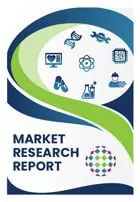
  • By Application, Clinical Application hold the largest market share of 45.6% in 2026 owing to the rising prevalence of neurological disorders.
  • By End User, Hospitals acquired the prominent market share of 36.9% in 2026 owing to its critical role in surgical planning.
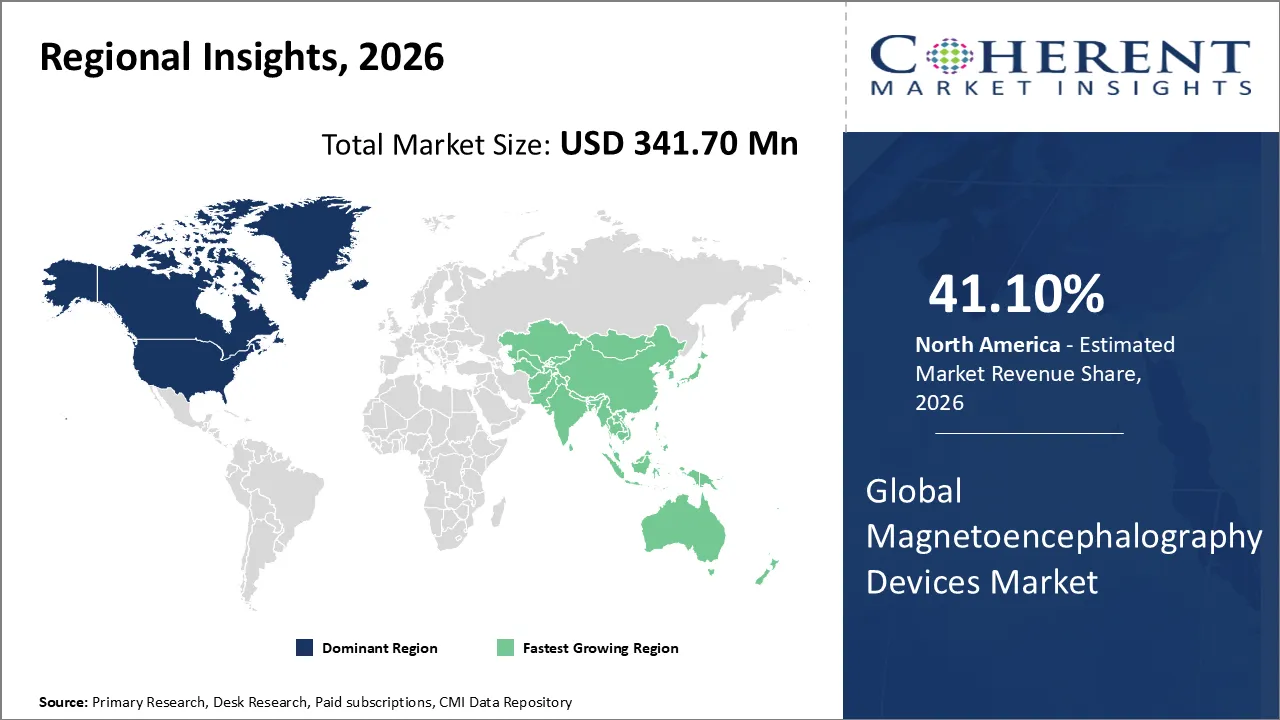
  • By Region, North America dominates the overall market with an estimated share of 41.1% in 2026 owing to the strong research funding and investments.

Market Overview

The market for Magnetoencephalography (MEG) devices is growing because researchers and doctors want more powerful neuroimaging technologies. MEG systems record high-resolution images of brain activity without touching the brain. This helps doctors identify and treat neurological conditions like epilepsy, Alzheimer's disease, and brain tumors. A lot of people are using it because of ongoing investments in neuroscience research, the expansion of hospital facilities, and better sensor accuracy and data integration. MEG is used more often now that people know it can be used for planning surgery before it happens and for testing the brain's functionality.

Current Events and Its Impact

Current Events

Description and its impact

Technological Advancements in Neuroimaging

  • Description: Integration of AI and Machine Learning in MEG Data Analysis
  • Impact: Enhances the precision and speed of MEG diagnostics, driving demand for advanced MEG devices with AI capabilities.
  • Description: Development of Wearable and Portable MEG Systems
  • Impact: Expands accessibility and applications of MEG devices in outpatient and remote settings, increasing overall market size.

Regional Healthcare Infrastructure Investments

  • Description: Expansion of Neurological Research Centers in Asia-Pacific
  • Impact: Increases regional demand for MEG devices due to rising clinical and research applications in countries like China, Japan, and India.
  • Description: Government Funding Initiatives in Europe for Neurodegenerative Disease Research
  • Impact: Creates new opportunities for MEG device adoption in early diagnosis and monitoring of Alzheimer’s and Parkinson’s diseases.

Geopolitical Tensions and Global Trade Dynamics

  • Description: Trade Restrictions Affecting Key Component Suppliers
  • Impact: Could cause supply bottlenecks and price increases for MEG device manufacturing inputs.
  • Description: Shifts in Global Research Collaborations Due to Political Conflicts
  • Impact: Limits cross-border clinical trials and innovation partnerships, potentially slowing device innovation and adoption rates.

Uncover macros and micros vetted on 75+ parameters: Get instant access to report

Segmental Insights

Magnetoencephalography Devices Market By Application

To learn more about this report, Download Free Sample

Magnetoencephalography Devices Market Insights, By Application - Clinical Application contribute the highest share of the market owing to its integration with precision medicine

Clinical Application hold the largest market share of 45.6% in 2026. The Magnetoencephalography (MEG) Devices Market is growing in clinical use as healthcare professionals look for accurate, non-invasive ways to map the brain to find and treat neurological problems. Hospitals and clinics use MEG a lot to figure out how to treat epilepsy, check how the brain works, and plan surgery. Better sensor technology, better interaction with MRI and EEG, and better data analysis all make things more accurate and faster. More and more doctors are learning about how MEG can help them choose the best treatment for each patient and improve their health outcomes.

For instance, FieldLine launched HEDscan, a noninvasive whole-head MEG system for mental health research that uses a helmet-based design with 128 synchronized quantum magnetic sensors to produce 3D brain activity imaging.

Magnetoencephalography Devices Market Insights, By End Users - Hospitals contribute the highest share of the market owing to its clinical evidence & outcomes improvement

Hospitals acquired the prominent market share of 36.9% in 2026. Hospitals are using more Magnetoencephalography (MEG) devices as they look for better ways to diagnose and treat neurological disorders. Doctors can use MEG technologies to accurately map brain activity. This helps with epilepsy surgery, tumor evaluation, and functional brain assessments. Big hospitals and specialized neurology departments use these devices to handle a lot of patients and difficult medical problems. Hospitals are more likely to buy MEG because it keeps getting better, works well with MRI and EEG, and has been shown to help patients get better.

For instance, York Instruments Ltd. developed HyQUID, a magnetoencephalography brain scanner that more precisely detects the brain’s tiny magnetic fields, based on research from Royal Holloway.
Regional Insights

Magnetoencephalography Devices Market By Regional Insights

To learn more about this report, Download Free Sample

North America Magnetoencephalography Devices Market Trends

North America dominates the overall market with an estimated share of 41.10% in 2026. The North American Magnetoencephalography (MEG) Devices Market is growing as more hospitals and research institutions buy them. They use innovative healthcare systems and strong neuroscience programs. More and more doctors are using MEG to map the brain accurately, plan epilepsy surgery, and treat neurological illnesses. Providers are using MEG along with MRI and other tests. EEG is also using new sensor and data processing technologies. More and more medical professionals are becoming aware of this, and there are now supportive reimbursement schemes. The presence of major MEG producers also helps the region's rising use of these devices in therapeutic settings and in everyday life.

For instance, in September 2025, Strathcona Resources Ltd. acquired 6,035,600 MEG Energy Corp. shares for approximately $172.7 million, paying an average price of $28.63 per share in compliance with securities laws.

Asia Pacific Magnetoencephalography Devices Market Trends

The Asia Pacific Magnetoencephalography (MEG) Devices Market is growing quickly because hospitals and research organizations are using more modern neurological diagnoses. Healthcare providers are responding to more people knowing about neurological illnesses, more money being spent on medical infrastructure, and more government backing for using technology. In the area, doctors are combining MEG with MRI and EEG to make accurate maps of the brain and help with planning before surgery. Technological advances and the rise of specialist neurology institutes are making it easier for more people in the region to use these tools in their work and study.

United States Magnetoencephalography Devices Market Trends

The market for magnetoencephalography (MEG) devices in the US is growing because hospitals and neuroscience institutes are using brain imaging tools that are more powerful. Doctors use MEG to make accurate diagnoses, figure out the ways the brain works, and plan surgeries, especially for people with epilepsy or tumors. Strong research programs, a well-developed healthcare system, and close cooperation between medical institutions and MEG manufacturers all help new ideas and devices get used. Sensor technology, data analysis, and integration with MRI and EEG are all getting better, which is making the market better. In hospitals and specialist neurology clinics, more people are using it because they are more aware of it.

India Magnetoencephalography Devices Market Trends

The India Magnetoencephalography (MEG) Devices Market is growing because hospitals and research institutions are using more advanced neuroimaging technologies. Healthcare providers are witnessing more people learn about neurological diseases, more healthcare infrastructure being built, and government programs that help medical technology. Doctors are using MEG, MRI, and EEG together to create accurate brain maps, functional assessments, and surgical plans. More clinical and research uses are becoming possible across India thanks to the growth of specialist neurology facilities and ongoing improvements in sensor technology, data processing, and system accessibility.

End-user Feedback and Unmet Needs in the Magnetoencephalography Devices Market

  • High Cost and Problems with Accessibility: End-users often point out that the high cost of MEG devices is a major barrier, which means that only large hospitals and research centers can use them. Smaller clinics and regional hospitals have a hard time justifying the cost, which means there is a need for more affordable or scalable MEG solutions that keep clinical accuracy without needing a lot of infrastructure.
  • Complexity in Operation and Data Interpretation: Clinicians claim that MEG systems need people who are particularly highly skilled to use and analyze them. The difficulty of understanding neural activity data makes it hard for a lot of people to use it. This shows that we need more user-friendly interfaces, automated data processing tools, and integrated software that makes clinical decision-making easier without losing accuracy.
  • Integration with Current Clinical Workflows: End users want MEG to work smoothly with MRI, EEG, and other neuroimaging tools. Many hospitals have trouble adding MEG to their current workflows, which makes it less useful in practice.

Magnetoencephalography Devices Market Trend

Adoption in Clinical Diagnostics

Hospitals and specialist neurology clinics are using MEG to plan brain surgery and treat neurological disorders in a very accurate way. It fits with our plan that it is harmless and has a great resolution, which clinicians like. More and more people are learning about the clinical benefits of MEG, which usually include helping people find the best treatment for them. It is becoming more important in routine tests for epilepsy, cancers, and neurodegenerative diseases. This makes it an important part of modern neurological treatment pathways.

Integration with Multimodal Imaging

In the field, it is becoming increasingly prevalent to use MEG with other neuroimaging technologies, such as MRI and EEG. This combination makes diagnoses more accurate by giving information about both structure and function. Doctors can now make detailed brain maps because advanced software platforms make it easy to combine data from many sources. This tendency makes it easier to plan surgeries, target therapies more accurately, and get better results for patients. It is an important part of integrated neurodiagnostic workflows.

Magnetoencephalography Devices Market Opportunity

Technological Innovation and Product Diversification

There are ways to make MEG devices that are smaller, do not require cryogen, and is wearable, which reduce costs and space needs. Improvements in sensor sensitivity, noise reduction, and the ability to work with MRI and EEG have made systems more flexible for providers. Manufacturers may stand out by making modular solutions that work in both research and clinical settings. This fills a need for devices that are simple to use, work well, and can be used in hospitals of all sizes and with all kinds of workflows.

Market Report Scope

Magnetoencephalography Devices Market Report Coverage

Report Coverage Details
Base Year: 2025 Market Size in 2026: USD 341.70 Mn
Historical Data for: 2020 To 2024 Forecast Period: 2026 To 2033
Forecast Period 2026 to 2033 CAGR: 7.8% 2033 Value Projection: USD 582.80 Mn
Geographies covered:
  • North America: U.S. and Canada
  • Latin America: Brazil, Argentina, Mexico, and Rest of Latin America
  • Europe: Germany, U.K., Spain, France, Italy, Russia, and Rest of Europe
  • Asia Pacific: China, India, Japan, Australia, South Korea, ASEAN, and Rest of Asia Pacific
  • Middle East: GCC Countries, Israel, and Rest of Middle East
  • Africa: South Africa, North Africa, and Central Africa
Segments covered:
  • By Application: Clinical Application, (Dementia, Autism, Schizophrenia, Multiple Sclerosis, Stroke, Epilepsy, Traumatic Brain Injury, Brain Tumor), and Research Applications
  • By End User: Hospitals, Imaging Centers, and Academic & Research Institutes
Companies covered:

Compumedics Limited, Croton Healthcare, Ricoh Company, Ltd., and CTF MEG International Services LP.

Growth Drivers:
  • Advanced Diagnostic Capabilities
  • Growing Awareness and Adoption in Hospitals
Restraints & Challenges:
  • Infrastructure Requirements
  • Competition from Alternative Technologies

Uncover macros and micros vetted on 75+ parameters: Get instant access to report

Magnetoencephalography Devices Market News

  • In May 2024, MYndspan opened its first brain health center in Birmingham, UK, becoming the first company to offer non-invasive magnetoencephalography (MEG) directly to consumers and expand access to proactive brain health technology.

Analyst Opinion (Expert Opinion)

  • The Magnetoencephalography devices market is at an inflection point where technological innovation is reshaping its clinical and research relevance. Clinical adoption is no longer confined to niche epilepsy centers: approximately 72% of clinical MEG use today supports epilepsy focus localization and pre‑surgical brain mapping at major neurosurgery units, reflecting a clear shift toward high‑value functional diagnostics rather than exploratory research alone. Healthcare networks increasingly treat MEG as a necessary complement to MRI and EEG, particularly for pediatric and drug‑resistant epilepsy cases where traditional imaging modalities fall short.
  • A pronounced trend driving sector maturation is the transition from bulky and cryogen cooled systems toward wearable OPM based solutions. It also includes AI assisted analytics that together redefine the operational feasibility. Around 41% of market innovation trends are now led by wearable OPM technologies and AI integration. It is done with with research groups reporting room temperature MEG designs that reduce system footprint and energy consumption significantly. These changes deal with two main pinpoints cited by clinical end users: infrastructure barriers and the scarcity of specialized operators capable of handling complex datasets.
  • Despite this progress, access remains skewed: the top five manufacturers still control around 68% This progress still comes with some challenges. The top five manufacturers still control around 68% of market share. This stats show the concentration risk and competitive tension for emerging firm. These businesses aim to drive price displacement and system diversification. Furthermore, mainstream clinical uptake continues to be constrained by the limited reimbursement frameworks for MEG diagnostics, particularly in systems where insurance protocols have not fully recognized functional neuroimaging codes. These structural issues underscore a market where clinical value is well demonstrated, yet financial pathways lag behind.
  • A compelling example of MEG’s clinical impact is found in recent pediatric applications: in a South Korean tertiary hospital, a wearable OPM‑based MEG system enabled seizure zone localization in a seven‑year‑old patient without sedation, dramatically reducing procedural risk and informing a surgery that cut seizure frequency by 90%. This market illustrates the technical promise with real world outcomes that leads to deeper integration into standard neurology workflows.

Market Segmentation

  • By Application
    • Clinical Application
    • Dementia
    • Autism
    • Schizophrenia
    • Multiple Sclerosis
    • Stroke
    • Epilepsy
    • Traumatic Brain Injury
    • Brain Tumor
    • Research Applications
  • By End User
    • Hospitals
    • Imaging Centers
    • Academic & Research Institutes
  • By Regional Insights
    • North America
      • U.S.
      • Canada
    • Latin America
      • Brazil
      • Argentina
      • Mexico
      • Rest of Latin America
    • Europe
      • Germany
      • U.K.
      • Spain
      • France
      • Italy
      • Russia
      • Rest of Europe
    • Asia Pacific
      • China
      • India
      • Japan
      • Australia
      • South Korea
      • ASEAN
      • Rest of Asia Pacific
    • Middle East
      • GCC Countries
      • Israel
      • Rest of Middle East
    • Africa
      • South Africa
      • North Africa
      • Central Africa
  • Key Players Insights
    • Compumedics Limited
    • Croton Healthcare
    • Ricoh Company, Ltd.
    • CTF MEG International Services LP

Sources

Primary Research interviews

  • Neurologists and neurosurgeons
  • Hospital administrators and clinical staff
  • Researchers and scientists in neuroimaging
  • Medical device distributors and suppliers
  • University and research institute lab managers

Databases

  • PubMed
  • Scopus
  • Web of Science
  • IEEE Xplore
  • ClinicalTrials.gov

Magazines

  • Medical Device and Diagnostic Industry (MD+DI)
  • Neurotech Reports
  • Medical Imaging Magazine
  • Brain & Life Magazine

Journals

  • NeuroImage
  • Journal of Neuroscience Methods
  • Human Brain Mapping
  • Frontiers in Neuroscience
  • Clinical Neurophysiology

Newspapers

  • The New York Times – Health Section
  • The Guardian – Science Section
  • The Washington Post – Health & Science
  • Times of India – Health & Science

Associations

  • International Society for Magnetoencephalography (ISME)
  • Organization for Human Brain Mapping (OHBM)
  • American Clinical Neurophysiology Society (ACNS)
  • Society for Neuroscience (SfN)

Public Domain sources

  • World Health Organization (WHO) reports
  • National Institutes of Health (NIH) publications
  • Centers for Disease Control and Prevention (CDC) data
  • Government health ministry statistics and reports

Proprietary Elements

  • CMI Data Analytics Tool, and Proprietary CMI Existing Repository of information for last 8 years

Share

Share

About Author

Komal Dighe is a Management Consultant with over 8 years of experience in market research and consulting. She excels in managing and delivering high-quality insights and solutions in Health-tech Consulting reports. Her expertise encompasses conducting both primary and secondary research, effectively addressing client requirements, and excelling in market estimation and forecast. Her comprehensive approach ensures that clients receive thorough and accurate analyses, enabling them to make informed decisions and capitalize on market opportunities.

Missing comfort of reading report in your local language? Find your preferred language :

Frequently Asked Questions

The global magnetoencephalography devices market is estimated to surpass USD 582.80 Mn by 2033.

Major players operating in the global magnetoencephalography devices market include Compumedics Limited, Croton Healthcare, Ricoh Company, Ltd., and CTF MEG International Services LP.

Increasing preference for magnetic resonance Imaging (MRI) scanning, computerized axial tomography (CT) scanning, and Positron emission tomography (PET) scanningis one of the major factors that is expected to hamper growth of the market over the forecast period.

Increasing technological advancements in MEG systems is one of the major factors that is expected to propel growth of the market over the forecast period.

The global magnetoencephalography devices market is estimated to exhibit a CAGR of 4.5% over the forecast period.

Among regions, North America is expected to hold a dominant position in the market over the forecast period.

Select a License Type

EXISTING CLIENTELE

Joining thousands of companies around the world committed to making the Excellent Business Solutions.

View All Our Clients
trusted clients logo
© 2026 Coherent Market Insights Pvt Ltd. All Rights Reserved.