Elbow Lesion Market Analysis & Forecast: 2026-2033

Elbow Lesion Market Size and Forecast – 2026 – 2033
The Global Elbow Lesion Market size is estimated to be valued at USD 1.20 billion in 2026 and is expected to reach USD 2.10 billion by 2033, exhibiting a compound annual growth rate (CAGR) of 8.5% from 2026 to 2033.
Global Elbow Lesion Market Overview
The elbow lesion market focuses on the diagnosis, treatment, and management of injuries and disorders affecting the elbow joint, including tendonitis, fractures, ligament injuries, bursitis, and degenerative conditions. Growth in this market is driven by rising sports participation, increasing workplace-related injuries, and a growing aging population prone to musculoskeletal disorders. Advances in medical imaging, minimally invasive surgical techniques, and biologic therapies are improving treatment outcomes. Hospitals, orthopedic clinics, and ambulatory surgical centers are key end users. Additionally, increased awareness of early diagnosis and rehabilitation is supporting market expansion globally.
Key Takeaways
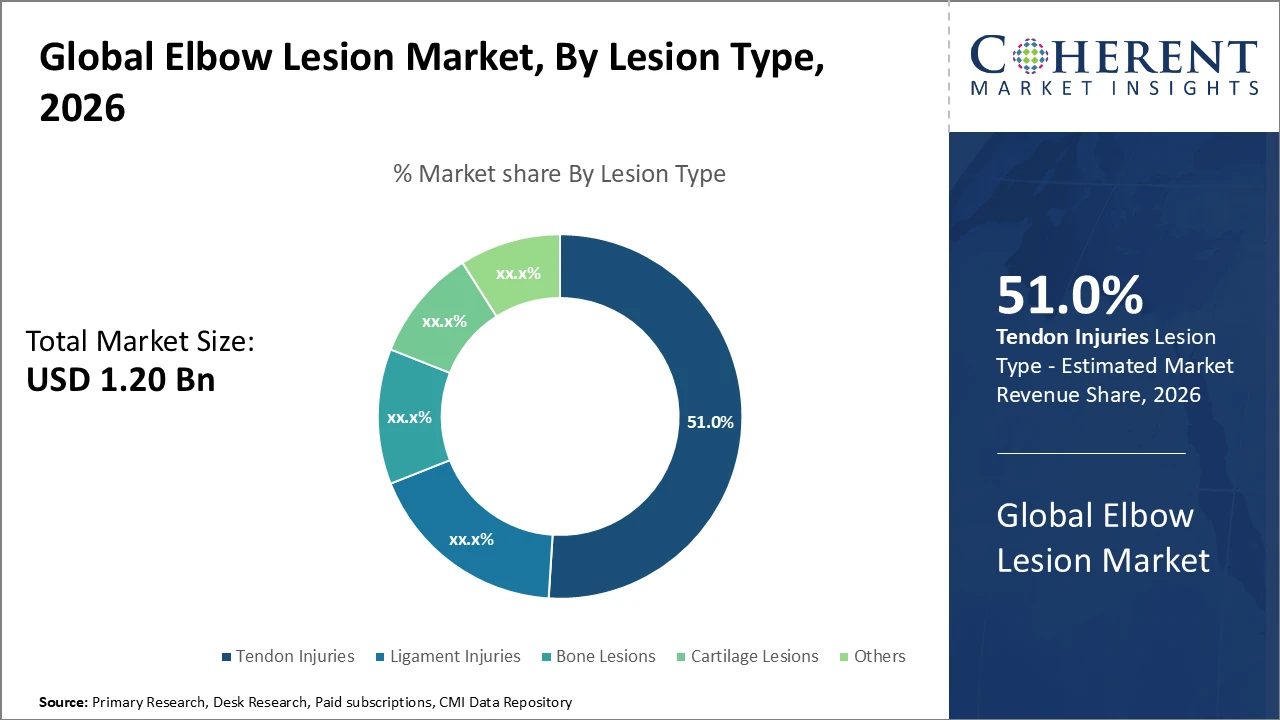
Tendon-related injuries account for the largest portion of the elbow lesion market, holding about 51% share, mainly due to the high occurrence of tendinopathies among both physically active individuals and the aging population.
Hospitals remain the primary care setting, capturing nearly 65% of the market, as they are the main providers for diagnosis, surgical intervention, and post-injury management.
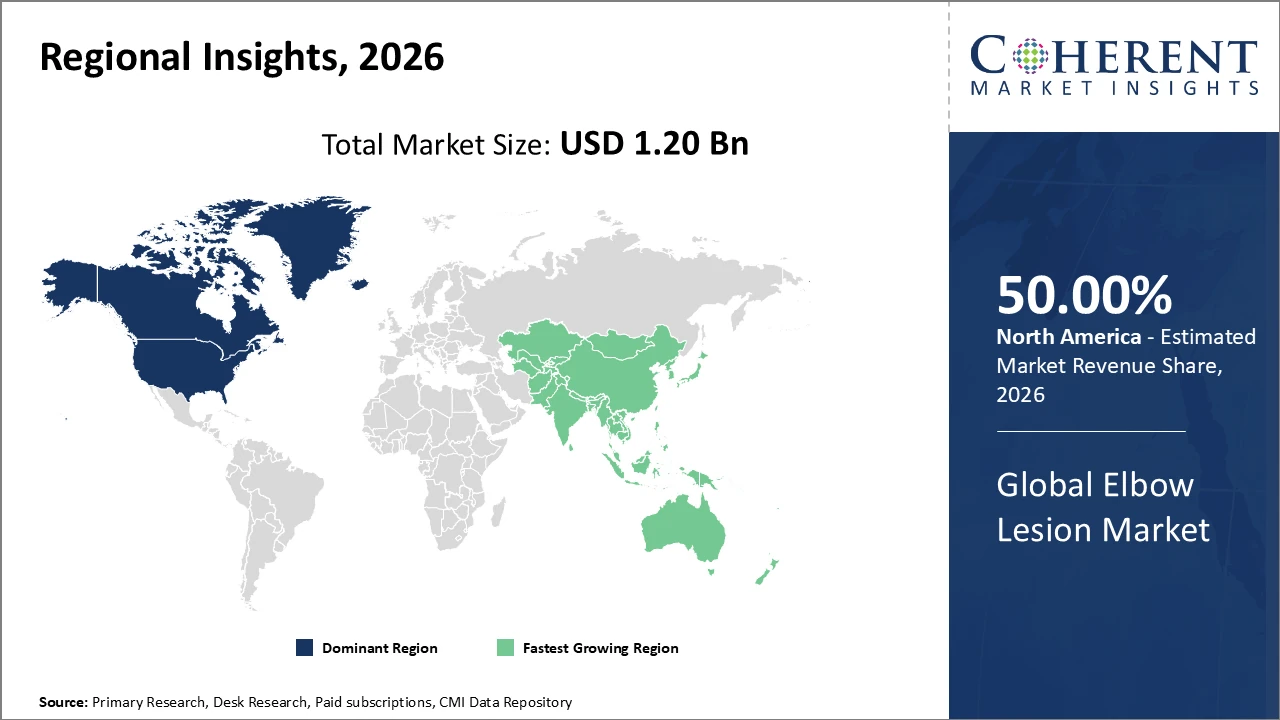
North America leads the global market, benefiting from advanced healthcare systems, high awareness levels, and a greater number of orthopedic procedures.
The Asia Pacific region is experiencing the fastest growth, fuelled by increasing healthcare expenditure and growing acceptance of minimally invasive and biologic therapies, particularly in emerging economies such as China and India.
Elbow Lesion Market Segmentation Analysis
To learn more about this report, Download Free Sample
Elbow Lesion Market Insights, By Lesion Type
Tendon injuries account for the largest share of the elbow lesion market at 51%, primarily driven by the widespread occurrence of tendinopathies such as tennis elbow among active individuals, aging populations, and sports participants. This high prevalence sustains consistent demand for both surgical and conservative treatment options. Ligament injuries represent the fastest-growing segment, fueled by a rising number of sports-related injuries and trauma cases, which is accelerating the adoption of advanced repair and reconstruction techniques. Bone lesions, including traumatic and pathological conditions, hold a moderate share and support ongoing demand for fixation implants. Cartilage lesions associated with degenerative joint disorders are experiencing steady growth due to increasing osteoarthritis prevalence affecting the elbow. Other less common lesion types remain niche but contribute through specialized and targeted treatment approaches.
Elbow Lesion Market Insights, By Treatment Type
Surgical treatment accounts for the largest share of the elbow lesion market at 54%, driven by continuous advancements in minimally invasive procedures and implant technologies that enhance clinical outcomes and shorten recovery periods. This segment continues to benefit from increased investment in arthroscopic instruments and biologic enhancement solutions. Rehabilitation devices are emerging as the fastest-growing category, supported by rising demand for post-treatment recovery tools such as wearable braces and physical therapy equipment, which recorded a notable increase in usage in 2025. Non-surgical treatment options, including steroid injections and platelet-rich plasma therapies, are gaining steady traction among patients preferring conservative management approaches. Pharmaceuticals, primarily analgesics and anti-inflammatory medications, play a complementary role by supporting pain management and inflammation control within integrated treatment pathways.
Elbow Lesion Market Insights, By End-User
Hospitals account for the largest share of the elbow lesion market at 65%, supported by their ability to perform complex surgical procedures and deliver multidisciplinary care that attracts a broad patient base. Specialty clinics represent the fastest-growing end-use segment, driven by specialized expertise in sports injury treatment, minimally invasive procedures, and biologic therapies, which contribute to higher patient volumes and improved outcomes. Ambulatory surgical centers are increasingly utilized for outpatient and minor lesion procedures, benefiting from their cost efficiency and streamlined services. Physiotherapy centers play a vital role in post-treatment rehabilitation and are evolving through the integration of digital platforms and wearable therapeutic technologies.
Elbow Lesion Market Trends
The elbow lesion market is increasingly moving toward personalized medicine, with customized biologic therapies and regenerative treatments gaining prominence.
In 2025, the use of platelet-rich plasma (PRP) therapy for tendon lesions in specialized U.S. clinics grew by 20%, highlighting the adoption of targeted treatment approaches.
Digital health solutions, including telemedicine for post-surgical rehabilitation, saw widespread acceptance following healthcare advancements in 2024, improving patient monitoring and management.
Minimally invasive and image-guided procedures are replacing traditional invasive techniques, supporting faster recovery times and lower complication rates.
AI-driven diagnostic tools are emerging in the market, enabling earlier and more precise lesion detection, particularly in countries like Germany and Japan.
Elbow Lesion Market Insights, By Geography
To learn more about this report, Download Free Sample
North America Elbow Lesion Market Analysis and Trends
North America leads the elbow lesion market, driven by its advanced healthcare infrastructure, high procedure volumes, and strong focus on research and development. The U.S. alone accounts prominent share of the regional market, supported by substantial investments in sports medicine clinics and aged-care facilities. Regulatory backing for minimally invasive treatments, along with rising rates of orthopedic surgeries, further stimulates market growth. Additionally, the presence of major global companies headquartered in the region strengthens innovation and competitive dynamics, reinforcing North America’s dominance in the elbow lesion market.
Asia Pacific Elbow Lesion Market Analysis and Trends
The Asia Pacific region is experiencing the fastest growth in the elbow lesion market, with a CAGR exceeding 10%, fuelled by rising healthcare spending, expanding urban middle-class populations, and growing awareness of musculoskeletal health. Countries such as China and India are seeing rapid expansion of clinics and increased adoption of advanced therapies, supported by favourable government healthcare policies and higher participation in sports and physical activities. This combination of factors is driving significant market momentum across the region.
Elbow Lesion Market Outlook for Key Countries
USA Elbow Lesion Market Analysis and Trends
The U.S. elbow lesion market continues to lead globally, driven by high rates of orthopedic procedures and rapid adoption of advanced technologies. In 2025, around 130,000 elbow surgeries were performed, with minimally invasive arthroscopic interventions accounting for 60% of these procedures. Major players like Zimmer Biomet and Stryker reinforce market growth through ongoing product innovation, addressing both degenerative and trauma-related lesions. Additionally, the healthcare system’s focus on sports injury management and comprehensive rehabilitation further supports strong business expansion in this market.
Germany Elbow Lesion Market Analysis and Trends
The Germany elbow lesion market is witnessing steady growth, driven by advanced healthcare infrastructure, high awareness of musculoskeletal disorders, and increasing adoption of minimally invasive and arthroscopic procedures. Rising sports participation and an aging population contribute to higher incidence of tendon, ligament, and cartilage injuries. The market benefits from government support for innovative treatments and growing use of regenerative therapies such as platelet-rich plasma (PRP). Leading orthopedic companies are expanding their presence, while digital health tools and AI-assisted diagnostics are enhancing early detection and personalized treatment approaches.
Analyst Opinion
Advancements in arthroscopic and endoscopic procedures are boosting elbow lesion market revenue. In 2025, arthroscopic debridement usage increased by 15% in leading U.S. hospitals, enhancing patient throughput and reducing recovery times, driving greater adoption.
Higher participation in high-impact sports like baseball, tennis, and weightlifting has raised ligament tear and tendinopathy cases. In 2024, European sports injury clinics reported a 12% increase in tennis elbow diagnoses, supporting demand for targeted therapies.
High-resolution MRI and 3D ultrasound imaging are improving diagnostic accuracy for complex elbow lesions. Major diagnostic centers in Japan recorded a 10% year-over-year increase in elbow MRI scans from 2024 to 2026, fueling market growth.
Age-related degenerative elbow conditions, such as osteoarthritis, are rising with global aging trends. Canadian health registries show over 25% of elderly patients with elbow pain were diagnosed with degenerative lesions in 2025, expanding the treatment patient base.
Market Scope
| Report Coverage | Details | ||
|---|---|---|---|
| Base Year: | 2025 | Market Size in 2026: | USD 1.20 billion |
| Historical Data for: | 2020 To 2024 | Forecast Period: | 2026 To 2033 |
| Forecast Period 2026 to 2033 CAGR: | 8.5% | 2033 Value Projection: | USD 2.10 billion |
| Geographies covered: |
|
||
| Segments covered: |
|
||
| Companies covered: | Zimmer Biomet Holdings Inc., Stryker Corporation, Smith & Nephew plc, Arthrex, Inc., DePuy Synthes, Wright Medical Group N.V., CONMED Corporation, DJO Global Inc., Medtronic plc, Hanger, Inc. | ||
| Growth Drivers: |
|
||
Uncover macros and micros vetted on 75+ parameters: Get instant access to report
Elbow Lesion Market Growth Factors
Technological innovations, including advanced imaging, arthroscopic techniques, and biologic therapies, have reshaped treatment standards and encouraged higher procedure volumes globally, boosting procedural adoption by over 12% in 2025. The rising number of orthopedic surgeries for trauma and degenerative disorders, driven by aging populations and increasing accident rates, has further fuelled market growth, with surgical interventions accounting for more than half of elbow lesion market revenue in 2024. Additionally, an increase in sports-related elbow injuries, particularly among younger populations, expanded treatment demand, reflected by a 14% rise in related hospital admissions in 2025. Enhanced patient education and early diagnosis campaigns are also supporting timely interventions, reducing complications, and driving market uptake, as seen in European public health initiatives in 2026 that raised early diagnosis rates of elbow pathologies by approximately 8%.
Elbow Lesion Market Development
In March 2025, Medartis completed the acquisition of the Avenger Radial Head System to bolster its upper extremity reconstruction portfolio, broadening its presence in the U.S. orthopedic segment and enhancing options for complex elbow lesion management. Additionally, continuous growth in biologic therapy customization, such as refined platelet???rich plasma (PRP) preparation protocols at specialized clinics has further driven personalized treatment approaches and strengthened regenerative care adoption.
Key Players
Leading Companies of the Market
Zimmer Biomet Holdings Inc.
Stryker Corporation
Smith & Nephew plc
Arthrex, Inc.
DePuy Synthes
Wright Medical Group N.V.
CONMED Corporation
DJO Global Inc.
Medtronic plc
Hanger, Inc
Several market players have strengthened their positions through strategic acquisitions and focused R&D investments, enhancing both portfolio diversity and technological capabilities. For example, in 2025, Arthrex, Inc. expanded its product offerings by acquiring specialized biologics solutions for tendon repair, leading to a 7% increase in its regional market share. Likewise, Stryker’s focus on minimally invasive implant technologies drove higher adoption rates in North America, resulting in a 10% growth in revenue from their surgical segment between 2024 and 2026. These initiatives underscore the role of innovation and strategic expansion in driving market competitiveness.
Elbow Lesion Market Future Outlook
The elbow lesion market is poised for strong growth, driven by advancements in minimally invasive and image-guided surgical techniques that improve outcomes and reduce recovery times. Increasing adoption of regenerative and biologic therapies, such as platelet-rich plasma and stem-cell treatments, is expanding personalized care options. Digital health solutions, including tele-rehabilitation and AI-assisted diagnostics, are enhancing early detection and patient management. Rising sports participation and aging populations further support demand for both preventive and therapeutic interventions. Emerging markets in Asia Pacific and Latin America are expected to grow rapidly, fueled by healthcare investments, improving infrastructure, and greater musculoskeletal health awareness.
Elbow Lesion Market Historical Analysis
The elbow lesion market has experienced steady growth over the past decade, driven by rising incidence of musculoskeletal injuries, sports-related trauma, and age-related degenerative conditions. Historically, tendon and ligament injuries accounted for the majority of cases, with surgical interventions dominating treatment due to limited non-surgical alternatives and slower adoption of minimally invasive techniques. Hospitals served as the primary care setting, while specialty clinics gradually emerged as treatment hubs. North America maintained a leading market position thanks to advanced healthcare infrastructure and high procedure volumes, while Europe and Asia-Pacific showed moderate growth. Early adoption of arthroscopic procedures and biologic therapies set the stage for current market expansion.
Sources
Primary Research Interviews:
Orthopedic Surgeons
Sports Medicine Physicians
Physiotherapists and Occupational Therapists
Medical Device Manufacturers (surgical implants, arthroscopic tools, rehabilitation devices)
Databases:
WHO Global Health Observatory
OECD Health Statistics
Global Burden of Disease (GBD) Database
National Center for Health Statistics (NCHS)
Magazines:
Orthopedic Design & Technology
Orthopedics Today
Medical Device Network
HealthTech Magazine
Journals:
Journal of Orthopaedic Research
Journal of Shoulder and Elbow Surgery
The American Journal of Sports Medicine
Clinical Orthopaedics and Related Research
Newspapers:
The New York Times (Health)
The Guardian (Health)
Financial Times (Healthcare)
The Hindu (Health)
Reuters Health
Associations:
American Academy of Orthopaedic Surgeons (AAOS)
International Society of Arthroscopy, Knee Surgery & Orthopaedic Sports Medicine (ISAKOS)
Orthopaedic Research Society (ORS)
National Athletic Trainers’ Association (NATA)
Share
Share
About Author
Nikhilesh Ravindra Patel is a Senior Consultant with over 8 years of consulting experience. He excels in market estimations, market insights, and identifying trends and opportunities. His deep understanding of the market dynamics and ability to pinpoint growth areas make him an invaluable asset in guiding clients toward informed business decisions. He plays a instrumental role in providing market intelligence, business intelligence, and competitive intelligence services through the reports.
Missing comfort of reading report in your local language? Find your preferred language :
Transform your Strategy with Exclusive Trending Reports :
Frequently Asked Questions

Credibility and Certifications

860519526

9001:2015

27001:2022


Need a Custom Report?
We can customize every report - free of charge - including purchasing stand-alone sections or country-level reports
Customize NowSelect a License Type
Joining thousands of companies around the world committed to making the Excellent Business Solutions.
View All Our Clients
 Schedule a meeting with report Author