U.S. Hospital Beds Market Analysis & Forecast: 2026-2033

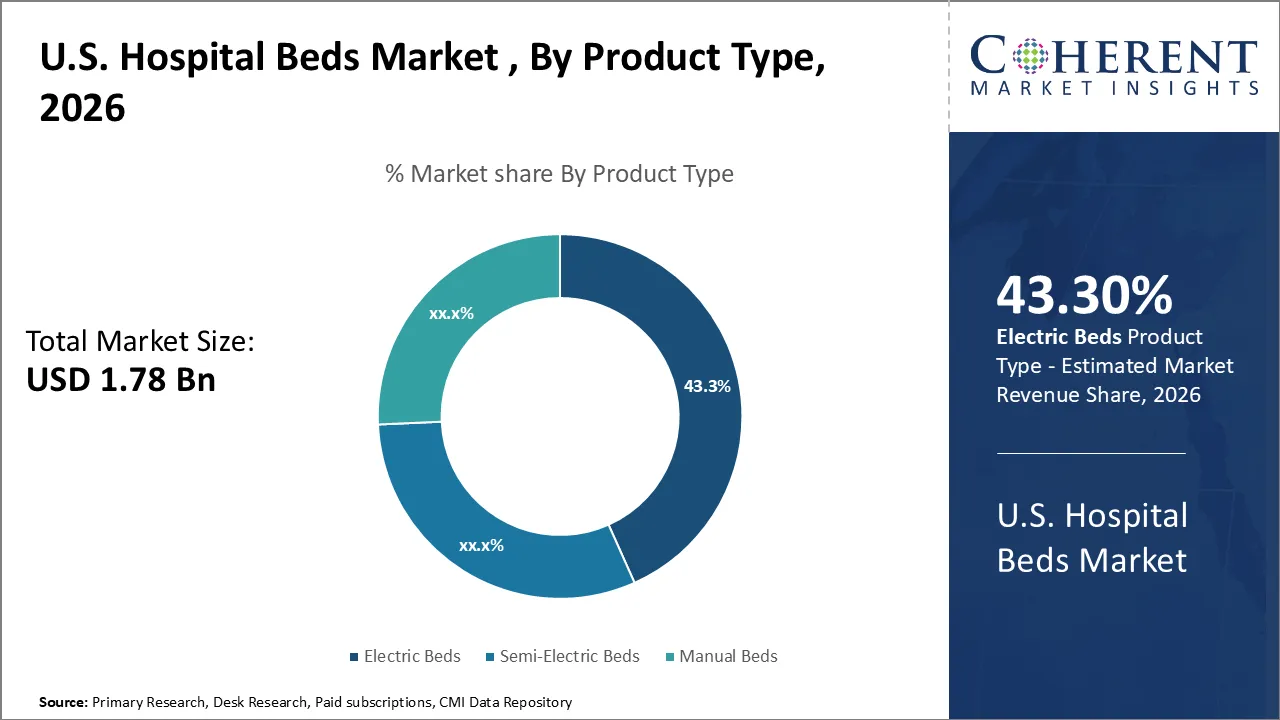
The U.S. Hospital Beds Market is estimated to be valued at USD 1.78 Bn in 2026 and is expected to reach USD 2.56 Bn by 2033, exhibiting a compound annual growth rate (CAGR) of 6.2% from 2026 to 2033.
Rising healthcare demand, an aging population, and the increasing prevalence of chronic and acute diseases drive the U.S. hospital beds market. Hospitals are actively modernizing infrastructure and adopting advanced beds with electronic adjustments, smart monitoring, and enhanced patient safety features. Expanding acute, critical, and intensive care services further boost demand, while hospitals prioritize patient comfort, infection control, and value-based care by replacing outdated beds. Technological advancements and public health preparedness continue to shape the market’s growth.
|
Current Events |
Description and its impact |
|
Macroeconomic Policy Shifts |
|
|
Technological Advancements in Healthcare Infrastructure |
|
|
Healthcare Industry Structural Changes |
|
Uncover macros and micros vetted on 75+ parameters: Get instant access to report
Electric Beds hold the largest market share of 43.3% in 2026. Hospitals in the U.S. are driving demand for electric beds to enhance patient comfort and improve clinical outcomes. They are adopting technologically advanced beds with electronic positioning, remote controls, and integrated safety features to support patient mobility and ease caregiver workload. Increased focus on pressure injury prevention, the expansion of acute and long-term care services, and the push for smart, connected healthcare solutions are prompting healthcare facilities to invest actively in modern electric beds. For instance, in May 2025, EzLift Bed launched the EZ Lift Sleep-to-Stand Bed, designed to help older adults overcome mobility challenges.
Acute Care Beds expected to hold largest market share of 38.80% in 2026. Hospitals in the U.S. are driving the acute care beds market to manage patients with short-term, high-acuity conditions more efficiently. They are expanding acute care units to accommodate rising emergency admissions, surgical procedures, and trauma cases. The increasing prevalence of chronic diseases and age-related health issues further boosts bed utilization. Healthcare facilities are investing in beds with advanced adjustability and monitoring features to enhance patient safety, streamline clinical workflows, and deliver rapid, effective care in fast-paced acute care settings. For instance, in February 2025, Stryker launched the ProCeed hospital bed, delivering a simple, efficient, and safe care platform for clinicians and patients across multiple regions.
Intensive Care Beds acquired the prominent market share of 52.20% in 2026. Hospitals in the U.S. are driving demand for intensive care beds to treat critically ill patients with complex, life-threatening conditions. Rising cases of severe illnesses, post-surgical complications, and multi-organ disorders are prompting healthcare facilities to expand ICU capacity. They are adopting beds with advanced monitoring, electronic adjustments, and integrated safety features to provide continuous care and enhance patient outcomes. Increased focus on specialized critical care, technological innovation, and emergency surge preparedness is further motivating hospitals to invest in modern intensive care beds. For instance, VA Southern Nevada Healthcare System has launched a Tele-ICU program in partnership with the VA Midwest Health Care Network, giving ICU staff 24/7 access to critical care specialists.
Hospitals capture the largest market share of 46.6% in 2026. U.S. hospitals are fueling the hospital beds market by expanding capacity to accommodate increasing patient demand and upgrading facilities with advanced infrastructure. Rising admissions from chronic illnesses, an aging population, and emergency cases are driving the need for more beds. Healthcare providers are installing beds that improve patient comfort, safety, and clinical efficiency, featuring electronic adjustments and integrated monitoring systems. Hospitals are also prioritizing infection control, value-based care, and technological enhancements, prompting the replacement of outdated beds and supporting overall market growth.
Hospitals are increasingly adopting beds equipped with IoT connectivity, remote monitoring, and automated positioning systems. These smart beds allow real-time patient data tracking, reduce caregiver workload, and improve clinical decision-making. Integration with electronic health records and alerts for mobility, pressure points, or emergencies is driving adoption, reflecting a shift toward technology-enabled patient care and more efficient hospital operations.
Healthcare facilities are prioritizing beds that enhance patient safety and reduce infection risks. Features such as antimicrobial surfaces, improved side rails, pressure-relieving mattresses, and fall prevention mechanisms are gaining prominence. Hospitals aim to minimize hospital-acquired infections and prevent injuries during patient transfers, aligning with stricter regulatory requirements and growing emphasis on quality outcomes in patient care.
Hospitals seek beds tailored to ICU, acute care, neonatal, and post-surgical recovery units. Opportunities exist for modular and multi-functional beds that can be easily adapted for different patient needs and clinical scenarios. By offering designs that improve safety, comfort, and efficiency, manufacturers can cater to a diverse range of hospital departments while addressing space constraints and operational flexibility requirements.
| Report Coverage | Details | ||
|---|---|---|---|
| Base Year: | 2025 | Market Size in 2026: | USD 1.78 Bn |
| Historical Data for: | 2020 To 2024 | Forecast Period: | 2026 To 2033 |
| Forecast Period 2026 to 2033 CAGR: | 6.2% | 2033 Value Projection: | USD 2.56 Bn |
| Segments covered: |
|
||
| Companies covered: |
Hill-Rom Holdings, Inc., Getinge AB, Invacare Corporation, Stryker Corporation, Paramount Bed Co. Ltd., Medline Industries, Inc., and LINET Group SE. |
||
| Growth Drivers: |
|
||
| Restraints & Challenges: |
|
||
Uncover macros and micros vetted on 75+ parameters: Get instant access to report
Share
Share
About Author
Manisha Vibhute is a consultant with over 5 years of experience in market research and consulting. With a strong understanding of market dynamics, Manisha assists clients in developing effective market access strategies. She helps medical device companies navigate pricing, reimbursement, and regulatory pathways to ensure successful product launches.
Missing comfort of reading report in your local language? Find your preferred language :
Transform your Strategy with Exclusive Trending Reports :
Frequently Asked Questions
Joining thousands of companies around the world committed to making the Excellent Business Solutions.
View All Our Clients
 Schedule a meeting with report Author