Saline Laxatives Market Analysis & Forecast: 2026-2033
The global saline laxatives market is estimated to be valued at USD 557.3 Mn in 2026 and is expected to reach USD 783.8 Mn by 2033, exhibiting a compound annual growth rate (CAGR) of 5.0% from 2026 to 2033.
Saline laxatives are in greater demand due to the rising prevalence of constipation and gastrointestinal issues among adults and aged populations. Growing awareness related to gut cleaning before various kinds of medical procedures such as colonoscopies is also gaining momentum in the market. Oral saline laxative formulations are gaining more attention, while rectal saline laxatives have a stagnant demand.
|
Current Events |
and its impact |
|
Aging Global Demographics and Healthcare Infrastructure Expansion |
|
|
Supply Chain Disruptions and Raw Material Shortages |
|
Uncover macros and micros vetted on 75+ parameters: Get instant access to report
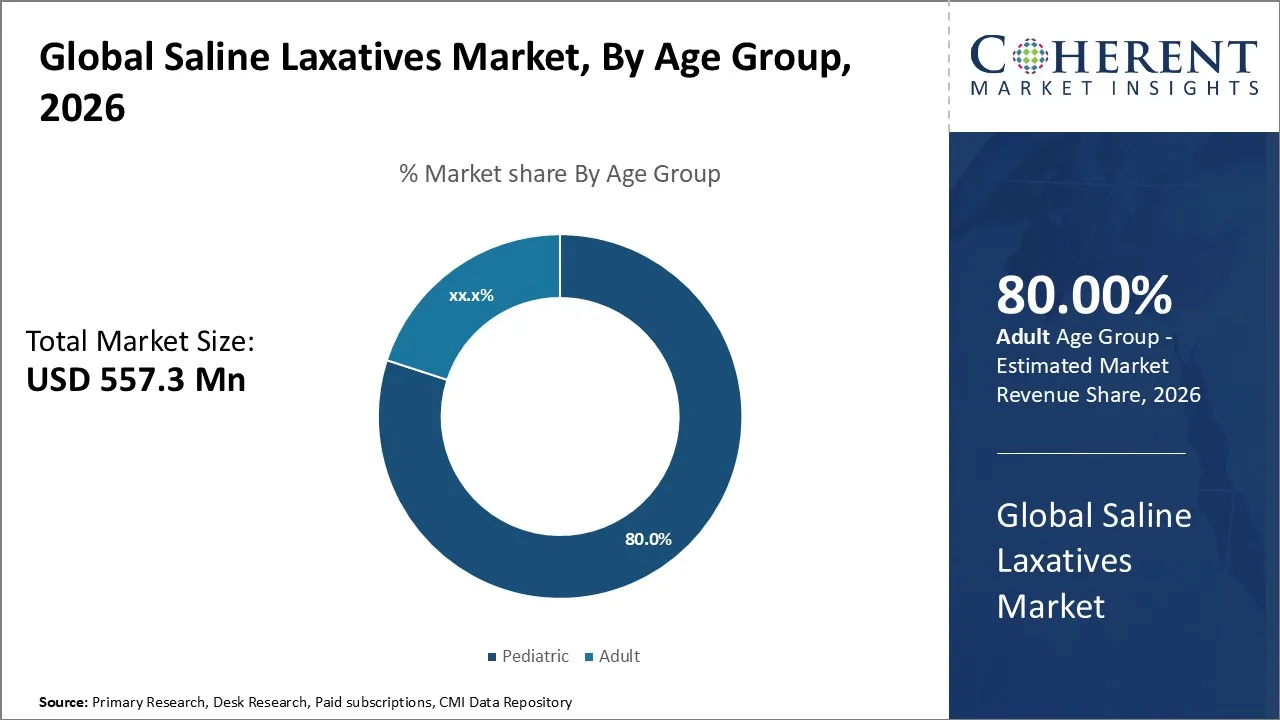
Based on age group, the adult segment is estimated to contribute the highest market share of 80% in 2026, owing to a higher prevalence of constipation and increased demand for laxatives among adults. Adults, especially the older generation, require products or solutions for bowel regulation for day-to-day purposes and for some medical procedures too.
For instance, in March 2025, Glenmark Pharmaceuticals announced the launch of Polyethylene Glycol 3350 Powder for Solution as an over‑the‑counter laxative in the United States market to address adult consumers in search of relief from constipation beyond what is provided in current PEG products.
Based on route of administration, the oral segment is expected to hold the highest market share of 70% in 2026. Since oral saline laxatives are widely used in the home setting, patients are able to administer the drug on their own without the supervision of a healthcare professional. The popularity of the route of administration is further aided by the availability of ready-to-drink products, pre-packaged sachets, and flavored products to improve adherence in the targeted population of adults and children.
For instance, in March 2025, Bayer announced a strategic collaboration with Teva Pharmaceutical for the co-development and commercialization of an improved oral osmotic laxative platform, with the aim of making it more tolerable for patients to take orally.
By distribution channel, the retail pharmacies segment is expected to offer the highest market share of 55% in 2026. The availability of a range of saline laxatives at retail pharmacies has raised consumer demand for the products. Additionally, retail pharmacies offer the benefit of expert consultation from the pharmacist regarding the selection of the saline laxative product to purchase. Online pharmacies are an upcoming distribution channel of the saline laxative market. They are expected to provide an additional convenience factor to tech-savvy consumers.
For instance, In July 2025, Bausch Health’s Salix Pharmaceuticals launched the “I Wish I Knew” direct‑to‑consumer awareness campaign, including educational outreach on gastrointestinal health
To learn more about this report, Request Free Sample
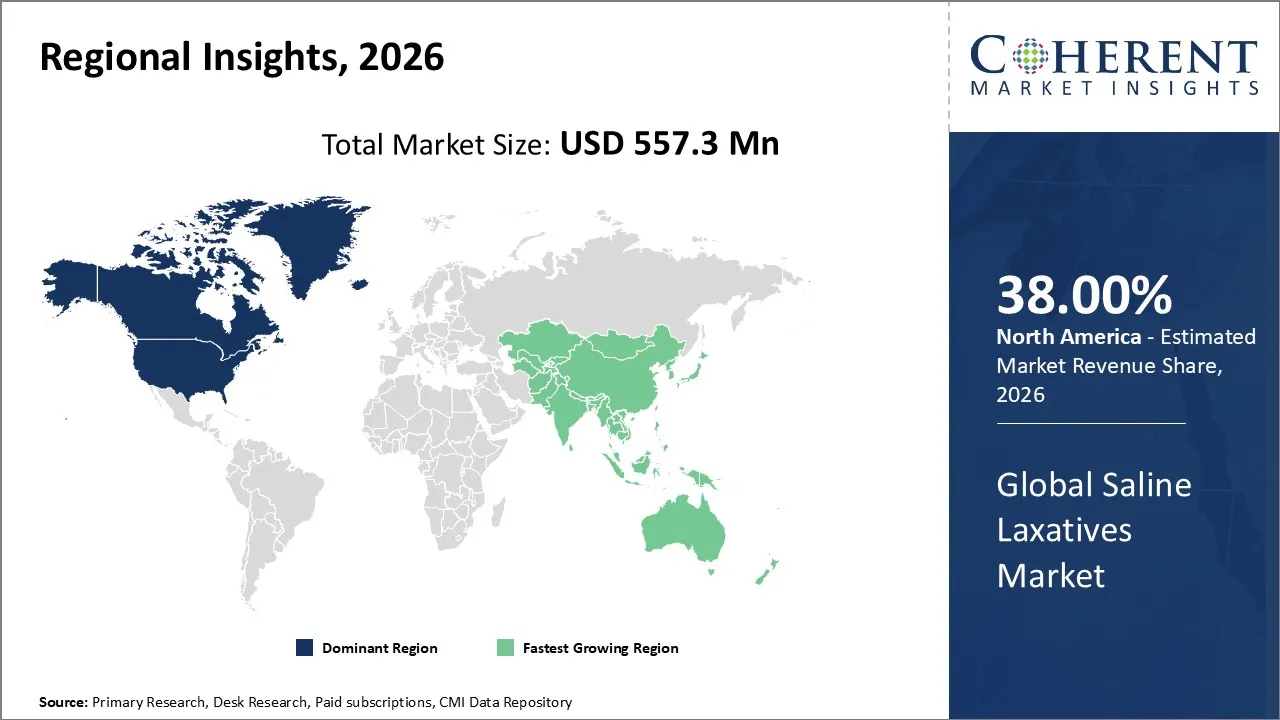
North America is expected to dominate the saline laxatives market in 2026, with an estimated market share of 38%. The key factors accountable for North America's market growth include high prevalence of constipation among adults, a strong consumer awareness about gastrointestinal health, widespread availability of the OTC laxatives through retail pharmacies, and preference for oral formulation for ease and convenience of use.
For instance, in March 2025, Glenmark Therapeutics launched Polyethylene Glycol 3350 Powder for Solution in the United States. The product is an over-the-counter oral laxative designed for adults to treat constipation effectively. The product is distributed by retail pharmacies, which are accessed by many individuals in the United States.
The Asia Pacific market shows the fastest growth in the saline laxative market because of growing health awareness and increasing disposable incomes. Oral preparations lead in market share, and dispensaries help extensively in their distribution in the urban areas of China, India, and Japan.
For instance, in June 2024, Glenmark Pharmaceuticals introduced LaxaGo, a polyethylene glycol oral laxative with balanced electrolytes, in urban areas of China. This move came as retail pharmacies in larger Chinese cities such as Beijing and Shanghai began stocking the drug due to a growing demand for a safe and efficacious constipation treatment.
The U.S. market for saline laxatives is growing steadily due to a higher rate of constipation conditions among adults, growing awareness of gastrointestinal health, and growing demands for oral forms of treatments. Adults are using over-the-counter treatments offered either at pharmacies or online.
For instance, in March 2025, Glenmark Therapeutics Inc., USA launched Polyethylene Glycol 3350 Powder for Solution (17 grams/capful) as an over‑the‑counter osmotic laxative in the United States, entering a major consumer segment and providing an alternative supplier to existing brands like MiraLAX®.
China’s increasing focus on digestive health and wellness is accelerating growth in the saline laxatives market. Adult populations in urban centers are driving demand for convenient oral laxatives, while retail pharmacies remain the preferred purchase channel. Rising awareness of gastrointestinal conditions, increasing disposable incomes, and expanding healthcare infrastructure support market expansion across the region.
For instance, in June 2024, Glenmark Pharmaceuticals introduced LaxaGo, a polyethylene glycol-based oral laxative with balanced electrolytes, in urban areas of China. Major retail pharmacies in cities like Beijing and Shanghai stocked the product to meet growing demand for safe and effective constipation relief among adults.
| Report Coverage | Details | ||
|---|---|---|---|
| Base Year: | 2025 | Market Size in 2026: | USD 557.3 Mn |
| Historical Data for: | 2020 To 2024 | Forecast Period: | 2026 To 2033 |
| Forecast Period 2026 to 2033 CAGR: | 5.0% | 2033 Value Projection: | USD 783.8 Mn |
| Geographies covered: |
|
||
| Segments covered: |
|
||
| Companies covered: |
Bayer AG, Beutlich Pharmaceuticals LLC., Prestige Consumer Healthcare Inc, Cardinal Health, Inc., Major Pharmaceuticals, Dynarex Corporation, Pharmascience Inc, and Salix Pharmaceuticals. |
||
| Growth Drivers: |
|
||
| Restraints & Challenges: |
|
||
Uncover macros and micros vetted on 75+ parameters: Get instant access to report
The rise in cases of constipation, particularly in adults and seniors, is recognized as a major driving factor in the market for saline laxatives. Sedentary lifestyles, reduced fiber intake in food, along with greater emphasis being placed on digestive health, are some of the key factors accelerating the requirement for efficient solutions to address this problem in people.
The market offers potential for growth in terms of new and improved formulations like combination PEG-electrolyte powder formulations or flavored oral solutions. In addition, increased accessibility of pharmacies is anticipated to drive the market further, especially among the youth who value convenience. The market also offers potential for product development in Asia because of the growing health consciousness in China, where people are looking for suitable remedies for gastrointestinal health due to health awareness creation by health analysts around the world.
Share
Share
Vipul Patil is a dynamic management consultant with 6 years of dedicated experience in the pharmaceutical industry. Known for his analytical acumen and strategic insight, Vipul has successfully partnered with pharmaceutical companies to enhance operational efficiency, cross broader expansion, and navigate the complexities of distribution in markets with high revenue potential.
Joining thousands of companies around the world committed to making the Excellent Business Solutions.
View All Our Clients