Programmable Infusion Pumps And Catheters Market Analysis & Forecast: 2026-2033
Programmable Infusion Pumps And Catheters Market Analysis & Forecast: 2026-2033
Programmable Infusion Pumps and Catheters Market, By Product Type (Volumetric Pumps, Syringe Pumps, Enteral Pumps, Insulin Pumps, Implantable Pumps, Patient Controlled Analgesia Pumps, and Pump Accessories), By Modality (Portable and Stationary), By Application (Oncology, Pediatrics/Neonatology, Pain, Gastroenterology, Hematology, and Diabetes), By Channel Type (Single Channel and Multi-Channel), By End User (Hospitals, Ambulatory Clinics, Homecare, Clinics, and Others), By Geography(North America, Latin America, Europe, Asia Pacific, the Middle East, and Africa)
Programmable Infusion Pumps and Catheters Market Size and Trends: 2026-2033
Programmable infusion pumps and catheters market is estimated to be valued at USD 13,905 Mn in 2026 and is expected to reach USD 20,650 Mn by 2033, exhibiting a compound annual growth rate (CAGR) of 5.8% from 2026 to 2033.
Key Takeaways
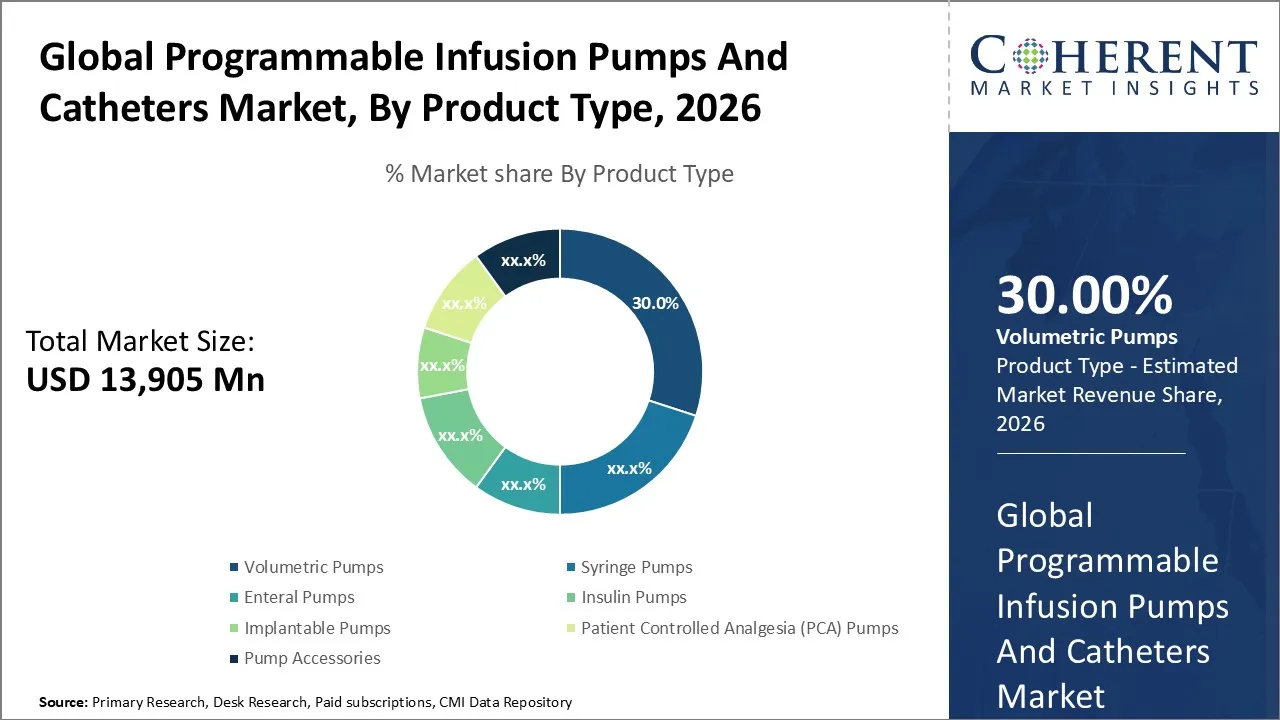
Based on Product Type, the Volumetric Pumps segment is expected to lead the market with 30% share in 2026, due to high adoption in hospitals and critical care settings.
Based on Modality, the Portable segment is projected to account for 35% share of the market in 2026, owing to increasing use in ambulatory care and homecare settings.
Based on Application, the Oncology segment is expected to lead with 25% share in 2026, driven by rising chemotherapy and targeted therapy treatments.
Based on Channel Type, the Single-Channel segment is expected to hold 70% share in 2026, due to simplicity and cost-effectiveness in hospitals.
Based on End User, the Hospitals segment is expected to lead with 60% share in 2026, owing to high adoption in inpatient care and ICUs.
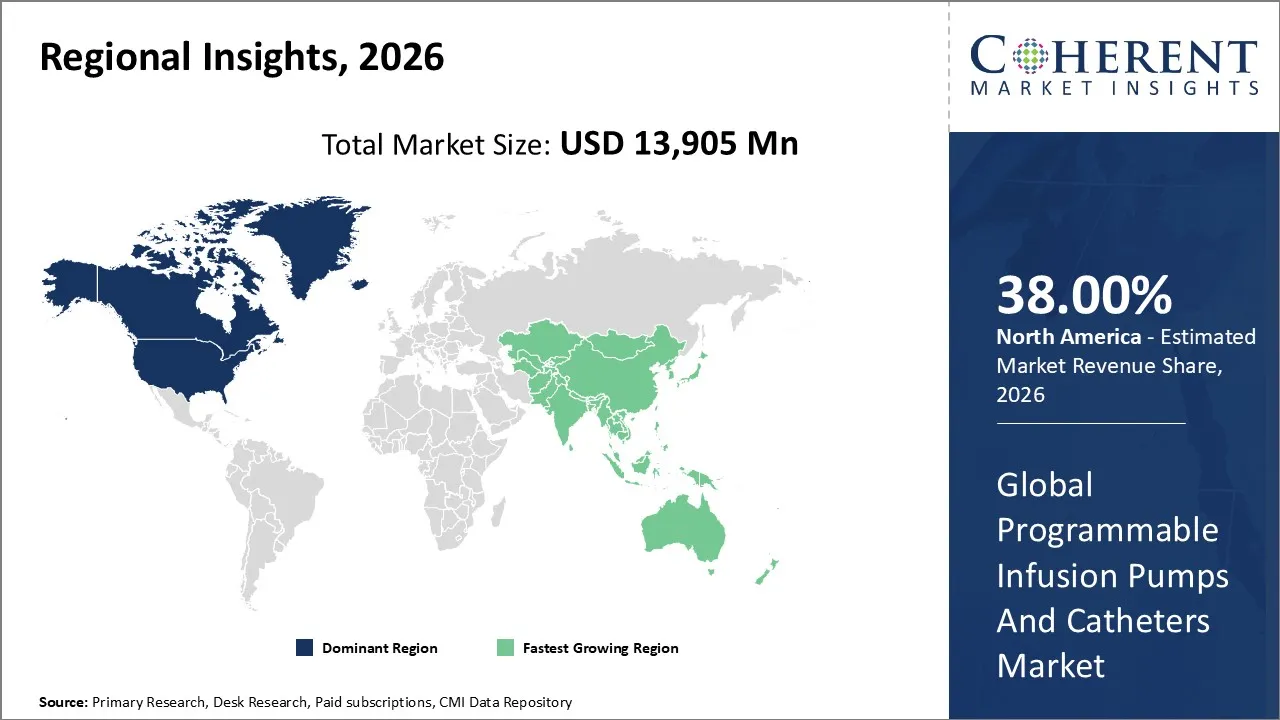
Based on Region, North America is set to lead the programmable infusion pumps and catheters market with 38% share in 2026. While, Asia Pacific is anticipated to be the fastest growing region.
Market Overview
Growing prevalence of chronic diseases like cancer, diabetes, and cardiovascular diseases is fueling the demand for programmable infusion pumps and catheters. These infusion pumps and catheters help in the controlled administration of drugs, thereby increasing patient safety and efficacy. The increasing adoption of smart and connected infusion systems, as well as the growing interest in outpatient and homecare services, is also fueling the growth of the market.
Current Events and Its Impacts on the Programmable Infusion Pumps and Catheters Market
Current Events
and its impact
Global Supply Chain Disruptions and Semiconductor Shortages
Description: Chip supply issue impacting the production of medical devices
Impact: Production schedule delays and higher costs for components of the smart infusion pump
Description: Raw material supply issue for catheter polymers and tubing
Impact: Price volatility and potential product shortages impacting market supply
Regulatory Framework Evolution and Digital Health Integration
Description: FDA's push for interoperability in medical devices
Impact: Rapid adoption of connected infusion systems and competitiveness in the market
Description: EU MDR compliance requirements for catheter and pump manufacturers
Impact: Higher regulatory expenses but improved safety of products resulting in market consolidation
How is Product Innovation driving the growth in programmable infusion pumps and catheters?
Smart Infusion Systems: Use of wireless communication, IoT-based monitoring, and automated notification systems for enhanced accuracy and patient safety.
Multi-Channel Pumps: The simultaneous delivery of multiple drugs, which helps in shortening the treatment time and maximizing productivity in critical care environments.
Compact & Portable Designs: Portable and battery-powered infusion pumps for home care and ambulatory care environments, which enable patients to move around freely without influencing their treatment.
Advanced Safety Features: Anti-free-flow systems, dose error reduction software, and lockout systems to prevent drug errors.
Electronic Health Record (EHR) Integration: Smooth data exchange between infusion pumps and hospital information systems for real-time patient monitoring, recording, and analysis.
Programmable Infusion Pumps and Catheters Market Insights, By Product Type – Volumetric Pumps dominate due to hospital adoption and critical care use
By product type, the volumetric pumps segment is expected to hold the largest market share of 30% in 2026. Volumetric pumps are widely used in hospitals and critical care settings because they are able to deliver a certain volume of IV fluids and medications accurately over a certain period of time. This makes volumetric pumps highly popular for complex infusion therapies such as chemotherapy, pain management, and critical care.
For instance, in April 2024, Baxter International Inc. obtained U.S. FDA 510(k) clearance for its Novum IQ Large Volume Infusion Pump, which introduced the company to the large volume (volumetric) pump market through its Novum IQ Infusion Platform.
Programmable Infusion Pumps and Catheters Market Insights, By Modality – Portable pumps expand ambulatory and homecare options
Based on modality, the portable segment is expected to hold a market share of 35% in 2026. Portable infusion pumps enable patients to undergo therapy outside the conventional hospital environment, thus facilitating ambulatory, homecare, and outpatient treatment programs. Portable infusion pumps are lightweight, battery-powered, and portable, thus facilitating patient mobility while ensuring accurate drug delivery.
For instance, in April 2025, ICU Medical Inc. introduced new Plum Solo™ precision IV pump, a portable, single‑channel complement to its dual‑channel Plum Duo™, both of which received U.S. FDA 510(k) clearance as part of the expanded ICU Medical IV Performance Platform.
Programmable Infusion Pumps and Catheters Market Insights, By Application – Oncology drives highest demand due to rising chemotherapy and targeted therapies
By application, the oncology segment is expected to lead with 25% share in 2026. The increase in cancer prevalence, combined with the need for precise, timed chemotherapy and targeted therapy administration, is driving adoption of programmable infusion systems in oncology wards. These pumps ensure safe and controlled delivery of high-risk medications, reducing errors and improving patient outcomes.
For instance, in November 2024, Boston Scientific Corporation announced a definitive agreement to acquire Intera Oncology Inc., the manufacturer of the Intera 3000 Hepatic Artery Infusion Pump, an implantable infusion device used to continuously infuse chemotherapy directly into the liver for the treatment of metastatic colorectal cancer and other liver tumors.
Programmable Infusion Pumps and Catheters Market Insights, By Channel Type – Single-channel pumps dominate due to simplicity and cost-effectiveness
By channel type, the Single-Channel segment is expected to account for the largest market share of 70% in 2026. Single-channel pumps are commonly used in hospitals because of their easy operation and efficiency compared to multi-channel pumps. Single-channel pumps are less prone to programming errors and are easier to train hospital staff on.
For instance, in April 2025, ICU Medical Inc. received U.S. FDA 510(k) clearance for its Plum Solo™ precision IV pump, a single‑channel complement to the dual‑channel Plum Duo™, marking the introduction of a new category of precision infusion devices under the ICU Medical IV Performance Platform.
Programmable Infusion Pumps and Catheters Market Insights, By End User – Hospitals remain the primary adopter due to inpatient care and ICUs
By end user, the hospitals are anticipated to have the highest market share of 60% in 2026. Hospitals are the largest segment as they have a large number of patients and also have intensive care units, which require complex infusion therapies such as chemotherapy, pain management, and critical care fluids.
North America Programmable Infusion Pumps and Catheters Market Analysis & Trends
North America is projected to lead the market for programmable infusion pumps and catheters in 2026, with a forecasted market share of 38%. The growth in the North American market is fueled by factors such as the region’s well-developed healthcare infrastructure, widespread use of smart and connected infusion devices, a rising number of chronic diseases such as cancer and diabetes, and a robust hospital and homecare infrastructure. For instance,
Asia Pacific Programmable Infusion Pumps and Catheters Market Analysis & Trends
The Asia Pacific is expected to be the fastest-growing region because of the growing investment in the healthcare sector, increasing awareness among patients about homecare and outpatient services, rising incidence of chronic diseases, and the expanding network of hospitals and clinics in China, India, and Japan. Affordable and reliable infusion pump systems are also being developed by local manufacturers.
For instance, in July 2025, B. Braun India launched its revised Infusomat Space portable infusion pumps, catering to the increasing need for portable, friendly, and safe infusion devices. The launch of the new product shows that the Asia Pacific region is committed to enhancing the delivery of healthcare while maintaining affordability for the ever-growing population.
Programmable Infusion Pumps and Catheters Market Outlook for Key Countries
Is the U.S. programmable infusion pumps and catheters market leading from advanced healthcare adoption?
The U.S. programmable infusion pumps and catheters market is at present the leading market globally because of the adoption of smart and connected infusion systems in hospitals and home care settings. The well-developed healthcare infrastructure, prevalence of chronic diseases, and developed hospital infrastructure are increasing the demand for accurate infusion therapies.
Is Canada’s infusion pump market growing with healthcare modernization?
Canada’s infusion pump market is experiencing a steady growth as hospitals and outpatient facilities are replacing old systems with modern programmable infusion pumps. The adoption of smart infusion pumps with electronic health records is enhancing safety and efficiency.
For instance, in April 2024, Mackenzie Health in Ontario became the first health system in Canada to introduce BD Alaris™ EMR Interoperability technology, which allows two-way communication between IV infusion pumps and the electronic medical record (EMR) system at its hospitals.
Is China’s healthcare expansion driving programmable infusion pump adoption?
China’s programmable infusion pumps market is rapidly expanding due to government initiatives to modernize hospitals, rising chronic disease prevalence, and increasing access to advanced medical devices.
For instance, in October 2025, Shenzhen MedRena Biotech Co., Ltd. announced its participation in MEDICA 2025, where the company showcased and was set to launch its next-generation smart infusion systems, including its 90 Series multi-channel smart infusion platform.
Market Report Scope
Programmable Infusion Pumps and Catheters Market Report Coverage
Report Coverage
Details
Base Year:
2025
Market Size in 2026:
USD 13,905 Mn
Historical Data for:
2020 To 2024
Forecast Period:
2026 To 2033
Forecast Period 2026 to 2033 CAGR:
5.8%
2033 Value Projection:
USD 20,650 Mn
Geographies covered:
North America: U.S. and Canada
Latin America: Brazil, Argentina, Mexico, and Rest of Latin America
Europe: Germany, U.K., Spain, France, Italy, Russia, and Rest of Europe
Asia Pacific: China, India, Japan, Australia, South Korea, ASEAN, and Rest of Asia Pacific
Middle East: GCC Countries, Israel, and Rest of Middle East
Africa: South Africa, North Africa, and Central Africa
Segments covered:
By Product Type: Volumetric Pumps, Syringe Pumps, Enteral Pumps, Insulin Pumps, Implantable Pumps, Patient Controlled Analgesia Pumps, and Pump Accessories
By Modality: Portable and Stationary
By Application: Oncology, Pediatrics/Neonatology, Pain, Gastroenterology, Hematology, and Diabetes
By Channel Type: Single Channel and Multi-channel
By End User: Hospitals, Ambulatory Clinics, Homecare, Clinics, and Others
Companies covered:
ICU Medical, Inc., Smiths Group plc., Baxter International Inc., Fresenius Se & Co. KGaA, Johnson & Johnson, Medtronic plc., Becton, Dickinson and Company, Terumo Corporation, B. Braun Melsungen AG, and Moog Inc.
Growth Drivers:
Increasing prevalence of chronic diseases and critical care needs
Adoption of smart infusion technologies for accurate and safe drug delivery
Restraints & Challenges:
Introduction of smart and connected infusion pump systems
Expansion of portable infusion pumps for homecare and ambulatory use
Programmable Infusion Pumps and Catheters Market Driver
Rising demand for safe and accurate drug delivery in hospitals and homecare
The rising incidence of chronic diseases, cancers, and critical care requirements has led to the adoption of programmable infusion pumps and catheters. The healthcare industry is focusing on accurate and controlled drug delivery to minimize medication errors. The adoption of advanced technologies such as smart alarms, dose error reduction systems, and integration with electronic medical records (EMR) is also contributing to the growth of the market.
Programmable Infusion Pumps and Catheters Market Opportunity
Introduction of smart, connected, and portable infusion systems
The market offers considerable opportunities for growth with the development of innovative infusion solutions such as portable infusion pumps, wireless-enabled smart infusion pumps, and multi-channel infusion systems. Companies dealing with user-friendly designs for homecare, digital health platforms, and AI-based safety solutions can enhance their market share. In addition, the growing demand for minimally invasive therapies and personalized medicine drives innovation in products.
Analyst Opinion (Expert Opinion)
The market for programmable infusion pumps and catheters is currently experiencing a paradigm shift due to the growing complexity of patient care in hospitals, clinics, and homecare settings. Healthcare professionals are increasingly turning their attention to solutions that can help enhance patient safety, efficiency, and reduce the risk of medication errors. For example, large hospital chains have started using smart infusion pumps in critical care and cancer centers.
Homecare infusion therapy is emerging as a major focus area, with products being re-engineered for portability, usability, and multi-channel delivery. Manufacturers are also developing pumps that enable effective therapy delivery outside the hospital setting, which indicates the increasing need for patient-centric therapy. Features such as user-friendly interfaces, wireless communication, and intelligent alarm notifications are also becoming the norm, making infusion therapy more efficient and safer.
Technological integration is redefining the market. Infusion pumps integrated with electronic health records and information technology systems in hospitals allow real-time monitoring and adjustments. This is not only ensuring safety but also helping hospitals optimize their time and operations. In the oncology and pediatrics segments, the need for devices that can deliver high-precision dosages of drugs is influencing the design of products, and manufacturers are focusing on precision and flexibility.
Regional innovation is also changing the landscape of competition. Local firms in Asia are now developing intelligent multi-channel pumps. This means that local firms in Asia are now developing intelligent multi-channel pumps. This indicates that innovation is no longer the domain of established Western firms but is now a global trend.
Top Strategies Followed by Programmable Infusion Pumps and Catheters Market Players
Established players focus heavily on research and development to drive innovation in advanced infusion technologies. Leading companies such as Baxter, B. Braun, and ICU Medical, are investing heavily in the development of intelligent, connected, and multi-channel pumps. They are testing new designs, safety, connectivity, and user interfaces to improve the accuracy, reliability, and usability of the pumps in hospital and homecare settings.
Mid-level players compete through the provision of cost-effective yet trustworthy solutions. These companies employ efficient manufacturing processes, source components globally, and provide flexible pumps that can be applied in hospitals, clinics, and home care settings. The business model is intended to find a middle ground between being affordable and providing quality, enabling them to penetrate the emerging markets or value segments.
Small-scale and niche players concentrate on specific markets or innovative solutions.These could include portable pumps for home care, pediatric or oncology-specific solutions, or connectivity with digital health platforms. By catering to the unmet needs of specific patient groups, they receive recognition and loyalty even with limited manufacturing capacity. Collaborations with hospitals, tech companies, or healthcare startups assist in increasing reach and validating new offerings.
Emerging Startups in the Programmable Infusion Pumps and Catheters Market
Innovation-driven startups are revolutionizing infusion therapy: Startups are working on the development of AI-powered smart pumps, wireless monitoring systems, and mini multi-channel devices intended for homecare or ambulatory use. If implemented on a larger scale, these technologies have the potential to disrupt the conventional hospital-based infusion therapy paradigm.
Connectivity and patient-centric solutions are prominent areas of focus: Certain startups are working on the integration of pumps with mobile applications, electronic health records, and remote monitoring systems. These technologies cater to the growing need for homecare infusion and telemedicine-based therapies.
Startups address niche and underserved segments: For example, include pediatric pumps, oncology-focused infusion systems, and portable devices intended for use in remote or rural settings. Partnerships with hospitals, healthcare systems, and digital health firms enable these startups to quickly validate their technologies and accelerate adoption.
Programmable Infusion Pumps and Catheters Industry News
In April 2025, ICU Medical introduced its new category of precision IV pumps, the Plum Solo™ and updated Plum Duo™ precision IV pumps with LifeShield™ infusion safety software following FDA 510(k) clearances.
In June 2025, the FDA issued Class I recalls (the most serious type) for certain Smiths Medical infusion pumps, including CADD‑Solis and CADD‑Solis VIP ambulatory systems, due to potential safety risks that could lead to therapy interruptions or delayed infusions.
Market Segmentation
Product Type Insights (Revenue, USD Mn, 2026 - 2033)
Channel Type Insights (Revenue, USD Mn, 2026 - 2033)
Single Channel
Multi-channel
End User Insights (Revenue, USD Mn, 2026 - 2033)
Hospitals
Ambulatory Clinics
Homecare
Clinics
Others
Regional Insights (Revenue, USD Mn, 2026 - 2033)
North America
U.S.
Canada
Latin America
Brazil
Argentina
Mexico
Rest of Latin America
Europe
Germany
U.K.
Spain
France
Italy
Russia
Rest of Europe
Asia Pacific
China
India
Japan
Australia
South Korea
ASEAN
Rest of Asia Pacific
Middle East
GCC Countries
Israel
Rest of Middle East
Africa
South Africa
North Africa
Central Africa
Key Players Insights
ICU Medical, Inc.
Smith’s Group plc.
Baxter International Inc.
Fresenius Se & Co. KGaA
Johnson & Johnson
Medtronic plc.
Becton
Dickinson and Company
Terumo Corporation
Braun Melsungen AG
Moog Inc.
Sources
Primary Research Interviews
Medical Device Manufacturers & Product Managers
Hospital Procurement & Supply Chain Heads
Clinical Engineers & Biomedical Technicians
Doctors & Nurses specializing in Oncology, Critical Care, and Diabetes
Home Healthcare Providers & Clinic Administrators
Distributors & Medical Device Retailers
Regulatory & Compliance Experts
Others
Databases
U.S. Food & Drug Administration (FDA) Device Database
European Medicines Agency (EMA) Database
Bloomberg Terminal
Thomson Reuters Eikon
Others
Magazines
Medical Device & Diagnostic Industry (MD+DI)
Medical Design & Outsourcing
Beckers Hospital Review
Healthcare Technology Management
Medical Device Network
Others
Journals
Journal of Infusion Nursing
American Journal of Health-System Pharmacy
Medical Devices: Evidence and Research
International Journal of Medical Informatics
Journal of Clinical Engineering
Others
Newspapers
The Wall Street Journal – Health Section
Financial Times – Healthcare Section
Reuters Health
Bloomberg News – Medical Devices Section
USA Today – Health Section
Others
Associations
Association for the Advancement of Medical Instrumentation (AAMI)
Infusion Nurses Society (INS)
Medical Device Manufacturers Association (MDMA)
International Society for Medical Innovation and Technology (ISMIT)
Others
Public Domain Sources
U.S. FDA – Device Approvals & Safety Communications
EMA – Medical Device Updates
U.S. Centers for Medicare & Medicaid Services (CMS) Reports
World Health Organization (WHO) Medical Device Reports
Health Canada – Medical Device Notices
Others
Proprietary Elements
CMI Data Analytics Tool
Proprietary CMI Existing Repository of Information for the Last 8 Years
Share
Share
About Author
Komal Dighe is a Management Consultant with over 8 years of experience in market research and consulting. She excels in managing and delivering high-quality insights and solutions in Health-tech Consulting reports. Her expertise encompasses conducting both primary and secondary research, effectively addressing client requirements, and excelling in market estimation and forecast. Her comprehensive approach ensures that clients receive thorough and accurate analyses, enabling them to make informed decisions and capitalize on market opportunities.
Missing comfort of reading report in your local language? Find your preferred language :
The programmable infusion pumps and catheters market is estimated to be valued at USD 13,905 Mn in 2026, and is expected to reach USD 20,650 Mn by 2033.
The CAGR of the programmable infusion pumps and catheters market is projected to be 5.8% from 2026 to 2033.
Key drivers include the rising demand for home healthcare and ambulatory care, advancements in smart and portable infusion pumps, increasing use in oncology and critical care, and focus on patient safety through accurate drug delivery.
High costs of advanced infusion devices, regulatory complexities, and risks associated with technical malfunctions or medication errors are the main factors limiting market growth.
The volumetric pumps segment is projected to dominate the market in 2026 due to widespread hospital and critical care adoption.
North America is expected to dominate the market in 2026, while Asia Pacific is anticipated to be the fastest-growing region.
ICU Medical, Inc., Smiths Group plc., Baxter International Inc., Fresenius SE & Co. KGaA, Johnson & Johnson, Medtronic plc., Becton, Dickinson and Company, Terumo Corporation, B. Braun Melsungen AG, and Moog Inc. are key players in this market.



 Schedule a meeting with report Author