P2x7 Receptor Antagonists Market Analysis & Forecast: 2026-2033
P2x7 Receptor Antagonists Market is estimated to be valued at USD 135.2 Mn in 2026 and is expected to reach USD 438 Mn by 2033, exhibiting a compound annual growth rate (CAGR) of 18.3% from 2026 to 2033.
Growing focus on targeted therapies for the treatment of inflammatory and neurodegenerative diseases drives the growth of the global P2X7 Receptor Antagonists Market. P2X7 receptors are implicated in neuroinflammation and modulation of immune responses and, hence, are promising drug targets for neurological disorders such as Alzheimer's disease, major depression, chronic pain, and various autoimmune diseases. Increasing incidence of central nervous system and immunological disorders and growing investment in neuroscience and immunology research supplement the market growth.
|
Current Events |
and its impact |
|
Regulatory Landscape Evolution and Drug Approval Processes |
|
|
Global Supply Chain Disruptions and Manufacturing Challenges |
|
Uncover macros and micros vetted on 75+ parameters: Get instant access to report
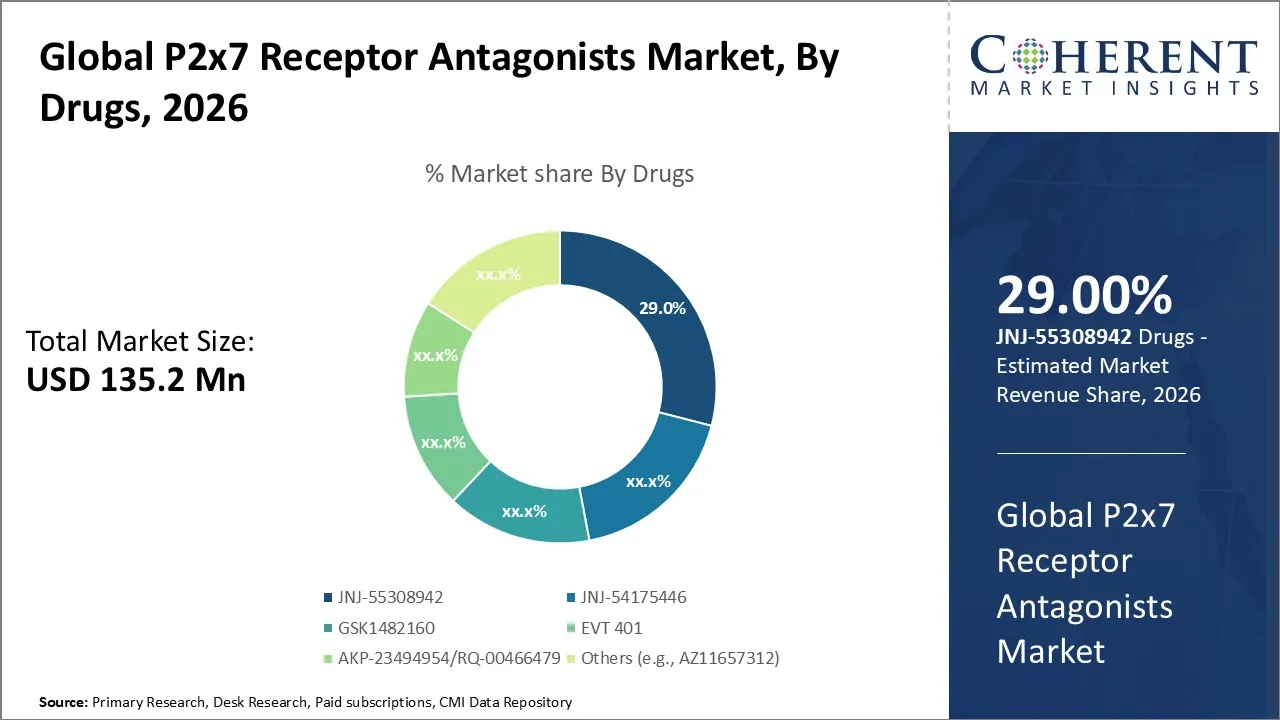
By drug type, JNJ-55308942 is estimated to contribute the highest market share of 29% in 2026 in the global P2X7 Receptor Antagonists Market. This segment dominance is attributed to its advanced stage of clinical development and strong therapeutic potential across inflammatory and neurological indications. JNJ-55308942 has demonstrated favorable pharmacological properties and target selectivity, positioning it as one of the leading candidates within the competitive P2X7 antagonist pipeline.
By application, Central Nervous System (CNS) disorders are expected to represent the largest market share of 47% by 2026, driven by an improved understanding of the role P2X7 receptors play in neuroinflammation, neurodegeneration, and synaptic dysfunction. The increasing prevalence of pathologies such as Alzheimer's disease, depression, epilepsy, and chronic pain has accelerated research efforts toward novel CNS-targeted therapies.
For instance, in September 2025, researchers at Oregon Health & Science University published breakthrough findings on the structural mechanism of P2X7 receptors, revealing distinct binding sites and conformational changes, which could enable design of more selective antagonists for neurological and neuroinflammatory conditions.
To learn more about this report, Download Free Sample
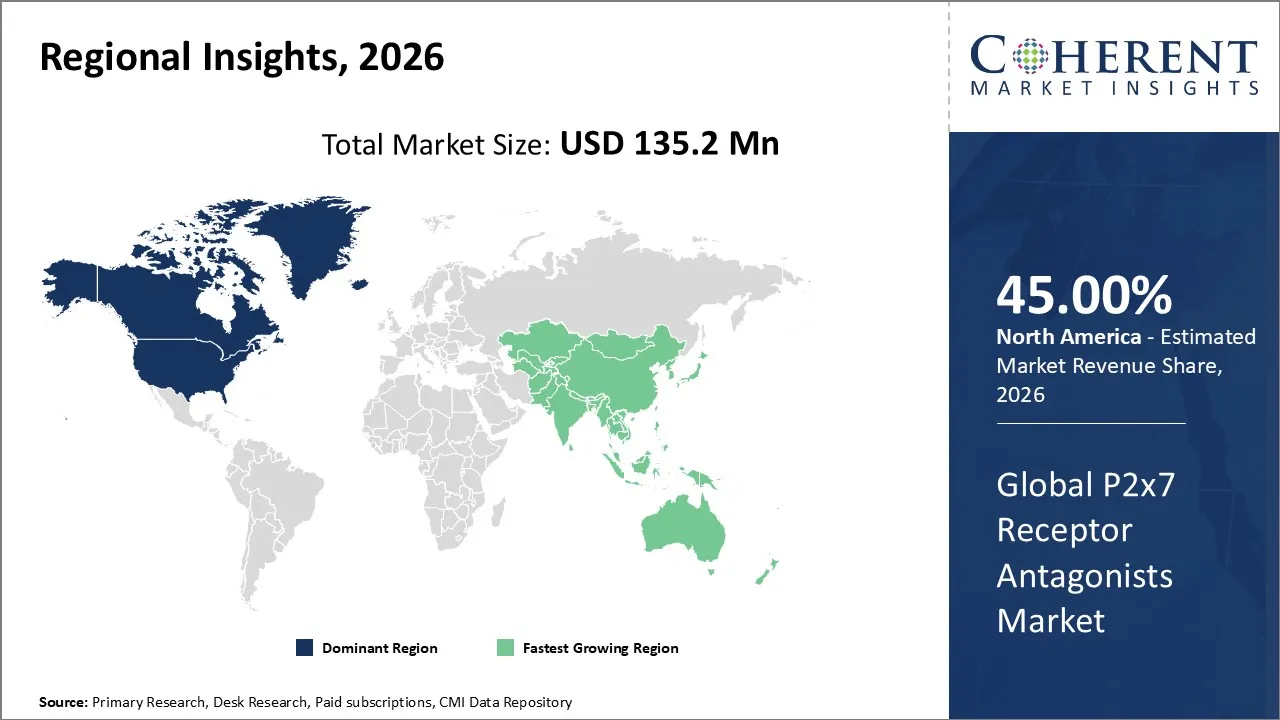
North America is expected to lead the global P2X7 Receptor Antagonists Market in the year 2026, while holding an estimated market share of 45%. The key reasons behind the dominance of the North American region can be accounted for by the developed health infrastructure of the region, high investment in neuroscience and immunology research, presence of key players, and the presence of clinical trials.
The Asia Pacific region is anticipated to be the fastest-growing market for P2X7 receptor antagonists due to increasing cases of neurological and immunological diseases, growing healthcare expenditure, increased collaboration among pharmaceutical companies, and favorable government support for the development of drugs, such as those for China, Japan, and India.
For instance, in October 2025, RaQualia Pharma Inc. announced an update regarding the P2X7 receptor antagonist, noting that while Eli Lilly removed this compound from its Phase II pain development pipeline, the existing license agreement remains active and future development pathways are under discussion.
The U.S. P2X7 Receptor Antagonists Market is expanding, driven by robust clinical research, strong pharmaceutical company presence, and high prevalence of CNS and immunological disorders. North America accounts for the largest regional share of the market in 2026 (45%).
China’s growing emphasis on healthcare innovation, biotechnology development, and clinical trial infrastructure is accelerating adoption and research for P2X7 receptor antagonists. Neurodegenerative and inflammatory disease-related research investment is particularly strong, based on the government commitment to improved public health outcomes.
For instance, in July 2025, Chinese researchers at Chengdu University’s preclinical research program continued development of a novel small‑molecule P2X7 receptor antagonist (compound code: 13a) targeting conditions such as chronic kidney disease, with ongoing evaluation in preclinical models indicating promising therapeutic potential.
| Report Coverage | Details | ||
|---|---|---|---|
| Base Year: | 2025 | Market Size in 2026: | USD 135.2 Mn |
| Historical Data for: | 2020 To 2024 | Forecast Period: | 2026 To 2033 |
| Forecast Period 2026 to 2033 CAGR: | 18.3% | 2033 Value Projection: | USD 438 Mn |
| Geographies covered: |
|
||
| Segments covered: |
|
||
| Companies covered: |
GlaxoSmithKline Plc, Johnson & Johnson, AstraZeneca Plc, RaQualia Pharma, Evotec AG, and Asahi Kasei Corporation. |
||
| Growth Drivers: |
|
||
| Restraints & Challenges: |
|
||
Uncover macros and micros vetted on 75+ parameters: Get instant access to report
The increasing prevalence of neurological and immunological disorders, such as Alzheimer's disease, multiple sclerosis, chronic pain, and inflammatory conditions, serves as a driving force in the demand for P2X7 receptor antagonists. These disorders have often been associated with neuroinflammation and immune dysregulation, hence presenting P2X7 as a very auspicious therapeutic target. Pharmaceutical companies continue to invest in the development of novel antagonists with ongoing research and clinical trials that show potential efficacy to address these unmet medical needs.
The market has growth opportunities through the development of next-generation P2X7 receptor antagonists with improved efficacy, safety, and bioavailability. Innovations such as oral, injectable, and targeted delivery systems can enhance patient compliance and therapeutic outcomes. Additionally, expanding clinical trials to new indications, including rare neuroinflammatory and autoimmune disorders, offers opportunities for market penetration. Collaborations between global pharmaceutical companies and regional biotech firms in North America and Asia Pacific can further accelerate development and commercialization.
Share
Share
About Author
Ghanshyam Shrivastava - With over 20 years of experience in the management consulting and research, Ghanshyam Shrivastava serves as a Principal Consultant, bringing extensive expertise in biologics and biosimilars. His primary expertise lies in areas such as market entry and expansion strategy, competitive intelligence, and strategic transformation across diversified portfolio of various drugs used for different therapeutic category and APIs. He excels at identifying key challenges faced by clients and providing robust solutions to enhance their strategic decision-making capabilities. His comprehensive understanding of the market ensures valuable contributions to research reports and business decisions.
Ghanshyam is a sought-after speaker at industry conferences and contributes to various publications on pharma industry.
Missing comfort of reading report in your local language? Find your preferred language :
Transform your Strategy with Exclusive Trending Reports :
Frequently Asked Questions
Joining thousands of companies around the world committed to making the Excellent Business Solutions.
View All Our Clients
 Schedule a meeting with report Author