Orthopedic Power Tools Market Analysis & Forecast: 2026-2033

The orthopedic power tools market is estimated to be valued at USD 1.8 Bn in 2026 and is expected to reach USD 2.7 Bn by 2033, growing at a compound annual growth rate (CAGR) of 5% from 2026 to 2033.
The orthopedic power tools market is advancing significantly due to the rising demand for high-precision surgical instruments and the increasing volume of procedures in the geriatric and sports medicine sectors. The growing global prevalence of musculoskeletal disorders combined with a strategic shift toward minimally invasive surgical techniques is expected to propel market growth over the forecast period.
Orthopedic power tools including drills, saws, and reamers, are essential for bone resection and fixation and joint replacement. Modern tools are increasingly designed with cordless battery-operated platforms that offer surgeons greater maneuverability and reduce the risk of contamination in the sterile field. This makes advanced power tools a vital component in modern operating rooms, especially for high-volume procedures like total hip and knee arthroplasties.
The industry is entering a transformative period owing to the integration of robotic-assisted surgery, the surge in ambulatory surgical centers, and the development of smart tools with integrated sensors. These advancements assist in enhancing precision and ergonomics and safety by improving submillimeter alignment, reducing surgeon fatigue, and utilizing torque-limiting technology to protect soft tissue. As a result, healthcare providers are increasingly adopting disposable single-use components and high-performance battery systems that meet rigorous global regulatory standards for sterilization and patient safety.
|
Current Event |
Description and the Impact |
|
Technological Innovations and Advancements |
|
|
Healthcare Policy and Reimbursement Changes
|
|
|
Market and Competitive Landscape Shifts
|
|
Uncover macros and micros vetted on 75+ parameters: Get instant access to report
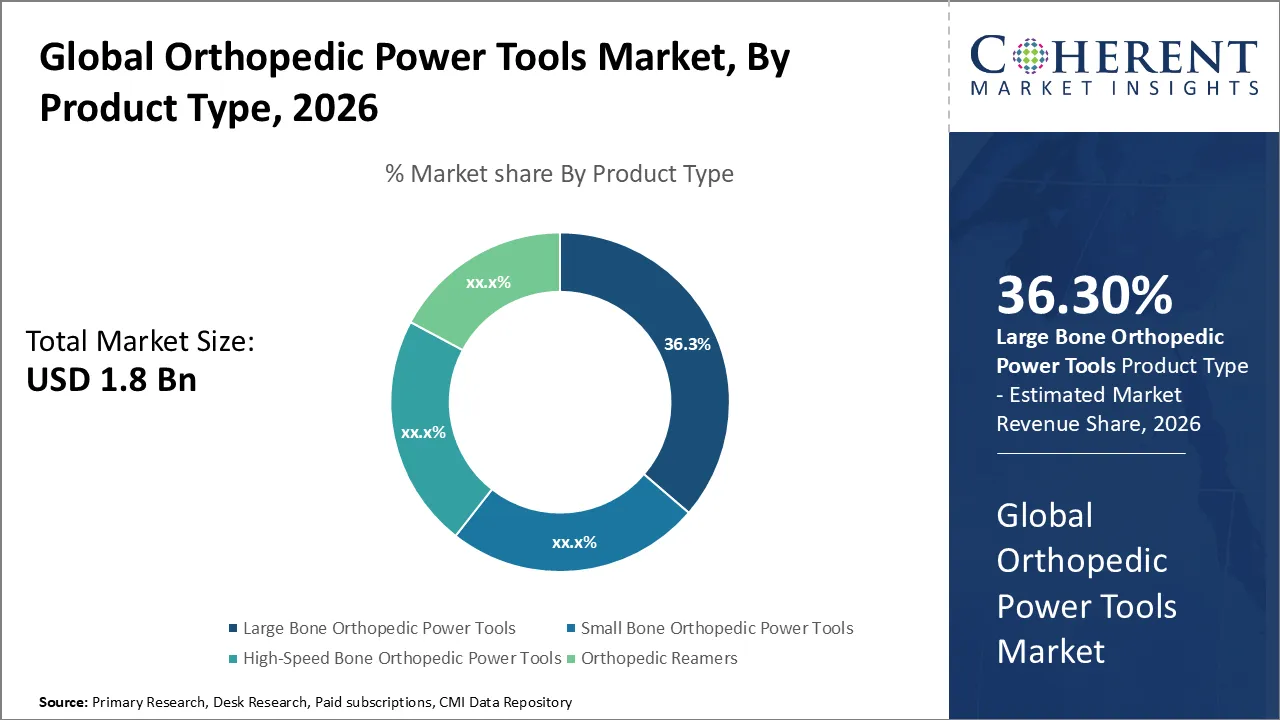
In terms of product type, the large bone orthopedic power tools segment contributes the highest share of 36.30% in 2026 of the orthopedic power tools market. The growth is due to the high frequency of high-torque procedures, such as total knee and hip arthroplasties, which are essential for treating the rising global burden of osteoarthritis. The segment is driven by a steady increase in trauma-related surgeries and fractures resulting from road accidents and sports injuries, necessitating robust tools for drilling, reaming, and sawing dense cortical bone. The top firms like Stryker, Zimmer Biomet, and DePuy Synthes (Johnson & Johnson) are innovating within this space. They are focusing on battery-powered modular systems that offer surgeons greater ergonomic flexibility and precision during complex large-bone interventions.
In terms of technology, the battery operated powered systems segment contributes the highest share of 39.10% in 2026 of the orthopedic power tools market. This growth can be attributed to its superior mobility and procedural efficiency. This technology accounts for a major share, largely because cordless designs eliminate the physical constraints of pneumatic hoses and electric cables. By removing these tripping hazards and tethered limitations, surgeons gain 360-degree range of motion, which is vital for high-precision tasks like total joint replacements. The battery systems align with modern sterilization protocols. The modern battery-operated units from manufacturers such as Stryker and DePuy Synthes are fully autoclavable and produce lower noise levels. This segment is favored by Ambulatory Surgical Centers (ASCs) that value the compact design and quick room turnover enabled by portable technology. With advancements in lithium-ion battery life and consistent torque output, this segment is expected to maintain its leadership position with a steady compound annual growth rate (CAGR) throughout the forecast period.
For instance, in June 2025, Arthrex has unveiled Synergy Power™, a versatile and dependable battery-powered system intended for a wide range of orthopedic applications.
In terms of end user, the orthopedic hospitals segment contributes the highest share of 61.60% in 2026 of the orthopedic power tools market. This growth can be attributed to the hospitals' unique capacity to manage high volumes of complex procedures, total joint replacements, trauma fixations, and spinal surgeries, which necessitate heavy-duty and high-precision power instruments. The hospitals have the advanced infrastructure necessary for maintaining and validating reusable power tool platforms. The growth is also strengthened by the early adoption of high-capital technologies like robotic-assisted surgical systems and navigation tools. The hospitals generally possess the financial resources and specialized personnel required to effectively integrate these platforms into their operating rooms. The hospitals continue to be the primary revenue generators in the market. This is largely due to their extensive patient pools and established reimbursement policies.
To learn more about this report, Download Free Sample
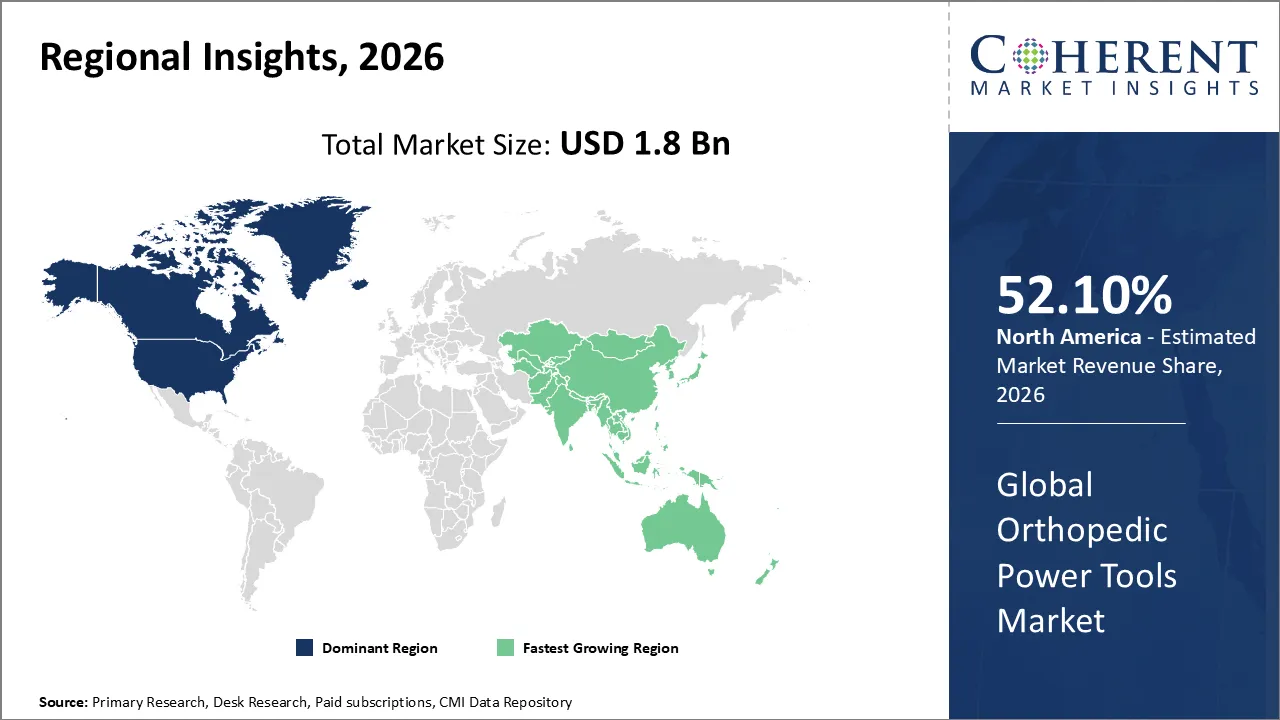
North America has remained the dominant region with 52.10% in 2026 of the global orthopedic power tools market over the past decade. The key industry leaders and a highly advanced healthcare infrastructure are responsible for the growth. This growth is owing to a high volume of surgeries, particularly in joint replacements and trauma interventions, driven by an aging population and a considerable number of sports-related injuries. The region is a primary hub for technological innovation, where surgeons are early adopters of robotic-assisted platforms and integrated digital operating suites.
In addition, the rapid shift toward outpatient care has accelerated the demand for portable, high-performance battery systems tailored for the fast-paced environment of Ambulatory Surgical Centers (ASCs). This growth is supported by well-established reimbursement frameworks and a streamlined regulatory environment that allows for the frequent introduction of upgraded, ergonomic power tool systems designed to improve surgical precision and reduce procedural time. The region has a strong presence of major industry players like Stryker and Zimmer Biomet, along with favorable reimbursement frameworks from CMS. North America is expected to retain its leadership position during the forecast period, despite the significant growth taking place in emerging markets.
For instance, in January 2026, the American Orthopaedic Association's (AOA) Own the Bone® program has partnered with RevelAi Health to develop an AI-powered bone health navigator. This tool aims to assist care teams in addressing gaps in osteoporosis management following fractures and in navigating the complexities of value-based reporting.
The Asia Pacific region is the fastest growing market for orthopedic power tools. The growth is owing to a massive patient pool and rapidly evolving healthcare infrastructure in nations like China, India, and Japan. This expansion is due to an aging population and a high incidence of road traffic accidents and sports injuries, which have substantially increased the volume of orthopedic surgeries. The region serves as a hub for medical tourism, drawing international patients to countries like India and Thailand for high-quality, affordable joint replacements. As a result, there is a rising demand for advanced battery-operated and electric power tools.
In addition, the government initiatives aimed at modernizing hospital facilities and the rising number of specialized orthopedic centers have speeded up the use of robotic-assisted surgical systems. The market is also seeing increased competition from local manufacturers offering specialized, ergonomic tools tailored for regional surgical practices. This combination of stringent procedural requirements and substantial technological investments ensures that the region remains a central focus for global market participants.
For instance, in December 2023, Sancheti Hospital has unveiled OrthoAI, a unique generative AI tool designed to assist orthopedic experts in accessing extensive and valuable medical literature.
The US market is defined by a well-established healthcare system and a strong focus on surgical innovation. This market is primarily propelled by a massive volume of orthopedic procedures, particularly hip and knee reconstructions, which are driven by a combination of an aging baby boomer population and high rates of obesity-related joint degradation. The U.S. landscape is unique for its rapid shift toward Ambulatory Surgical Centers (ASCs), which perform outpatient total joint replacements using portable, battery-powered systems.
In addition, the U.S. serves as the global headquarters for industry titans like Stryker, Zimmer Biomet, and DePuy Synthes, ensuring early access to the latest technological breakthroughs. There is a substantial trend toward robotic-assisted surgery and smart instrumentation that integrates with navigation platforms to enhance precision and patient outcomes. The market continues to see high demand for premium, ergonomic tools that reduce surgeon fatigue and maximize operating room efficiency.
For instance, in January 2026, MTF Biologics unveiled Summit Matrix, a state-of-the-art synthetic bone graft with the goal of enhancing bone regeneration following orthopedic and spinal procedures.
China is one of the most dynamic landscapes in the orthopedic power tools sector owing to a massive demographic shift and aggressive healthcare modernization. The demand for joint replacements and spine surgeries is increasing with a rapidly aging population and a high incidence of musculoskeletal diseases. This has transformed China into a critical growth engine for the Asia Pacific region. The market is undergoing a notable transition from pneumatic systems to advanced battery-operated and electric tools. This transition indicates a larger trend toward surgical practices that prioritize high precision and minimally invasive techniques.
The government's initiatives, like the Healthy China 2030 blueprint, are propelling the growth of hospital infrastructure and encouraging the use of robotically assisted surgical platforms. The local manufacturers are emerging in the industry and are providing competitive, cost-effective solutions tailored to the needs of tier-2 and tier-3 cities. In addition, centralized procurement policies and evolving reimbursement frameworks are transforming the competitive landscape. This shift is prompting vendors to innovate in terms of durability and ergonomic design to secure large-scale hospital contracts.
| Report Coverage | Details | ||
|---|---|---|---|
| Base Year: | 2025 | Market Size in 2026: | USD 1.8 Bn |
| Historical Data for: | 2020 To 2024 | Forecast Period: | 2026 To 2033 |
| Forecast Period 2026 to 2033 CAGR: | 5% | 2033 Value Projection: | USD 2.7 Bn |
| Geographies covered: |
|
||
| Segments covered: |
|
||
| Companies covered: |
De Soutter Medical, B. Braun SE, AYGUN CO.,INC., Medtronic, Johnson & Johnson Services, Inc., Zimmer Biomet, Stryker, medical bees GmbH, adeor medical AG., Shanghai Bojin Medical Instrument Co.,Ltd, CONMED Corporation., NSK / Nakanishi inc., MicroAire Surgical Instruments, LLC., Brasseler USA, ARBUTUS MEDICAL, joimax GmbH |
||
| Growth Drivers: |
|
||
| Restraints & Challenges: |
|
||
Uncover macros and micros vetted on 75+ parameters: Get instant access to report
The increasing prevalence of orthopedic diseases and musculoskeletal disorders is a primary driver of growth in the orthopedic power tools market. The chronic conditions like osteoarthritis and rheumatoid arthritis are prevalent worldwide, thereby resulting in a growing patient population that requires surgical intervention. These procedures are essential for alleviating pain and restoring mobility. These degenerative bone diseases necessitate the frequent use of complex procedures like joint replacements and spinal fusions. In addition, the increasing incidence of bone density issues and age-related fragility leads to more frequent fractures that require surgical stabilization. Thus, widespread health challenges create a constant demand for high-performance surgical instruments. Consequently, cutting-edge power tools like drills and saws are indispensable to modern orthopedic surgery, facilitating precise bone manipulation and efficient execution. The contribution is critical to both immediate surgical success and long-term functional outcomes.
The Orthopedic Power Tools Market is positioned for sustained advancement, supported by rising surgical volumes and increasing procedural complexity across orthopedic care pathways. Global orthopedic procedure counts continue to expand, driven by aging populations, higher incidence of trauma cases, and growing adoption of joint reconstruction and spinal surgeries. Industry data indicates that a majority of orthopedic interventions now rely on power-assisted instruments, reflecting a structural shift away from manual tools to improve precision, consistency, and operating room efficiency.
Product demand is largely concentrated around powered drills, saws, and reamers, with large-bone applications accounting for a substantial share of utilization due to their critical role in hip, knee, and trauma-related procedures. Battery-powered and cordless systems are gaining accelerated acceptance, with recent adoption metrics indicating that these systems represent a significant proportion of new installations, driven by mobility, reduced setup time, and workflow optimization benefits. Reusable systems remain dominant in hospital environments, while disposable and single-use configurations are increasingly adopted in ambulatory surgical centers to address sterilization efficiency and infection control priorities.
Regionally, developed healthcare markets maintain strong consumption levels due to advanced surgical infrastructure and high procedure intensity, while emerging economies are contributing incremental demand through expanded hospital capacity and rising healthcare expenditure. Technological innovation focused on ergonomics, torque control, and system integration continues to shape competitive differentiation. Overall, market momentum remains anchored in quantifiable growth in orthopedic surgical activity and sustained capital investment in operating room technologies.
Share
Share
About Author
Manisha Vibhute is a consultant with over 5 years of experience in market research and consulting. With a strong understanding of market dynamics, Manisha assists clients in developing effective market access strategies. She helps medical device companies navigate pricing, reimbursement, and regulatory pathways to ensure successful product launches.
Missing comfort of reading report in your local language? Find your preferred language :
Transform your Strategy with Exclusive Trending Reports :
Frequently Asked Questions
Joining thousands of companies around the world committed to making the Excellent Business Solutions.
View All Our Clients
 Schedule a meeting with report Author