Monovaccine (Epstein - Barr virus) Market Analysis & Forecast: 2026-2033

Monovaccine (Epstein - Barr virus) market is estimated to be valued at USD 8.34 Bn in 2026 and is expected to reach USD 12.05 Bn in 2033, exhibiting a compound annual growth rate (CAGR) of 5.40% from 2026 to 2033.
The Monovaccine (Epstein-Barr Virus) market is evolving as research highlights EBV’s role in multiple diseases, including mononucleosis, Burkitt’s lymphoma, Hodgkin’s lymphoma, gastric carcinomas, and multiple sclerosis. Growing awareness of EBV’s long-term health impact is driving demand for preventive solutions. Advances in biotechnology and immunology are enabling the development of targeted vaccines that address both primary infections and EBV-associated complications. Increasing clinical trials, regulatory support, and investment in vaccine innovation are expected to strengthen the market’s trajectory.
|
Current Events |
Description and its Impact |
|
Rising Multiple Sclerosis and Cancer Incidence Awareness |
|
|
Technological Breakthroughs in Vaccine Development |
|
Uncover macros and micros vetted on 75+ parameters: Get instant access to report
|
Location |
Organization / Sponsor |
Highlight |
|
Maryland, USA |
NIH / Local research centers |
Phase I EBV vaccine candidate trial launched to assess safety & immunogenicity |
|
USA |
OPKO Health & Merck (ModeX Therapeutics) |
EBV vaccine candidate entered Phase I clinical study in collaboration with Merck |
|
Lyon, France |
WHO–IARC |
Study confirmed EBV infection increases risk of multiple cancer types, strengthening vaccine rationale |
|
USA (multi-site) |
ModernaTX, Inc. |
Clinical trial of mRNA-1189 EBV vaccine in healthy adolescents and adults (NCT05164094) |
|
San Francisco, USA |
UCSF |
EBV-specific cytotoxic T-lymphocyte (CTL) therapy trials for refractory EBV infection and EBV-associated nasopharyngeal carcinoma |
|
Global (multi-center) |
The Lancet reported |
Ongoing therapeutic EBV vaccine studies exploring prevention of EBV-driven cancers and autoimmune diseases |
Uncover macros and micros vetted on 75+ parameters: Get instant access to report
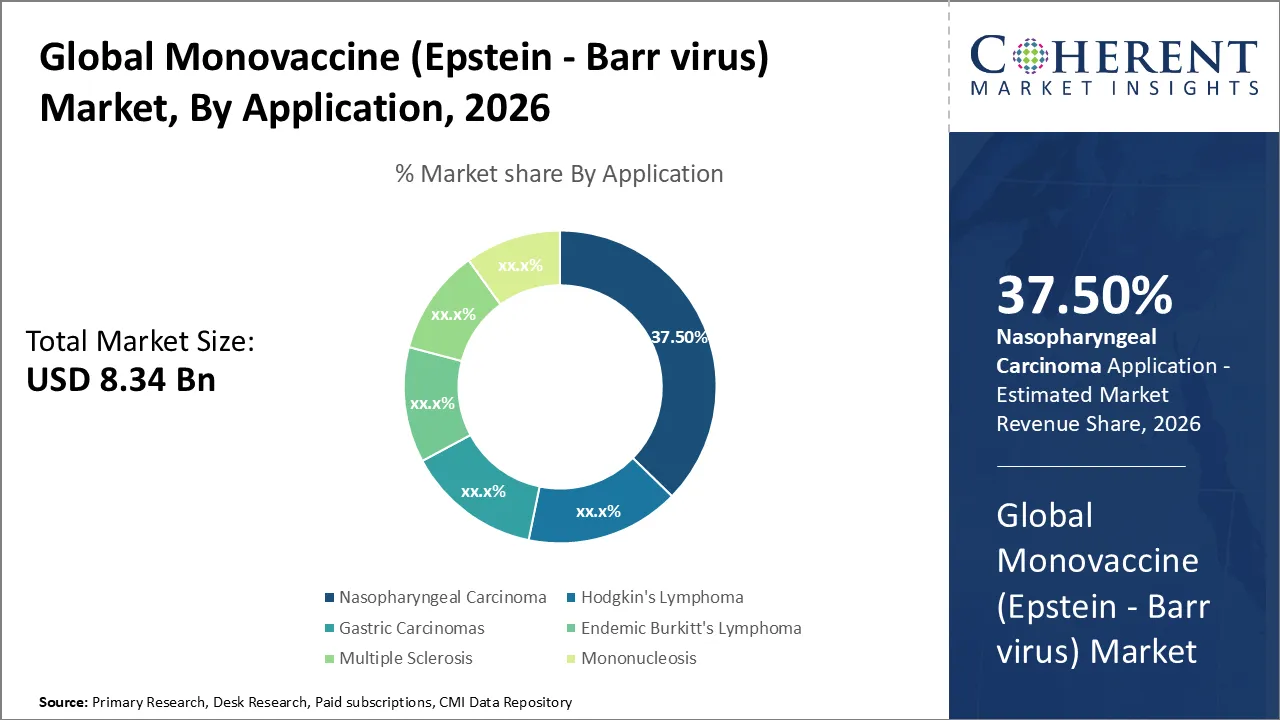
In terms of application, the nasopharyngeal carcinoma segment is expected to hold 37.5% share in 2026, due to its high prevalence in Asia-Pacific regions, strong causal link with EBV, and oncology-driven investment. Its clinical significance, regional concentration, and therapeutic priority make it the leading application segment compared to other EBV-related conditions.
For instance, in September 2025, HKU researchers unveiled a viral mechanism driving the spread of nasopharyngeal carcinoma, a cancer strongly linked to Epstein–Barr virus. The discovery highlights how EBV promotes tumor progression, reinforcing its causal role. This breakthrough supports EBV-targeted vaccine development.
To learn more about this report, Download Free Sample
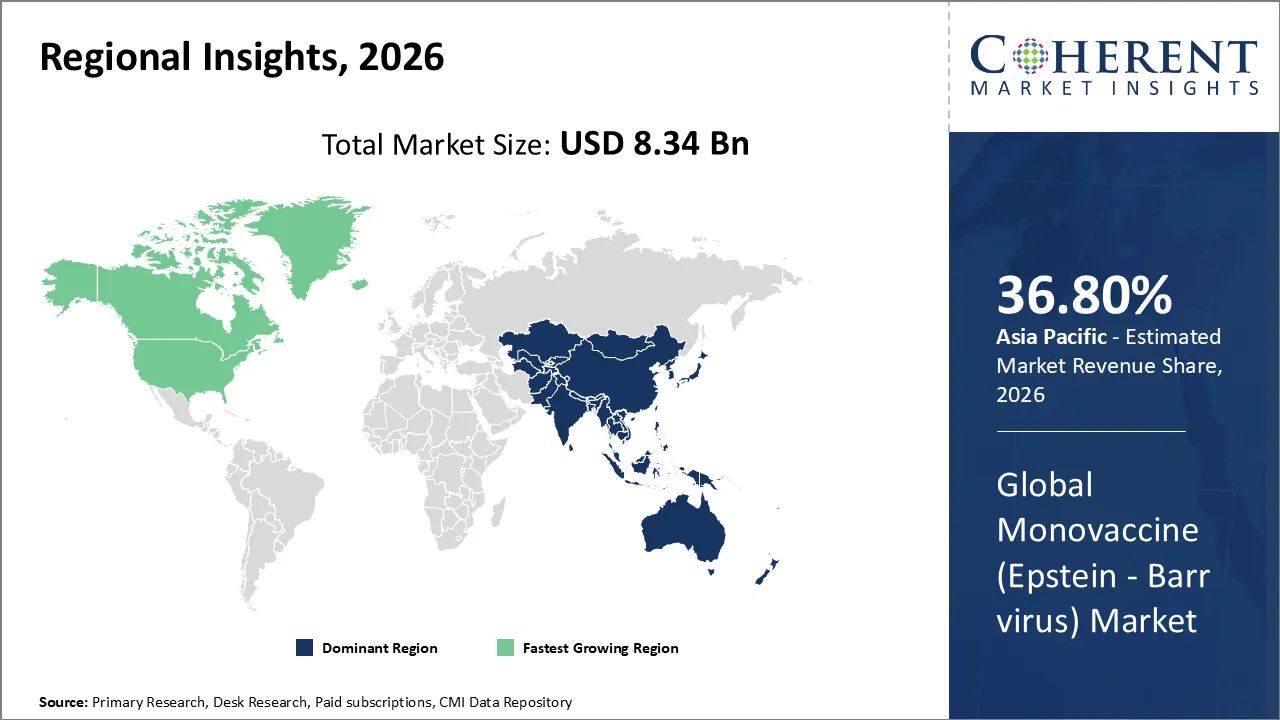
Asia Pacific is expected to dominate the monovaccine (Epstein- barr virus) market with 36.80% share in 2026, due to the high prevalence of nasopharyngeal carcinoma and other EBV-linked cancers, especially in China and Southeast Asia. Large patient populations, regional research initiatives, and oncology-focused investments make the region the dominant market for EBV-targeted vaccines.
North America is expected to exhibit the fastest growth, due to advanced R&D, robust oncology investments, and rising awareness of EBV’s role in Hodgkin’s lymphoma and multiple sclerosis. High healthcare spending, supportive regulatory frameworks, and active clinical trials make the region the fastest-growing EBV vaccine market.
For instance, in August 2025, a Phase 1 clinical trial for an Epstein–Barr virus vaccine candidate has launched in Maryland, USA. The study focuses on evaluating safety and immune response, marking a significant step in EBV vaccine development. This initiative highlights North America’s growing role in advancing EBV monovaccines for cancer and autoimmune disease prevention.
In 2026, China drives demand for the Epstein–Barr virus monovaccine due to its high prevalence of nasopharyngeal carcinoma, strongly linked to EBV infection. A large patient population, government-backed oncology initiatives, and expanding clinical research infrastructure make China the leading market, reinforcing Asia-Pacific’s dominance in EBV vaccine development and adoption.
In 2026, the United States drives demand for the Epstein–Barr virus monovaccine due to advanced clinical trials, strong biotech investment, and rising awareness of EBV’s role in Hodgkin’s lymphoma and multiple sclerosis. High healthcare spending and supportive regulatory frameworks make the U.S. the fastest-growing EBV vaccine market globally.
For instance, in January 2025, OPKO Health’s ModeX Therapeutics, in collaboration with Merck, announced that its Epstein–Barr virus vaccine candidate has entered Phase I clinical trials in the United States. The study aims to evaluate safety and immune response, marking a key milestone in EBV monovaccine development and North America’s growing vaccine research landscape.
| Report Coverage | Details | ||
|---|---|---|---|
| Base Year: | 2025 | Market Size in 2026: | USD 8.34 Bn |
| Historical Data for: | 2020 To 2024 | Forecast Period: | 2026 To 2033 |
| Forecast Period 2026 to 2033 CAGR: | 5.40% | 2033 Value Projection: | USD 12.05 Bn |
| Geographies covered: |
|
||
| Segments covered: |
|
||
| Companies covered: |
Cancer Research UK, National Institutes of Health, Chinese University of Hong Kong, Genocea Biosciences, Inc., Dana-Farber Cancer Institute, German Cancer Research Institute, and University of Minnesota |
||
| Growth Drivers: |
|
||
| Restraints & Challenges: |
|
||
Uncover macros and micros vetted on 75+ parameters: Get instant access to report
Epstein–Barr Virus (EBV) has been increasingly recognized as a major contributor to serious health conditions such as mononucleosis, Burkitt’s lymphoma, Hodgkin’s lymphoma, gastric carcinomas, multiple sclerosis, and nasopharyngeal carcinoma. This growing awareness is fueling demand for targeted vaccines that can prevent or mitigate EBV-related complications. Public health campaigns and ongoing medical research emphasize prevention, which is significantly boosting Monovaccine (Epstein–Barr virus) market demand. As more populations understand EBV’s risks, adoption of preventive vaccines is expected to accelerate globally.
Rapid progress in biotechnology and immunology is enabling the development of highly effective EBV monovaccines. Innovations in vaccine platforms, molecular biology, and immunotherapy are creating opportunities for both therapeutic and prophylactic approaches, addressing primary infections and EBV-related complications simultaneously. These advancements are strengthening the vaccine pipeline, accelerating clinical trials, and improving efficacy outcomes. As a result, the Monovaccine (Epstein–Barr virus) market share is expected to expand, with biotech firms and pharmaceutical companies gaining competitive advantages through cutting-edge vaccine technologies.
Global healthcare systems are increasingly prioritizing prevention over treatment, creating a strong foundation for EBV vaccine adoption. Epstein–Barr Virus (EBV) vaccines are positioned as proactive solutions to reduce the incidence of cancers, autoimmune disorders, and chronic illnesses linked to EBV. Hospitals, clinics, and government health agencies are exploring the integration of monovaccines into immunization programs to lower long-term healthcare costs. This preventive approach is expected to accelerate growth, with the Monovaccine (Epstein–Barr virus) Market forecast projecting steady expansion worldwide.
The monovaccine segment for Epstein–Barr Virus (EBV) is taking shape as a distinct and data-sensitive opportunity within the broader viral immunization landscape. EBV is one of the most widespread human herpesviruses, with a very high lifetime infection rate globally and a well-documented role in infectious mononucleosis as well as multiple malignancies and autoimmune conditions, prompting intensified research focus.
Current market evaluations show early-stage commercial potential for monovaccines targeting EBV, reflecting increasing pipeline activity and investment by major biopharmaceutical companies. With no licensed EBV vaccine available to date, multiple vaccine platforms, including subunit, recombinant, and mRNA technologies are under development to address both prophylactic and therapeutic needs across diverse EBV-related indications. Public–private collaborations and funding support account for significant portions of development expenditure, enhancing the pace of clinical research.
Despite early stage status, the monovaccine market reflects a transition from unmet medical need toward eventual commercialization, supported by expanding scientific insights, regulatory engagement, and diversified technology platforms.
Share
Share
About Author
Abhijeet Kale is a results-driven management consultant with five years of specialized experience in the biotech and clinical diagnostics sectors. With a strong background in scientific research and business strategy, Abhijeet helps organizations identify potential revenue pockets, and in turn helping clients with market entry strategies. He assists clients in developing robust strategies for navigating FDA and EMA requirements.
Missing comfort of reading report in your local language? Find your preferred language :
Transform your Strategy with Exclusive Trending Reports :
Frequently Asked Questions
Joining thousands of companies around the world committed to making the Excellent Business Solutions.
View All Our Clients
 Schedule a meeting with report Author