Medical Oxygen Systems Market Analysis & Forecast: 2026-2033
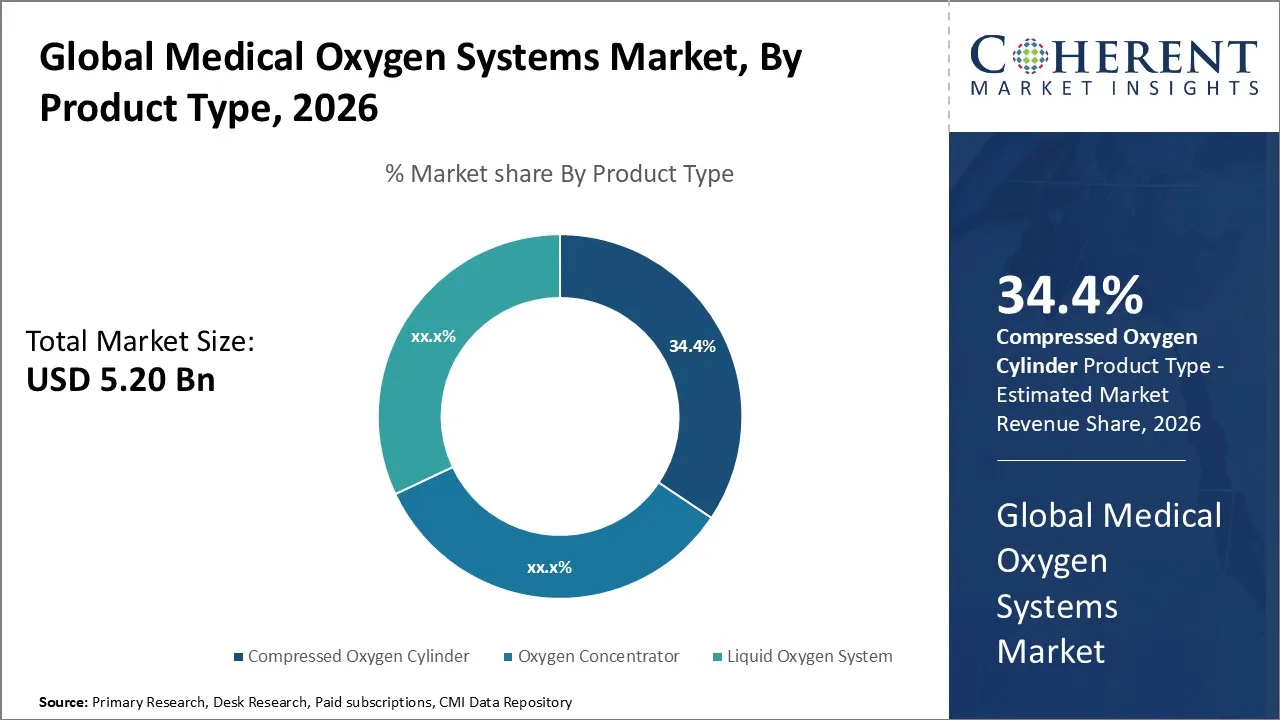
The Medical Oxygen Systems Market is estimated to be valued at USD 5.20 Bn in 2026 and is expected to reach USD 8.40 Bn by 2033, exhibiting a compound annual growth rate (CAGR) of 7.2% from 2026 to 2033.
The medical oxygen systems market supports healthcare delivery by providing a reliable oxygen supply to hospitals, clinics, emergency services, and homecare settings. Rising respiratory diseases, an aging population, increasing hospital admissions, and growing demand for home-based oxygen therapy actively drive market growth. Technological advancements, including portable oxygen concentrators and on-site oxygen generation systems, accelerate adoption.
|
Current Events |
Description and its impact |
|
Global Oxygen Demand Surge Due to Respiratory Disease Outbreaks |
|
|
Geopolitical Tensions Affecting Raw Material and Equipment Supply Chains |
|
|
Economic Factors and Healthcare Infrastructure Investments |
|
Uncover macros and micros vetted on 75+ parameters: Get instant access to report
Compressed Oxygen Cylinder hold the largest market share of 34.4% in 2026. Compressed oxygen cylinders continue to play a vital role in the medical oxygen systems market by offering reliable, portable, and instantly available oxygen supply. Healthcare providers actively use these cylinders in emergency care units, ambulances, operating rooms, and facilities without centralized oxygen pipelines. Expanding healthcare infrastructure in developing regions, the ongoing need for backup oxygen sources, and simple storage and transportation drive adoption. Moreover, disaster management teams and temporary care facilities rely on cylinders, maintaining steady demand across diverse healthcare settings.
Portable Oxygen System expected to hold largest market share of 42.2% in 2026. Portable oxygen systems actively drive the medical oxygen systems market by allowing patients to maintain mobility, convenience, and uninterrupted oxygen therapy. Growing preference for home-based treatment, greater awareness of quality-of-life improvements, and the need for oxygen support during travel and daily routines fuel demand. Manufacturers enhance adoption through lightweight designs, longer battery life, and easy-to-use features. Healthcare providers also encourage portable systems to limit hospital visits and promote patient-centered care across various treatment settings. For instance, in May 2025, PATH and Kenya’s Ministry of Health launched Kenya’s first oxygen roadmap to advance equitable access to high-quality, sustainable, and affordable medical oxygen nationwide.
Hospitals acquired the prominent market share of 34.6% in 2026. Hospitals actively drive the medical oxygen systems market by requiring a continuous, high-volume oxygen supply for critical care units, operating rooms, and emergency departments. Increasing patient admissions, the growing prevalence of respiratory and chronic diseases, and expanding healthcare infrastructure fuel this demand. Hospitals implement centralized piped systems, on-site oxygen generation, and backup solutions to maintain uninterrupted oxygen delivery. Furthermore, regulatory standards and post-pandemic preparedness push hospitals to rely increasingly on robust and reliable oxygen systems. For instance, in June 2025, Inogen launched the Voxi 5 stationary oxygen concentrator, developed with Yuwell Medical, to complement its portable oxygen lineup and expand market reach through its existing sales channels.
To learn more about this report, Download Free Sample
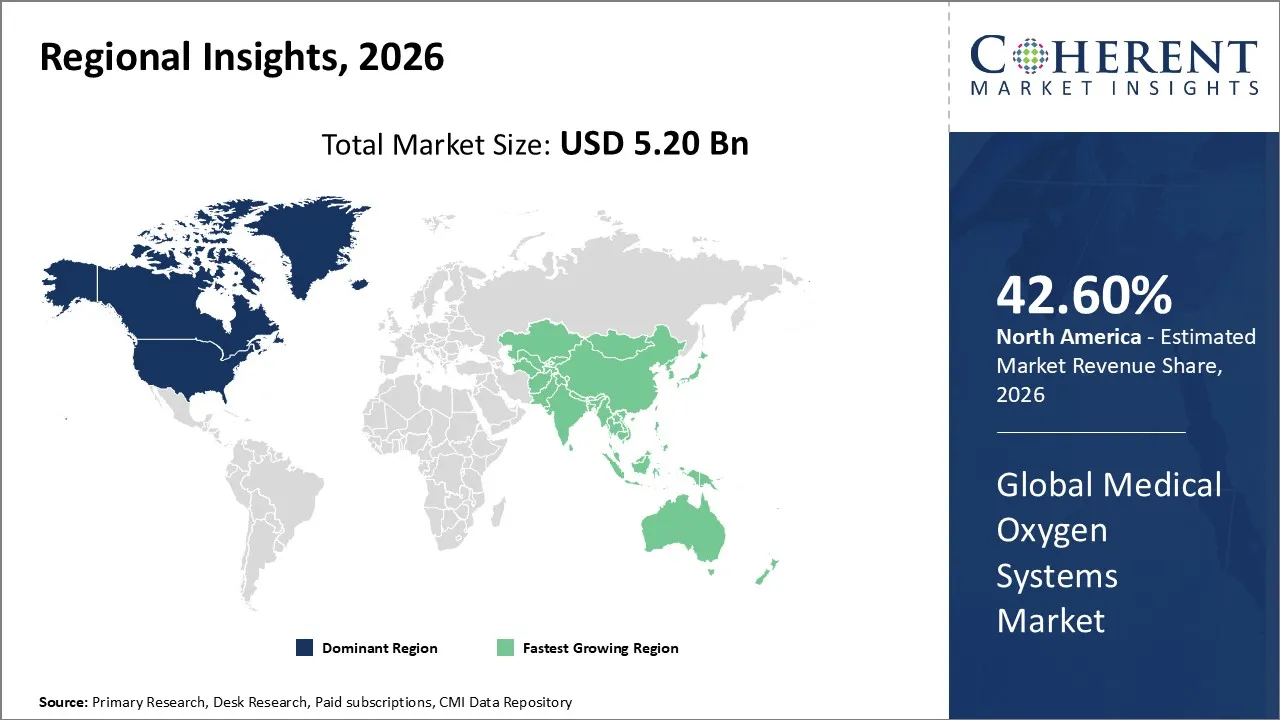
North America dominates the overall market with an estimated share of 42.60% in 2026. North America’s medical oxygen systems market grows steadily as advanced healthcare infrastructure and increasing home oxygen therapy adoption drive demand for both fixed and portable devices. Hospitals and home‑care providers implement smart oxygen delivery solutions and on-site generation to ensure reliable supply and better patient outcomes. Integration with digital monitoring and telehealth improves system efficiency, while the region’s emphasis on quality standards and patient-focused care actively expands the use of oxygen therapy across hospitals, clinics, and community settings. For instance, in January 2026, Profusa, Inc. launched the healthcare research version of its Lumee tissue oxygen monitoring system for the contract research organization (CRO) market.
Asia Pacific’s medical oxygen systems market grows steadily as healthcare providers expand infrastructure and shift from basic cylinder supplies to on-site generation and advanced delivery solutions. A large and aging population, rising respiratory illness rates, and increasing focus on home-based care actively drive the adoption of both fixed and portable oxygen systems. Governments and private partners invest in improving oxygen access and implementing remote monitoring technologies, further accelerating market growth and enhancing the availability of effective oxygen therapy across the region.
The United States medical oxygen systems market grows as healthcare providers expand hospital infrastructure and home oxygen services to address increasing clinical needs. Rising chronic respiratory conditions and strong healthcare networks actively drive the use of advanced concentrators, portable devices, and on-site oxygen generation solutions. Providers implement smart and remote-enabled oxygen delivery systems to ensure continuous care, while reimbursement programs and a focus on patient independence further encourage the adoption of flexible oxygen therapy options in both community and home settings. For instance, in January 2025, Caire announced the availability of its new IntenOxy 5 stationary oxygen concentrator for sale in the United States and Puerto Rico.
India’s medical oxygen systems market grows as healthcare providers actively strengthen hospital oxygen infrastructure and adopt reliable on-site generation systems. Rising respiratory illnesses and patient preference for home treatment drive increased demand for home-based solutions, including lightweight concentrators and portable tanks. Urban centers spearhead adoption due to better healthcare access, while tier‑2 and tier‑3 cities gradually implement these systems. Government initiatives and enhanced distribution networks further expand the reach and availability of oxygen therapy across hospitals and home care settings nationwide. For instance, in September 2024, Oxymed launched the P2 Portable Oxygen Concentrator in the Indian market, delivering 90–95% oxygen purity across all flow rates in a lightweight 1.98 kg design.
The medical oxygen systems market is increasingly moving from traditional cylinder‑based supply to portable and integrated solutions. Hospitals still rely on centralized systems, but portable oxygen concentrators are gaining ground in home care and ambulatory settings because of convenience and technological advancements. This shift reflects broader healthcare delivery changes, catering to mobility, patient comfort, and decentralized care environments, with modular skid‑mounted systems becoming more common in smaller facilities.
Innovation in medical oxygen systems emphasizes smart technology integration and efficiency. Newer devices increasingly feature IoT connectivity for remote monitoring, predictive maintenance, and data analytics, enabling better patient care and provider oversight. Manufacturers are also focusing on energy‑efficient systems that reduce power consumption and operational costs. These enhancements align with sustainability goals in healthcare while meeting performance expectations across hospital and home care segments.
As healthcare shifts to home‑based settings, there is a strong opening for medical oxygen systems designed for personal use. Portable, lightweight concentrators and user‑friendly devices support patient mobility and long‑term therapy outside hospitals, appealing to individuals with chronic respiratory conditions and active lifestyles. This trend encourages manufacturers to innovate products that suit home environments and ambulatory care, broadening patient access and fostering new service offerings.
| Report Coverage | Details | ||
|---|---|---|---|
| Base Year: | 2025 | Market Size in 2026: | USD 5.20 Bn |
| Historical Data for: | 2020 To 2024 | Forecast Period: | 2026 To 2033 |
| Forecast Period 2026 to 2033 CAGR: | 7.2% | 2033 Value Projection: | USD 8.40 Bn |
| Geographies covered: |
|
||
| Segments covered: |
|
||
| Companies covered: |
Koninklijke Philips N.V, Inogen, Inc., BOC Healthcare, Precision Medical, Inc., Luxfer Group, Cryofab, Inc., Responsive Respiratory, Inc., Atlas Copco, GCE group, and High Vacuum Maintenance (HVM) S.R.L. |
||
| Growth Drivers: |
|
||
| Restraints & Challenges: |
|
||
Uncover macros and micros vetted on 75+ parameters: Get instant access to report
Share
Share
About Author
Manisha Vibhute is a consultant with over 5 years of experience in market research and consulting. With a strong understanding of market dynamics, Manisha assists clients in developing effective market access strategies. She helps medical device companies navigate pricing, reimbursement, and regulatory pathways to ensure successful product launches.
Missing comfort of reading report in your local language? Find your preferred language :
Transform your Strategy with Exclusive Trending Reports :
Frequently Asked Questions
Joining thousands of companies around the world committed to making the Excellent Business Solutions.
View All Our Clients
 Schedule a meeting with report Author