all report title image

Lifescience Reagent Market Analysis & Forecast: 2026-2033
Lifescience Reagent Market, By Product Type (Biochemical Reagents, Cell Culture Reagents, Genomic Reagents, Chromatography Reagents, Flow Cytometry Reagents, PCR Reagents, Electrophoresis Reagents, Signal Transduction Reagents, and Others ), By End User (Diagnostics Laboratory, Contract Research Manufacturers, Academic and Research Institute, and Others ), By Geography (North America, Latin America, Europe, Asia Pacific, Middle East, and Africa)

  • Published In : 29 Jan, 2026
  • Code : CMI2681
  • Page number :153
  • Formats :
      Excel and PDF :
  • Industry : Biotechnology
  • Historical Range : 2020 - 2024
  • Forecast Period : 2026 - 2033

Lifescience Reagent Market Size and Trends: 2026-2033

Lifescience reagent market is estimated to be valued at USD 63,610 Mn in 2026 and is expected to reach USD 104,170 Mn by 2033, exhibiting a compound annual growth rate (CAGR) of 7.3% from 2026 to 2033.

Key Takeaways

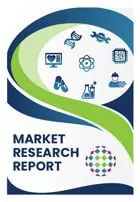
  • Based on Product Type, the Cell Culture Reagents segment is expected to lead the life science reagents market with around 29% share in 2026, due to their widespread use in biopharmaceutical manufacturing and cell-based research.
  • Based on End User, the Diagnostics Laboratory (including Hospitals & Diagnostic Labs) segment is expected to lead the market with approximately 54% share in 2026.
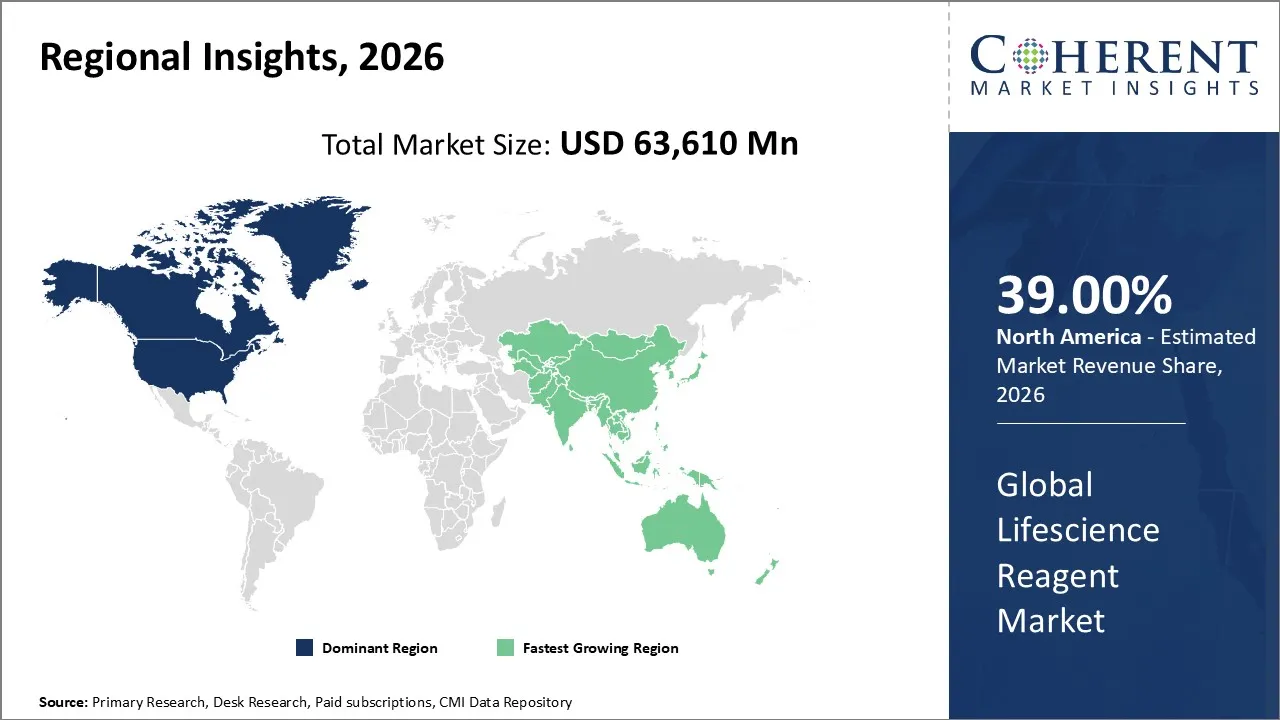
  • Based on Region, North America is set to lead the Lifescience reagent market with 39% share in 2026. While, Asia Pacific is anticipated to be the fastest growing region.

Market Overview

Increased investments in biotechnology, pharmaceutical R&D, and improved diagnostics are driving growth in the global market for life science reagents. The vital roles that life science reagents play in drug development, genomics, proteomics, and in vitro diagnostics are driving up demand for goods including PCR kits, cell culture medium, chromatographic media, and specialty biochemical reagents. The introduction of cutting-edge technologies like digital PCR, next generation sequencing (NGS), and high throughput screening has raised the demand for high-end, specialized reagents.

Current Events and Its Impacts on the Life Science Reagent Market

Current Events

and its impact

U.S.-China Technology Trade Restrictions and Export Controls

  • Description: Export restrictions on advanced laboratory equipment
  • Impact: Limited availability of sophisticated analytical tools hurting the capacity to produce and manage the quality of reagents
  • Description: Biotechnology Sector Sanctions
  • Impact: Reduced cross-border reagent purchase due to a lack of cooperation between Western and Chinese research organizations

Global Inflation and Central Bank Monetary Policy Shifts

  • Description: Interest rate increases have an impact on R&D funding.
  • Impact: Institutional and venture capital investments in biotechnology firms are declining, which lowers the need for specialized reagents.
  • Description: Rate of Currency Exchange
  • Impact: The impact of volatility on laboratory budgets and supplier relationships is caused by fluctuating costs associated with overseas reagent procurement.

Uncover macros and micros vetted on 75+ parameters: Get instant access to report

How is Product Innovation driving the growth in life science reagents market?

  • Automation-ready Reagents: In high throughput diagnostics and research, the development of reagents that are compatible with robotic workflows and automated liquid handling systems is increasing laboratory productivity and reducing human error.
  • Artificial intelligence integrated and smart reagent systems: The predictive reagent performance monitoring and optimal use are made possible by integrating digital platforms and AI, which increases precision research and reduces waste.
  • Eco-friendly and sustainable reagents: Manufacturers are introducing reagent formulations that maintain high performance while meeting international environmental sustainability criteria. These formulations are based on biodegradable ingredients and green chemistry.

Segmental Insights

Lifescience Reagent Market By Product Type

To learn more about this report, Download Free Sample

Life Science Reagents Market Insights, By Product Type – Cell Culture Reagents dominate due to widespread research applications

Based on product type, the cell culture reagents segment is estimated to contribute the highest market share of around 29% in 2026, owing to its extensive use in biopharmaceutical manufacturing, drug discovery, and cell-based research applications. Cell culture reagents are vital for both basic and practical life sciences research because they give cells in vitro the necessary nutrition, growth factors, and environmental support.

For instance, In October 2025, PromoCell unveiled Custom GMP Cell Culture Media Services, designed to support clinical applications and manufacturing for cell‑based therapies and regenerative medicine.

Life Science Reagents Market Insights, By End User – Diagnostics Laboratories lead with increasing clinical testing demand

Based on end user, the Diagnostics Laboratory segment (including Hospitals & Diagnostic Labs) is estimated to contribute the highest market share of approximately 54% in 2026, due to the growing prevalence of chronic and infectious diseases and the rising demand for routine and specialized diagnostic testing. For immunoassays, PCR-based diagnostics, and high-throughput screening, all crucial for precise and prompt patient care, clinical laboratories mostly rely on life science reagents.

For instance, in October 2025, the U.S. Food and Drug Administration (FDA) approved a new blood test co‑developed by Roche Diagnostics and Eli Lilly for supporting early Alzheimer’s assessment.
Regional Insights

Lifescience Reagent Market By Regional Insights

To learn more about this report, Download Free Sample

North America Life Science Reagents Market Analysis & Trends

North America is expected to dominate the life science reagents market in 2026, with an estimated market share of 39%. Leading pharmaceutical and biotechnology companies, advanced clinical diagnostics facilities, and large R&D expenditures are a few of the factors driving the region's market expansion.

For instance, in January 2026, Thermo Fisher Scientific Inc. and NVIDIA established a strategic agreement with the goal of using artificial intelligence (AI) to accelerate life science research in North America and beyond, automate laboratory processes, and improve scientific instrumentation.

Asia Pacific Life Science Reagents Market Analysis & Trends

The Asia Pacific region is anticipated to be the fastest-growing market due to rising investments in biotechnology and healthcare infrastructure, growing prevalence of chronic and infectious diseases, and increasing government support for life science research in countries like China, India, and Japan. The region's expanding network of diagnostic labs and biopharmaceutical companies is driving a strong demand for reagents and laboratory supplies.

For instance, In December 2025, Thermo Fisher Scientific announced the expansion of its bioprocessing capabilities throughout the Asia Pacific region, including the opening of a new Bioprocess Design Center in Hyderabad, India, and improvements to its current centers in Incheon, South Korea, and Singapore.

Life Science Reagents Market Outlook for Key Countries

Is the U.S. life science reagents market booming from biotech innovation and research investments?

The U.S. life science reagents market is booming, fueled by strong R&D investment, the presence of global biopharma companies, and increasing clinical diagnostics activity. Demand is being driven by the widespread use of PCR, cell culture, and genomic reagents in both research and diagnostic labs.

For instance, in January 2026, Thermo Fisher Scientific announced a strategic collaboration with NVIDIA to leverage AI for automating laboratory workflows, enhancing reagent-based processes, and accelerating research efficiency across North American laboratories.

Is Canada’s expanding diagnostics sector boosting reagents demand?

The need for life science reagents is being greatly increased by Canada's expanding biopharma and diagnostics industries. The usage of reagents for PCR, cell culture, and immunoassay applications is being driven by rising investments in clinical laboratories, molecular diagnostics, and university research facilities.

For instance, in April 2025, BD Biosciences expanded its reagent supply network in Toronto, providing local laboratories with faster access to PCR and flow cytometry reagents. This initiative strengthens lab capabilities, supports research scalability, and reflects the rising demand for high-quality reagents in Canadian laboratories.

Market Report Scope

Life science Reagent Market Report Coverage

Report Coverage Details
Base Year: 2025 Market Size in 2026: USD 63,610 Mn
Historical Data for: 2020 To 2024 Forecast Period: 2026 To 2033
Forecast Period 2026 to 2033 CAGR: 7.3% 2033 Value Projection: USD 104,170 Mn
Geographies covered:
  • North America: U.S. and Canada
  • Latin America: Brazil, Argentina, Mexico, and Rest of Latin America
  • Europe: Germany, U.K., Spain, France, Italy, Russia, and Rest of Europe
  • Asia Pacific: China, India, Japan, Australia, South Korea, ASEAN, and Rest of Asia Pacific
  • Middle East: GCC Countries, Israel, and Rest of Middle East
  • Africa: South Africa, North Africa, and Central Africa
Segments covered:
  • By Product Type: Biochemical Reagents, Cell Culture Reagents, Genomic Reagents, Chromatography Reagents, Flow Cytometry Reagents, PCR Reagents, Electrophoresis Reagents, Signal Transduction Reagents, and Others
  • By End User: Diagnostics Laboratory, Contract Research Manufacturers, Academic and Research Institute, and Others
Companies covered:

F. Hoffmann-La Roche Ltd., Danaher Corporation, Abbott Laboratories, Merck KGaA, Bio-Rad Laboratories, GE Healthcare, Siemens Healthineers, Becton, Dickinson and Company, Agilent Technologies Inc., Perkin Elmer Inc., Waters Corporation, Ortho Clinical Diagnostics, bioMérieux SA, and Sysmex Corporation.

Growth Drivers:
  • Increasing R&D activities and investment in biopharmaceutical research
  • Rising adoption of advanced diagnostics and laboratory reagents
Restraints & Challenges:
  • Expansion of innovative high-performance reagents and ready-to-use kits
  • Integration of AI-driven and automated laboratory solutions

Uncover macros and micros vetted on 75+ parameters: Get instant access to report

Life Science Reagents Market Driver

Increasing R&D activities and adoption of advanced diagnostics

The market for life science reagents is growing quickly due to increased expenditure in biopharmaceutical research, clinical diagnostics, and academic research. Labs and research institutions are increasingly using advanced reagents, such as cell culture media, PCR kits, genomic reagents, and flow cytometry reagents, to support drug discovery, therapeutic development, and diagnostic applications. The increasing prevalence of chronic illnesses, cancer research, and individualized treatment all contribute to the global demand for reagents.

Life Science Reagents Market Opportunity

Expansion of innovative reagents and automated solutions

The introduction of new high-performance reagents, ready-to-use kits, and automated laboratory solutions presents the industry with substantial growth prospects. In order to serve both research and clinical labs, businesses can create reagents that are optimized for high-throughput applications, regulatory compliance, and reproducibility. Furthermore, the combination of automation workflows and AI-driven lab platforms may increase demand for reagent systems that provide accurate, scalable, and efficient experiments, creating opportunities for innovation in the biopharma manufacturing and diagnostics industries.

Analyst Opinion (Expert Opinion)

  • The market for life science reagents is expanding quickly due to the increasing complexity of biopharmaceutical development, research, and diagnostics. The need for pre-formulated, ready-to-use solutions is growing as laboratories place a greater emphasis on reagents that facilitate automation, repeatability, and high-throughput workflows. The emphasis on efficiency, uniformity, and regulatory compliance in the design and execution of scientific studies is reflected in this trend.
  • PCR kits, genomic reagents, and cell culture reagents are becoming essential parts of contemporary laboratory operations. Reagents are currently chosen by researchers not only for their functionality but also for their dependability, simplicity of use, and compatibility with cutting-edge lab systems.
  • Geographically, North America remains a major hub due to its strong research infrastructure, adoption of advanced technologies, and concentration of key market players. Meanwhile, the Asia Pacific region is witnessing rapid growth as life sciences research, diagnostics, and biopharmaceutical manufacturing expand, creating rising demand for both research-grade and production-grade reagents.

Top Strategies Followed by Life Science Reagents Market Players

  • Established players focus heavily on research and development to drive innovation in high-performance reagents. Leading companies such as Sartorius, Merck KGaA, and Thermo Fisher Scientific make large investments in R&D. To improve dependability, consistency, shelf life, and workflow compatibility, they thoroughly test new formulations, pre-mixed media, and automated reagent systems.
  •  Mid-level competitors fight on price without sacrificing quality. These businesses concentrate on creating scalable reagent kits that adhere to regulations, use effective manufacturing techniques, and procure raw materials from overseas vendors. This method allows for competitive pricing for university and smaller laboratory clients at low cost.
  • Custom research reagents or specialized assay kits are examples of small-scale businesses that concentrate on certain industries. By concentrating on developing markets, they raise awareness and customer loyalty while having fewer resources. Some companies use digital lab management platforms, automation-ready kits, or modular reagent solutions to differentiate themselves from the competition. Local partnerships with academic institutions or contract research firms expand credibility and market reach.

Emerging Startups in the Life Science Reagents Market

  • Several startups are pioneering innovative technologies. companies such as Synthego and Benchling are fusing the production of reagents with digital workflow platforms and synthetic biology. If effective, these concepts have a chance to completely transform laboratory operations around the globe.
  • Startups are providing environmentally friendly solutions, and sustainability is a key issue. Several companies are developing reduced-waste consumables, biodegradable reagents, and reusable reagent kits. These initiatives help labs reduce their environmental effect as institutional sustainability standards rise.
  • Startups are using specialized products to close gaps in the market. For instance, some offer modular kits for multi-step testing, while others offer reagents made especially for uncommon or challenging-to-culture cell lines. These businesses are able to swiftly grow and satisfy particular scientific demands by forming strategic alliances with academic institutions, research networks, and biotech incubators.

Lifescience Reagent Industry News

  • In August 2025, F. Hoffmann‑La Roche Ltd. announced that its cobas® Respiratory 4‑flex assay, powered by innovative TAGS technology for PCR testing of multiple respiratory viruses (including SARS‑CoV‑2, influenza A/B, and RSV), received U.S. FDA 510(k) clearance.
  • In January 2025, Danaher Corporation completed its acquisition of QIAGEN, a molecular diagnostics and reagent specialist, to bolster its life sciences and diagnostic reagent portfolio.
  • In December 2024, Sysmex Corporation launched the HISCL Line Washing Solution Concentrated reagent packaged in containers made from recycled plastic reagent bottles, highlighting sustainability efforts in reagent formulation and packaging for clinical laboratories in Japan and other markets

Market Segmentation

  • Product Type Insights (Revenue, USD Mn, 2026 - 2033)
    • Biochemical Reagents
    • Cell Culture Reagents
    •  Genomic Reagents
    • Chromatography Reagents
    •  Flow Cytometry Reagents
    •  PCR Reagents
    •  Electrophoresis Reagents
    •  Signal Transduction Reagents
    • Others
  • End User Insights (Revenue, USD Mn, 2026 - 2033)
    • Diagnostics Laboratory
    •  Contract Research Manufacturers
    • Academic and Research Institute
    • Others
  • Regional Insights (Revenue, USD Mn, 2026 - 2033)
    • North America
      • U.S.
      • Canada
    • Latin America
      • Brazil
      • Argentina
      • Mexico
      • Rest of Latin America
    • Europe
      • Germany
      • U.K.
      • Spain
      • France
      • Italy
      • Russia
      • Rest of Europe
    • Asia Pacific
      • China
      • India
      • Japan
      • Australia
      • South Korea
      • ASEAN
      • Rest of Asia Pacific
    • Middle East
      • GCC Countries
      • Israel
      • Rest of Middle East
    • Africa
      • South Africa
      • North Africa
      • Central Africa
  • Key Players Insights
    • Hoffmann-La Roche Ltd.
    • Danaher Corporation
    • Abbott Laboratories
    • Merck KGaA
    • Bio-Rad Laboratories
    • GE Healthcare
    • Siemens Healthineers
    • Becton Dickinson and Company
    • Agilent Technologies Inc.
    • Perkin Elmer Inc.
    • Waters Corporation
    • Ortho Clinical Diagnostics
    • BioMerieux SA
    • Sysmex Corporation

Sources

Primary Research Interviews

  • Life Science Reagent Manufacturers & R&D Heads
  • Laboratory Product Managers & Technicians
  • Clinical & Diagnostic Lab Managers
  • Academic & Research Institute Scientists
  • Biopharmaceutical Company R&D Teams
  • Procurement Heads in Hospitals & Diagnostic Labs
  • Contract Research Organizations (CROs)
  • Others

Databases

  • PubMed
  • ClinicalTrials.gov
  • FDA & EMA Databases
  • NCBI (National Center for Biotechnology Information)
  • Web of Science
  • Others

Magazines

  • Genetic Engineering & Biotechnology News (GEN)
  • The Scientist
  • BioTechniques
  • Laboratory News
  • BioPharm International
  • Others

Journals

  • Nature Biotechnology
  • Journal of Molecular Diagnostics
  • Analytical Chemistry
  • Trends in Biotechnology
  • Journal of Clinical Laboratory Analysis
  • Others

Newspapers

  • The New York Times (Health & Science Section)
  • The Guardian (Science Section)
  • Reuters Health & Pharma
  • Bloomberg News (Life Sciences Section)
  • Financial Times (Healthcare & Life Sciences)
  • Others

Associations

  • American Society for Biochemistry and Molecular Biology (ASBMB)
  • International Society for Analytical Cytology (ISAC)
  • Clinical & Laboratory Standards Institute (CLSI)
  • Association for Laboratory Automation (ALA)
  • American Society for Microbiology (ASM)
  • Others

Public Domain Sources

  • FDA & EMA Regulatory Announcements
  • WHO Reports & Publications
  • U.S. National Institutes of Health (NIH) Reports
  • CDC Publications & Data
  • Company Press Releases & Official Websites
  • Others

Proprietary Elements

  • CMI Data Analytics Tool
  • Proprietary CMI Existing Repository of Information for the Last 8 Years

Share

Share

About Author

Nikhilesh Ravindra Patel is a Senior Consultant with over 8 years of consulting experience. He excels in market estimations, market insights, and identifying trends and opportunities. His deep understanding of the market dynamics and ability to pinpoint growth areas make him an invaluable asset in guiding clients toward informed business decisions. He plays a instrumental role in providing market intelligence, business intelligence, and competitive intelligence services through the reports.

Missing comfort of reading report in your local language? Find your preferred language :

Frequently Asked Questions

The lifescience reagents market is estimated to be valued at USD 63,610 Mn in 2026, and is expected to reach USD 104,170 Mn by 2033.

The CAGR of the lifescience reagents market is projected to be 7.3% from 2026 to 2033.

Growing demand for cell-based research, genomic testing, and high-throughput laboratory workflows, along with innovation in reagent formulations and automation-ready solutions, are major growth drivers.

High costs of specialized reagents, regulatory compliance challenges, and competition from generic or in-house prepared reagents are the main factors limiting growth.

The Cell Culture Reagents segment is expected to dominate the market due to their widespread use in biopharmaceutical manufacturing and research.

Diagnostics Laboratories, including hospitals and diagnostic labs, are expected to lead the market due to growing testing requirements and lab automation adoption.

North America is expected to dominate, supported by strong research infrastructure, advanced laboratory facilities, and concentration of key industry players.

Select a License Type

EXISTING CLIENTELE

Joining thousands of companies around the world committed to making the Excellent Business Solutions.

View All Our Clients
trusted clients logo
© 2026 Coherent Market Insights Pvt Ltd. All Rights Reserved.