Insomnia Treatment Market Analysis & Forecast: 2026-2033

The Insomnia Treatment Market is estimated to be valued at USD 4.4 Bn in 2026 and is expected to reach USD 5.93 Bn by 2033, growing at a compound annual growth rate (CAGR) of 4.3% from 2026 to 2033.
The insomnia treatment market is advancing significantly due to the rising demand for non-habit-forming pharmaceutical therapies and integrated digital health solutions. The growing consumer awareness regarding the long-term cognitive impacts of sleep deprivation and a strategic shift away from traditional benzodiazepines are expected to propel market growth over the forecast period.
The modern treatment options, particularly Dual Orexin Receptor Antagonists (DORAs) and melatonin-based agonists, have become vital components in neurological and behavioral health. These therapies are designed to improve sleep architecture without the dependency risks or next-day impairment associated with older sedatives.
The industry is undergoing a structural transformation as advances in digital therapeutics, broader telehealth accessibility, and the incorporation of AI-enabled sleep monitoring tools reshape care delivery models. This progress make managing insomnia more accurate and effective by using personalized treatments like Digital Cognitive Behavioral Therapy (dCBT-I) and tracking health data in real-time. As a result, the healthcare providers can replace or supplement traditional medications with high-performance, data-backed alternatives. These innovations assist manufacturers and clinicians in addressing the growing stringent global regulatory standards for patient safety, treatment transparency, and long-term efficacy.
|
Current Event |
Description and the Impact |
|
Macro-Level Event: Technological Innovations in Sleep Treatment |
|
|
Macro-Level Event: Rising Global Mental Health Awareness |
|
|
Nano-Level Event: Corporate Mergers and Acquisitions in Pharma and Digital Health |
|
Uncover macros and micros vetted on 75+ parameters: Get instant access to report
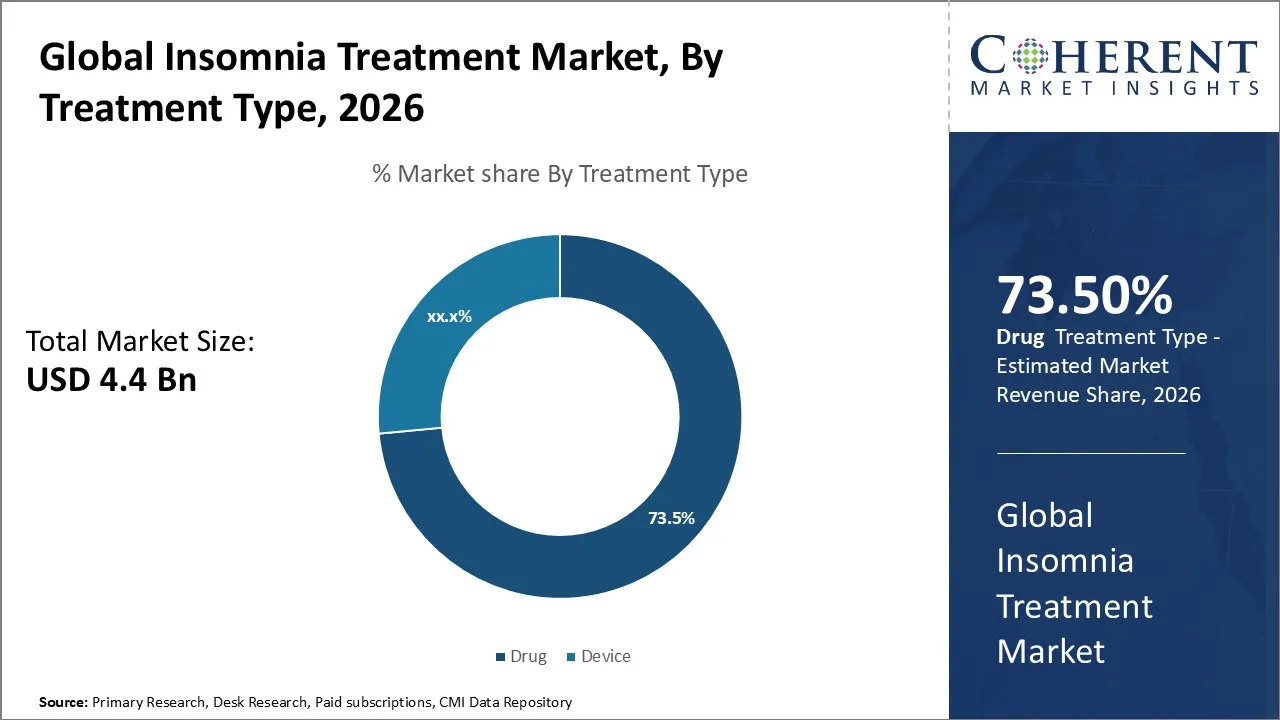
In terms of treatment type, the drug segment contributes the highest share of 73.50% in 2026 of the market. The growth is owing to the immediate relief offered by pharmacological interventions. The medications can be obtained from primary care physicians. However, there is often a shortage of specialized behavioral therapists. This scarcity makes medications a more practical first-line option for the average patient. A wide variety of therapeutic options designed for specific sleep disorders also contribute to the segment's growth. The traditional non-benzodiazepines, known as Z-drugs, continue to hold a substantial share of the market.
The market is evolving toward more advanced formulations. The introduction of Orexin Receptor Antagonists (DORAs) has transformed the landscape by targeting the brain's wake signals instead of merely sedating the central nervous system. Furthermore, the substantial increase in over-the-counter (OTC) sleep aids, such as antihistamines and melatonin-based products, ensures that the drug segment appeals to a diverse range of consumers.
For instance, in June 2025, Simcere Pharmaceutical announced that QUVIVIQ® has received approval from the National Medical Products Administration. The medication is developed in partnership with Idorsia in Switzerland. This medication is intended for adult patients with insomnia, specifically those who have difficulty falling asleep and maintaining sleep.
In terms of distribution channel, the retail pharmacies segment contributes the highest share of 46.10% in 2026 of the market. These pharmacies serve as the primary point of contact for patients seeking relief from sleep disturbances. The growth of this segment is owing to the extensive accessibility of brick-and-mortar pharmacies, which function as an essential link between healthcare providers and patients. Insomnia is often treated at the primary care level, which leads patients to fill their prescriptions at nearby drugstores or large retail chains for convenience.
Retail pharmacies are at the forefront of the Over-the-Counter (OTC) market. The retail pharmacists play a dual purpose. They serve as accessible healthcare consultants, providing timely advice on non-prescription aids. Their storefronts showcase a wide variety of both branded and generic products that are readily available to the public. This combination of front-of-store revenue and high-volume prescription sales establishes a strong financial foundation for the retail segment.
To learn more about this report, Download Free Sample
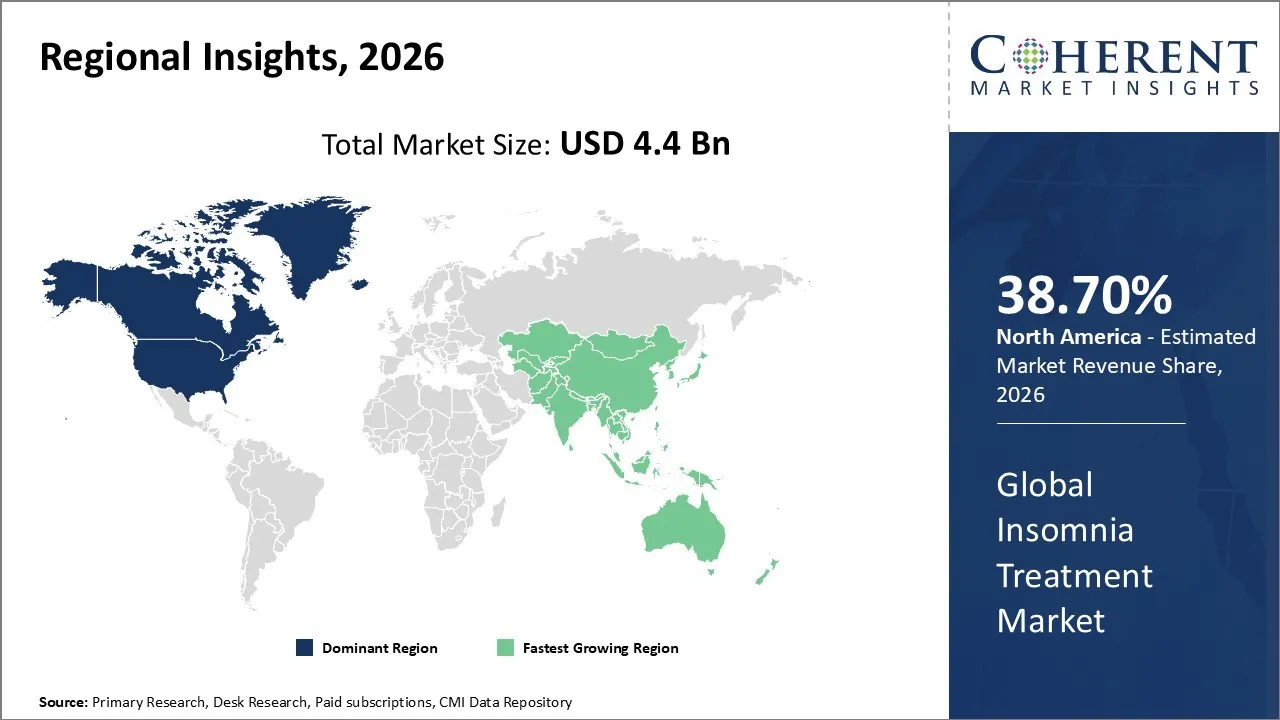
North America has remained the dominant region with 38.70% in 2026 of the global insomnia treatment market over the past decade. The growth is owing to the US playing a pivotal role due to its high prevalence of chronic sleep disorders and a robust healthcare infrastructure. The market is undergoing a technical shift. The traditional benzodiazepines are now facing competition from Dual Orexin Receptor Antagonists (DORAs). These next-generation pharmacological treatments are favored for their enhanced safety profiles as well as their effectiveness in improving sleep architecture.
The technological integration has emerged as a key driver of growth in the region. The growth of Digital Therapeutics (DTx), including FDA-cleared cognitive behavioral therapy (CBT-I) apps like SleepioRx, is helping to address the needs of patients. This transition toward technology-enabled care is also bolstered by the increasing availability of wearable sleep-tracking devices and smartphones, which facilitate personalized dosing and enable remote patient monitoring.
For instance, in March 2024,
The Asia Pacific region is experiencing the fastest growth in the market for insomnia treatment. The large, under-penetrated patient populations in China and India, along with a mature yet expanding market in Japan, are responsible for this growth. In Japan, intense work cultures and the increasing aging population have made sleep disorders a substantial public health concern. The urbanization and the associated 24-hour lifestyle have notably increased the prevalence of insomnia among the growing middle class in the region. As a result, there has been a rise in awareness and an increase in both clinical diagnoses and self-treatment practices.
The treatment paradigm in Asia Pacific is currently undergoing a significant transition from traditional sedatives to more innovative pharmacological and digital solutions. The benzodiazepines and non-benzodiazepines still command the largest volume due to their low cost and historical presence. There is a marked increase in the adoption of Orexin Receptor Antagonists and melatonin-based therapies.
For instance, in August 2025, Eisai Co., Ltd. unveiled DAYVIGO®, an orexin receptor antagonist that was discovered and developed in-house, in China. This medication is intended for the treatment of adults suffering from insomnia.
The US insomnia treatment market is experiencing growth owing to the rising prevalence of sleep disorders linked to modern stressors, an aging population, and the increasing incidence of chronic comorbidities like cardiovascular disease and mental health disorders. There is a notable shift toward non-pharmacological interventions. Digital therapeutics (DTx) and Cognitive Behavioral Therapy for Insomnia (CBT-I) platforms, like Sleepio, are gaining popularity. This is because of their high efficacy and lower risk of dependency compared to sedative-hypnotics. In addition, the expansion of telehealth services and the integration of wearable sleep-tracking devices are fostering a technology-enabled growth phase, thus facilitating more personalized and accessible patient care nationwide.
China is the fastest-growing market for insomnia treatment owing to its unique integration of Western pharmaceuticals and Traditional Chinese Medicine (TCM). There is a distinct shift toward non-benzodiazepines and Dual Orexin Receptor Antagonists (DORAs), exemplified by the recent approval of Dayvigo (lemborexant) by the National Medical Products Administration. The Chinese patients frequently opt for herbal remedies and acupuncture, with Guipi Decoction serving as a staple in clinical practice. The industry is undergoing a transformation due to a significant increase in digital health. The tech firms and platforms like Sleepace are offering AI-driven sleep monitoring and Cognitive Behavioral Therapy for Insomnia (CBT-I) to a tech-savvy urban population seeking alternatives to traditional medication.
For instance, in September 2025, , Idorsia Ltd. unveiled QUVIVIQ® (daridorexant) in China by Simcere Pharmaceuticals Group Ltd. QUVIVIQ is a dual orexin receptor antagonist developed by Idorsia and is indicated for the treatment of adult patients with insomnia.
| Report Coverage | Details | ||
|---|---|---|---|
| Base Year: | 2025 | Market Size in 2026: | USD 4.4 Bn |
| Historical Data for: | 2020 To 2024 | Forecast Period: | 2026 To 2033 |
| Forecast Period 2026 to 2033 CAGR: | 4.3% | 2033 Value Projection: | USD 5.93 Bn |
| Geographies covered: |
|
||
| Segments covered: |
|
||
| Companies covered: |
Innovative Neurological Devices, Cerêve Inc., Sanofi, Pfizer Inc., Paratek Pharmaceuticals Inc., Merck & Co., Takeda Pharmaceutical Company Ltd., Ebb Therapeutics, and Electromedical Products International Inc. |
||
| Growth Drivers: |
|
||
| Restraints & Challenges: |
|
||
Uncover macros and micros vetted on 75+ parameters: Get instant access to report
The increasing prevalence of insomnia and sleep disorders is a primary catalyst for the growth of the global insomnia treatment market. The modern lifestyle factors, like the increasing work-related stress and excessive blue light exposure from digital devices, have destroyed natural circadian rhythms on a global scale. This shift is owing to the aging demographic with increased vulnerability to chronic sleep disturbances, coupled with heightened societal awareness of sleep’s role in mental and physical health outcomes. The market is growing beyond legacy sedative therapies to include advanced pharmacological modalities along with AI enabled digital therapeutics owing to the rising public awareness and improved diagnostic penetration. The increase in patient demand continues to fuel substantial cross-sector investment as sleep disorders have transitioned from minor inconveniences to recognized medical priorities. This momentum ensures that the development of specialized interventions remains a top priority for healthcare providers and innovators worldwide.
According to the Cleveland Clinic, as of January 2026, approximately 1 in 3 adults worldwide report experiencing symptoms of insomnia. Additionally, nearly 10% of adults suffer from chronic insomnia, which persists for at least three months.
Definition: The insomnia treatment market is a comprehensive sector of the healthcare industry focused on providing medical and behavioral solutions for individuals who experience persistent difficulty falling or staying asleep. This market is fundamentally categorized into pharmacological treatments, which include prescription medications like orexin receptor antagonists and z drugs as well as over-the-counter supplements such as melatonin. The market encompasses nonpharmacological interventions, specifically Cognitive Behavioral Therapy for Insomnia (CBT-I), and advanced medical devices like sleep-tracking wearables. The current market dynamics are influenced by a global shift toward digital health, where mobile applications and AI driven platforms provide accessible sleep management tools. The industry is defined by its goal to improve sleep quality while minimizing the side effects and dependency often associated with traditional sedative hypnotic drugs.
Share
Share
About Author
Ghanshyam Shrivastava - With over 20 years of experience in the management consulting and research, Ghanshyam Shrivastava serves as a Principal Consultant, bringing extensive expertise in biologics and biosimilars. His primary expertise lies in areas such as market entry and expansion strategy, competitive intelligence, and strategic transformation across diversified portfolio of various drugs used for different therapeutic category and APIs. He excels at identifying key challenges faced by clients and providing robust solutions to enhance their strategic decision-making capabilities. His comprehensive understanding of the market ensures valuable contributions to research reports and business decisions.
Ghanshyam is a sought-after speaker at industry conferences and contributes to various publications on pharma industry.
Missing comfort of reading report in your local language? Find your preferred language :
Transform your Strategy with Exclusive Trending Reports :
Frequently Asked Questions
Joining thousands of companies around the world committed to making the Excellent Business Solutions.
View All Our Clients
 Schedule a meeting with report Author