Infant Radiant Warmer Market Analysis & Forecast: 2026-2033

Infant Radiant Warmer Market Size and Forecast – 2026 – 2033
The Global Infant Radiant Warmer Market size is estimated to be valued at USD 1.20 billion in 2026 and is expected to reach USD 2.30 billion by 2033, exhibiting a compound annual growth rate (CAGR) of 9.7% from 2026 to 2033.
Global Infant Radiant Warmer Market Overview
The infant radiant warmer market comprises devices designed to maintain the body temperature of newborns, particularly preterm or low-birth-weight infants, in neonatal care settings. Key products include open radiant warmers, closed incubator systems with integrated warming features, and transport warmers for patient mobility. These devices often incorporate advanced features such as servo-controlled heating, humidity regulation, and monitoring systems for vital signs, ensuring optimal neonatal care. Hospitals and neonatal intensive care units (NICUs) are the primary end users, while portable and energy-efficient models are gaining traction in emerging markets. Continuous innovation focuses on improving safety, usability, and patient outcomes.
Key Takeaways
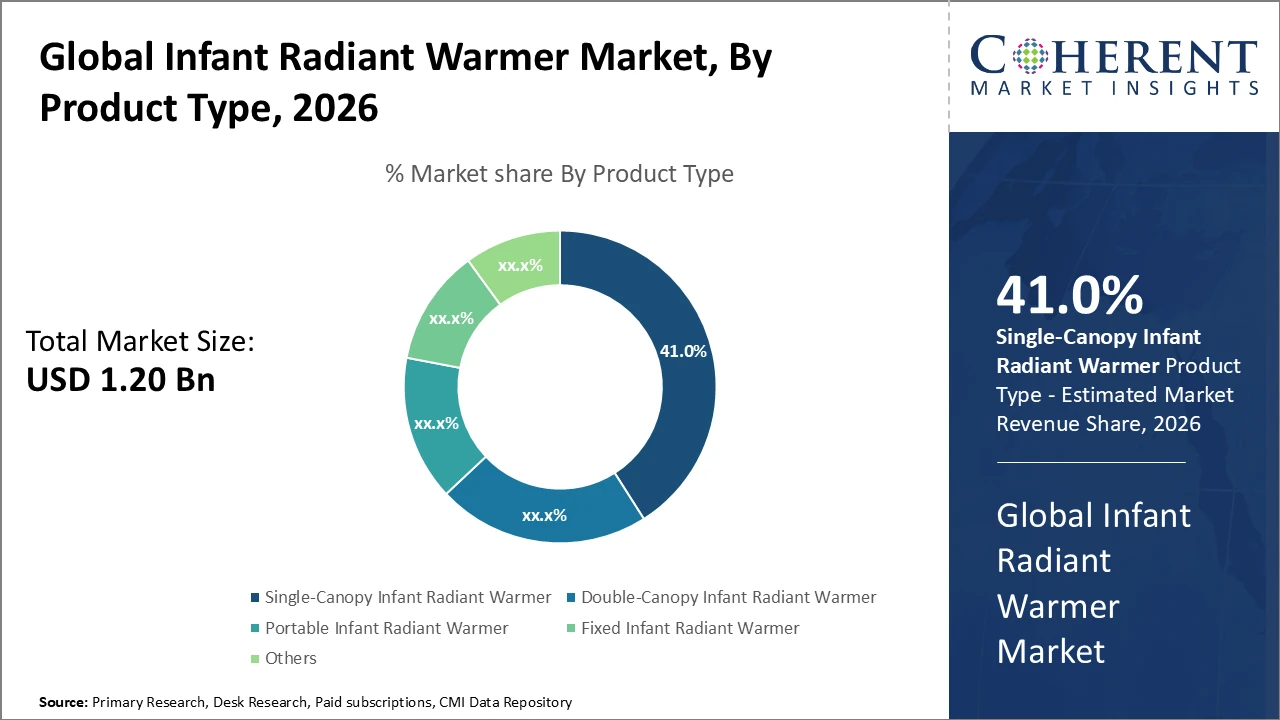
Single-Canopy Infant Radiant Warmers dominate the market with a 41% share, driven by cost-effectiveness and ease of deployment in hospital settings.
Infrared Heating technology leads the heating methods segment due to precise temperature control and minimal infant discomfort.
Hospitals and maternity clinics are the primary end users, contributing the highest revenue because of expanding neonatal care facilities worldwide.
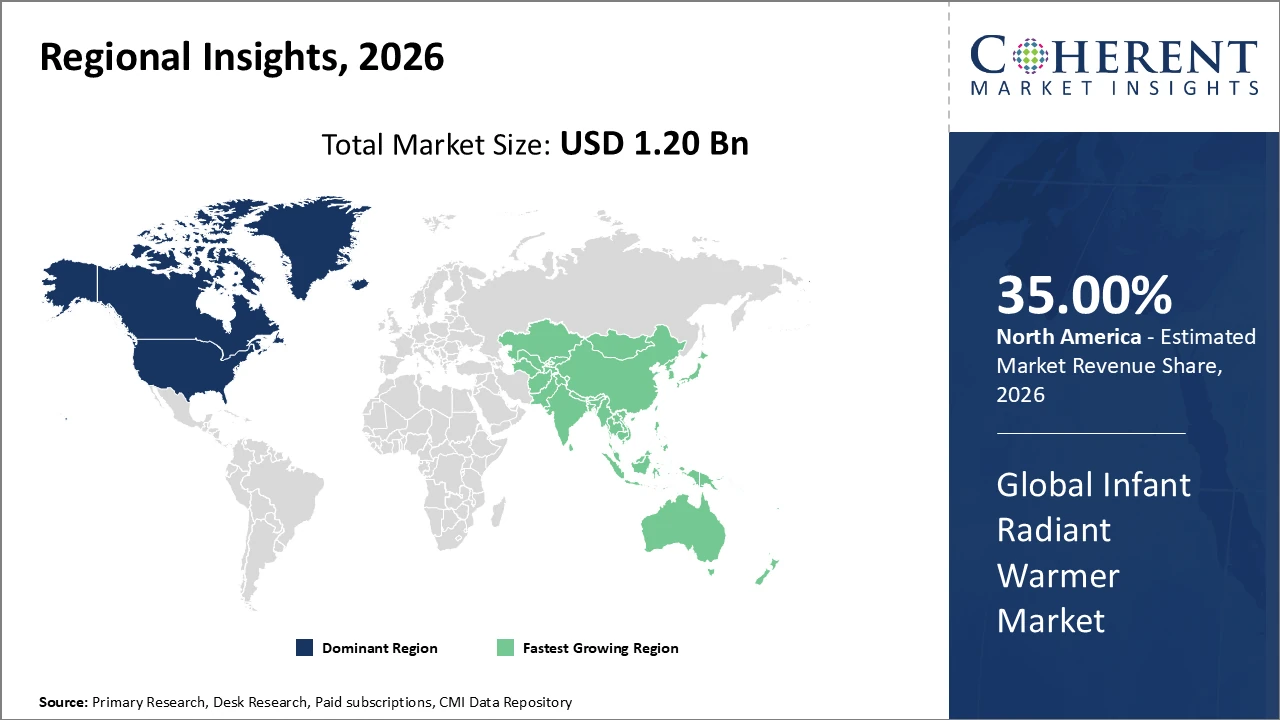
North America holds over 35% of global revenue, supported by advanced healthcare infrastructure and significant investment in neonatal care.
Asia Pacific shows the highest CAGR, fueled by rising premature birth rates and government initiatives to reduce infant mortality in countries like India and China.
Europe exhibits steady growth, driven by strict neonatal care regulations and the presence of leading market players promoting innovation.
Infant Radiant Warmer Market Segmentation Analysis
To learn more about this report, Download Free Sample
Infant Radiant Warmer Market Insights, By Product Type
Single-Canopy Infant Radiant Warmers dominate the market with a 41% share, largely due to their cost-effective design and ease of installation across diverse healthcare settings. Their widespread adoption in hospitals and neonatal clinics is supported by reliable thermal regulation and safety features that meet strict clinical standards. The fastest-growing subsegment is Portable Infant Radiant Warmers, catering to home care and ambulatory centers that require mobility alongside effective thermal management. Double-Canopy Warmers, suitable for twins or multiple births, remain niche due to higher costs, while Fixed Warmers, integrated into NICU suites, serve long-term intensive care. Other units include hybrid or customized designs for specialized clinical needs.
Infant Radiant Warmer Market Insights, By Technology
Infrared heating leads the infant radiant warmer market due to its precise temperature control and enhanced neonatal comfort, making it the preferred choice in NICUs worldwide. Its energy efficiency and rapid warming capabilities have boosted market revenue and established it as a key industry standard. Combination heating systems, which integrate infrared and convection methods, are the fastest-growing subsegment, offering flexible thermal management for varied clinical conditions and expanding adoption in high-acuity units. Convection heating remains relevant in settings requiring uniform air temperature control, while emerging technologies like phase-change or electromagnetic heating are in early stages but show potential for future growth.
Infant Radiant Warmer Market Insights, By End-User
Hospitals and maternity clinics dominate the infant radiant warmer market due to their extensive NICUs and the need for advanced warming systems that support complex clinical workflows. Their large market share is driven by ongoing NICU expansions and equipment upgrades in line with industry growth strategies. The fastest-growing subsegment is home care settings, supported by portable, user-friendly radiant warmers that enable premature infant care outside hospitals. Ambulatory surgical centers utilize these warmers for short-duration postoperative care, though they occupy a smaller market share. Other end users include specialized pediatric and research facilities, leveraging advanced warming technologies for experimental and therapeutic purposes, reflecting a diversification in care delivery.
Infant Radiant Warmer Market Trends
The Infant Radiant Warmer market is increasingly focused on digitization and energy efficiency.
Integration of IoT and AI enables enhanced monitoring, with 2025 data showing 68% of new installations featuring smart connectivity.
Sustainability is a growing trend, with manufacturers adopting eco-friendly production and energy-saving designs; demand for such models is increasing by nearly 10% annually.
Modular, multi-functional designs allow single devices to serve multiple neonatal care needs, expanding market segments and fostering business growth.
Overall, technological innovation and sustainable design are key drivers shaping market trends and adoption.
Infant Radiant Warmer Market Insights, By Geography
To learn more about this report, Download Free Sample
North America Infant Radiant Warmer Market Analysis and Trends
In North America, the Infant Radiant Warmer market is dominated by advanced medical infrastructure and high healthcare spending. The region holds over 35% of the global market share, supported by extensive NICU capacities and comprehensive healthcare reimbursement systems. Leading companies such as GE Healthcare and Drägerwerk have strong regional footprints, continuously innovating to comply with strict safety regulations and meet complex clinical requirements.
Asia Pacific Infant Radiant Warmer Market Analysis and Trends
In North America, the Infant Radiant Warmer market is driven by advanced medical infrastructure and high healthcare expenditure. The region accounts for over 35% of the global market, supported by extensive NICU capacities and robust reimbursement frameworks. Major players like GE Healthcare and Drägerwerk maintain strong regional presence, focusing on continuous innovation to meet stringent safety standards and complex clinical requirements. The combination of technological advancement, well-established healthcare systems, and high adoption of neonatal care solutions reinforces North America’s market leadership.
Infant Radiant Warmer Market Outlook for Key Countries
USA Infant Radiant Warmer Market Analysis and Trends
The USA’s infant radiant warmer market is a key strategic region, driven by NICU infrastructure upgrades and advanced regulatory support for innovative devices. By 2025, nearly 70% of tertiary care hospitals had adopted IoT-enabled warming systems, indicating rapid market uptake. Leading companies like Drägerwerk and GE Healthcare invest heavily in R&D, enabling continuous product improvements that enhance clinical outcomes and operational efficiency. A well-established supply chain further supports market growth, with U.S.-based exports contributing significantly to global trade volumes.
Germany Infant Radiant Warmer Market Analysis and Trends
The Germany infant radiant warmer market is driven by advanced neonatal care infrastructure, stringent healthcare regulations, and rising demand for technologically sophisticated warming solutions. Hospitals and maternity clinics are primary end users, adopting devices with IoT-enabled monitoring and energy-efficient designs. Single-canopy warmers and infrared heating dominate product preferences due to reliability and precision. Market growth is supported by increasing preterm births, government healthcare initiatives, and continuous innovation by key players like Drägerwerk and GE Healthcare, fostering enhanced clinical outcomes and expanding adoption across neonatal care units.
Analyst Opinion
Adoption of infant radiant warmers with advanced sensor technologies has surged, particularly in NICUs, with 2025 data showing approximately 68% of new installations globally featuring IoT-enabled devices, improving patient monitoring and reducing thermal fluctuations.
Manufacturing capacities have expanded steadily, with high-precision component suppliers increasing output by 15% year-over-year between 2024 and 2026, enabling market players to scale production without compromising quality and enhancing competitive positioning.
Pricing strategies in North America and Asia Pacific have seen moderate annual decreases of around 3.5% due to competition and technological commoditization, broadening the addressable market in mid-tier hospitals and developing regions.
Import-export flows have intensified, with North America and Europe leading exports and Asia Pacific and Middle East & Africa as primary importers; U.S. exports accounted for over 38% of global shipments in 2025, highlighting a strong supply chain and the globalization of market players.
Market Scope
| Report Coverage | Details | ||
|---|---|---|---|
| Base Year: | 2025 | Market Size in 2026: | USD 1.20 billion |
| Historical Data for: | 2020 To 2024 | Forecast Period: | 2026 To 2033 |
| Forecast Period 2026 to 2033 CAGR: | 9.7% | 2033 Value Projection: | USD 2.30 billion |
| Geographies covered: |
|
||
| Segments covered: |
|
||
| Companies covered: | GE Healthcare, Natus Medical Incorporated, Atom Medical Corporation, MedGyn Products, Inc., Allengers Medical Systems Ltd., ConvaTec Group PLC, Philips Healthcare, Fisher & Paykel Healthcare, Babylog GmbH, Integra Lifesciences Holdings Corporation | ||
| Growth Drivers: |
|
||
Uncover macros and micros vetted on 75+ parameters: Get instant access to report
Infant Radiant Warmer Market Growth Factors
Advancements in neonatal healthcare infrastructure are key drivers of infant radiant warmer market growth, as hospitals invest in next-generation warming systems to reduce infant mortality. WHO data from 2025 shows a 10% year-on-year increase in global NICU expansions, directly boosting demand for radiant warmers. Rising premature birth rates in regions like Asia Pacific and Sub-Saharan Africa increase the need for effective thermal management. Technological innovations in energy-efficient, user-friendly devices lower operational costs and drive adoption, while government reimbursement policies in developed countries further incentivize procurement, collectively sustaining robust market growth.
Infant Radiant Warmer Market Development
In 2025, GE Healthcare introduced IoT-enabled infant radiant warmers that allow real-time monitoring of neonatal vital signs and environmental conditions. These smart devices enhance patient safety, enable remote clinical oversight, and support more efficient care delivery in NICUs. The adoption of connected-care systems in tertiary hospitals and specialized neonatal units has significantly increased, reflecting the growing emphasis on digital integration in neonatal healthcare.
Key Players
Leading Companies of the Market
GE Healthcare
Natus Medical Incorporated
Atom Medical Corporation
CanvaTec Group PLC
Philips Healthcare
Babylog GmBH
Fisher & Paykel Healthcare
Allengers Medical Systems Ltd.
MedGyn Products, Inc.
Integra LifeSciences Holdings Corporation
Several market players have strengthened their positions through strategic partnerships and technology licensing. For instance, Drägerwerk collaborated with semiconductor companies to integrate ultra-precise thermal sensors, improving temperature detection accuracy by 12% and enhancing clinical outcomes. Similarly, GE Healthcare invested in AI-powered monitoring algorithms, reducing alarm fatigue in NICUs by 27% in 2024. These initiatives not only improve device functionality and patient care but also drive innovation-led growth, allowing companies to expand market share and maintain competitive advantage in the rapidly evolving infant radiant warmer market.
Infant Radiant Warmer Market Future Outlook
The infant radiant warmer market is poised for robust growth over the coming years, driven by rising premature birth rates, expanding NICU capacities, and technological advancements in neonatal care. Increasing adoption of IoT-enabled and AI-integrated warmers will enhance patient monitoring, clinical efficiency, and safety outcomes. Energy-efficient and modular designs are expected to gain traction, particularly in emerging regions and home care settings. Additionally, supportive government policies, healthcare infrastructure investments, and rising awareness of neonatal health will further stimulate demand. Continuous innovation, strategic partnerships, and global expansion of key players will shape the market’s dynamic and sustainable growth trajectory.
Infant Radiant Warmer Market Historical Analysis
The infant radiant warmer market has experienced steady growth over the past decade, driven by rising global awareness of neonatal care and increasing preterm birth rates. Historically, hospitals and NICUs in North America and Europe led adoption due to advanced healthcare infrastructure and stringent regulatory standards. Early product iterations focused on basic thermal regulation, while gradual technological advancements introduced infrared heating, improved safety features, and integrated monitoring systems. Expansion into emerging regions such as Asia Pacific and Latin America accelerated in the late 2010s, supported by government healthcare initiatives and rising hospital capacities. These historical trends laid the foundation for today’s innovation-driven market growth.
Sources
Primary Research Interviews:
Neonatologists
Pediatricians
NICU Nurses and Technicians
Medical Device Manufacturers specializing in neonatal equipment
Databases:
World Health Organization (WHO) Maternal and Newborn Health Statistics
OECD Health Data
UNICEF Newborn and Infant Care Reports
Magazines:
Medical Design & Outsourcing
MedTech Dive
Neonatal Intensive Care Journal
HealthTech Magazine
Medical Device Network
Journals:
Journal of Perinatology
Neonatology
Pediatric Research
Advances in Neonatal Care
Journal of Neonatal Nursing
Newspapers:
The New York Times (Health)
The Guardian (Health)
Financial Times (Healthcare)
The Hindu (Health)
Reuters Health
Associations:
World Health Organization (WHO)
American Academy of Pediatrics (AAP)
European Foundation for the Care of Newborn Infants (EFCNI)
Association of Women’s Health, Obstetric and Neonatal Nurses (AWHONN)
Share
Share
About Author
Komal Dighe is a Management Consultant with over 8 years of experience in market research and consulting. She excels in managing and delivering high-quality insights and solutions in Health-tech Consulting reports. Her expertise encompasses conducting both primary and secondary research, effectively addressing client requirements, and excelling in market estimation and forecast. Her comprehensive approach ensures that clients receive thorough and accurate analyses, enabling them to make informed decisions and capitalize on market opportunities.
Missing comfort of reading report in your local language? Find your preferred language :
Transform your Strategy with Exclusive Trending Reports :
Frequently Asked Questions

Credibility and Certifications

860519526

9001:2015
27001:2022


Need a Custom Report?
We can customize every report - free of charge - including purchasing stand-alone sections or country-level reports
Customize NowSelect a License Type
Joining thousands of companies around the world committed to making the Excellent Business Solutions.
View All Our Clients
 Schedule a meeting with report Author