
Home Medical Equipment Market Analysis & Forecast: 2026-2033

Home Medical Equipment Market Size and Forecast – 2026 – 2033
The Global Home Medical Equipment Market size is estimated to be valued at USD 32.5 billion in 2026 and is expected to reach USD 55.8 billion by 2033, exhibiting a compound annual growth rate (CAGR) of 8.2% from 2026 to 2033.
Global Home Medical Equipment Market Overview
The Home Medical Equipment (HME) market includes a wide range of products designed to support patient care, recovery, and long-term health management in home settings. Key product categories include mobility aids such as wheelchairs, walkers, and scooters; respiratory equipment like oxygen concentrators, ventilators, and CPAP devices; monitoring and diagnostic devices including blood glucose monitors, blood pressure monitors, and pulse oximeters; therapeutic equipment such as hospital beds and infusion pumps; and durable medical equipment for daily living assistance. Growing chronic disease prevalence, aging populations, and preference for home-based care continue to drive demand for these products worldwide.
Key Takeaways
• Respiratory therapy equipment dominates the Home Medical Equipment market share, driven by advancements in portable oxygen devices and ventilation support systems.
• Among applications, the chronic diseases segment experiences the highest growth, propelled by the global rise in COPD and diabetes cases.
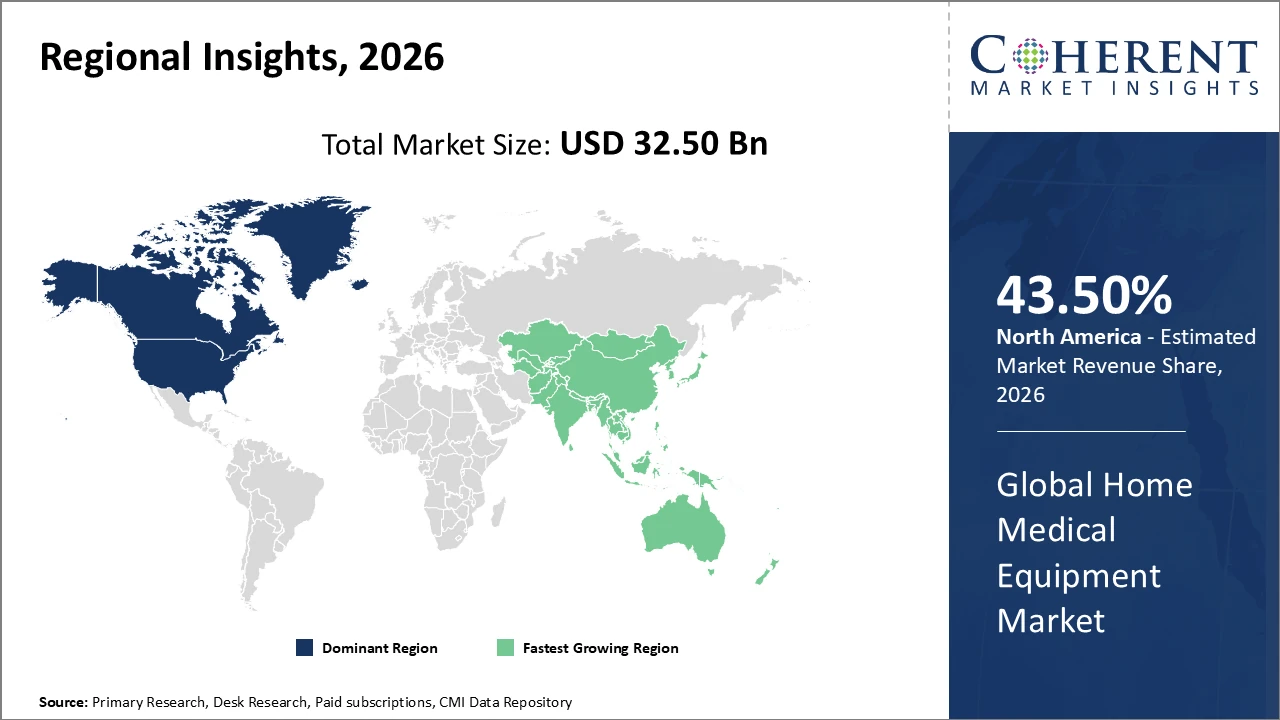
• North America holds the largest market size and industry share, owing to advanced healthcare infrastructure and favorable reimbursement policies.
• Asia Pacific represents the fastest-growing region, with a CAGR exceeding 9%, led by rising healthcare investments and expanding geriatric populations in India and China.
Home Medical Equipment Market Segmentation Analysis
To learn more about this report, Download Free Sample
Home Medical Equipment Market Insights, By Equipment Type
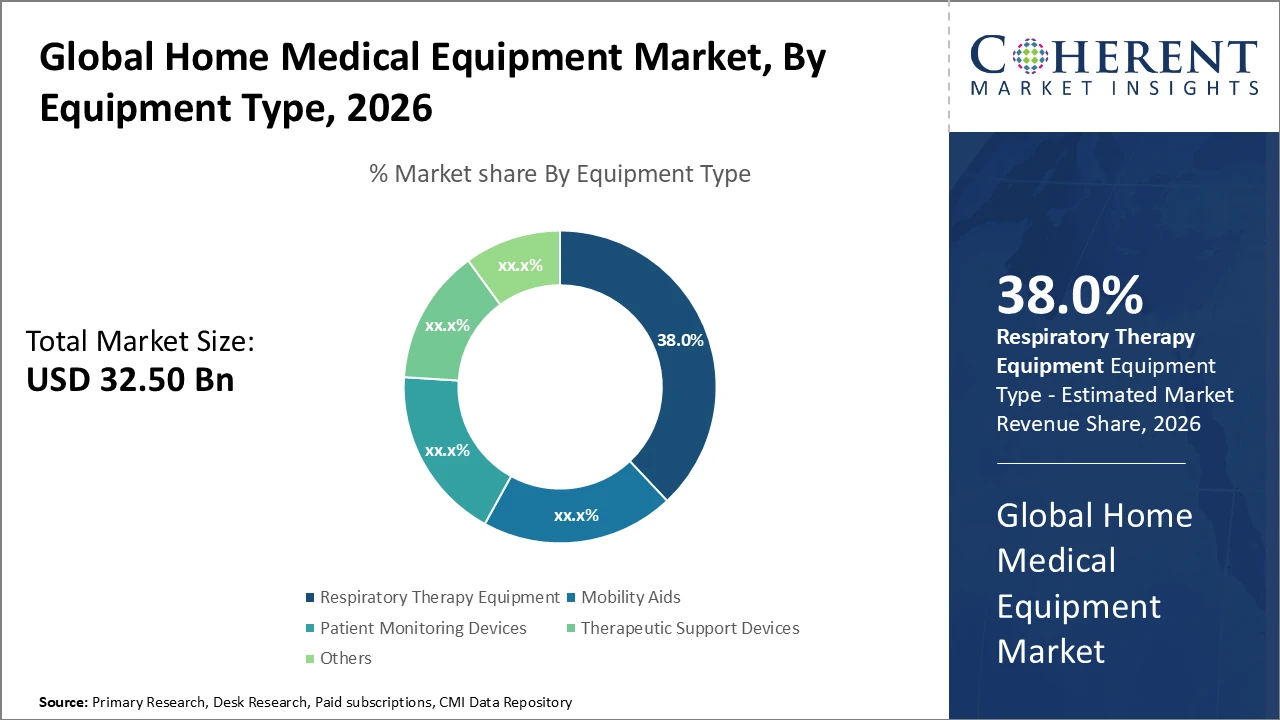
Respiratory therapy equipment dominates the market share due to the growing global prevalence of respiratory conditions and the rising preference for non-invasive ventilation and portable oxygen concentrators. The subsegment benefits from technological improvements such as lightweight designs and battery-operated functionality that enhance user convenience. Mobility aids represent the fastest-growing subsegment, propelled by aging demographics and the increasing incidence of mobility-impairing conditions. Patient monitoring devices, including wearable biosensors and remote monitoring systems, are gaining traction by enabling continuous health tracking. Therapeutic support devices, covering wound care and physiotherapy aids, contribute steadily to market growth, while other categories include specialized equipment addressing niche medical needs.
Home Medical Equipment Market Insights, By Application
Chronic diseases dominate the application segment due to the escalating global burden of diabetes, COPD, and cardiovascular conditions. This subsegment shows strong demand for equipment such as glucose monitors, respiratory devices, and cardiac monitoring systems, driven by the growing focus on patient self-management. Elderly care is the fastest-growing subsegment, supported by government initiatives aimed at improving seniors’ quality of life and increasing demand for assistive devices. Post-surgery rehabilitation supports recovery through specialized mobility and therapy equipment, growing at a moderate pace. Homecare services cover broader healthcare-at-home models, gaining momentum with aging populations, while other applications include pediatric and specialized care needs.
Home Medical Equipment Market Insights, By End-User
Homecare facilities lead the market owing to their structured service delivery and the increasing adoption of home medical equipment for patient monitoring and therapy support. Hospitals at home represent the fastest-growing subsegment, effectively substituting traditional inpatient care with cost-efficient home-based treatments supported by technological integration and insurance reimbursements. Individual patients purchase devices for chronic disease management and remote monitoring, reflecting rising patient empowerment and self-care trends. Assisted living facilities serve as significant end users by providing specialized care for aging populations. Other end users include community healthcare centers and rehabilitation clinics.
Home Medical Equipment Market Trends
• The Home Medical Equipment market shows a strong shift toward digital transformation.
• In 2026, integrated remote patient monitoring devices accounted for nearly 35% of total sales, highlighting the move toward data-driven and connected care.
• The growth of rental and subscription-based business models has improved affordability and boosted market penetration, particularly in emerging economies.
• Supportive regional policies for aging populations, such as initiatives introduced by the U.S. Department of Health and Human Services in 2025, have further strengthened market expansion.
Home Medical Equipment Market Insights, By Geography
To learn more about this report, Download Free Sample
North America Home Medical Equipment Market Analysis and Trends
North America dominates the Home Medical Equipment market due to its well-established healthcare infrastructure, widespread adoption of advanced medical technologies, and supportive reimbursement policies. The United States plays a central role, driven by strong demand for home-based care solutions. Leading companies such as Medline and ResMed strengthen the market through continuous innovation, advanced respiratory devices, and enhanced service delivery models. The region’s growing emphasis on chronic disease management, coupled with the expansion of hospital-at-home and remote patient monitoring programs, further fuels market growth and positions North America as a key revenue-generating region globally.
Asia Pacific Home Medical Equipment Market Analysis and Trends
Asia Pacific represents the fastest-growing region in the Home Medical Equipment market, registering a CAGR exceeding 9% during the forecast period. Growth is driven by improving healthcare accessibility, supportive government initiatives focused on elderly care, and the expansion of home health services. Rising awareness of home-based medical solutions, along with increasing disposable incomes in emerging economies such as China and India, is accelerating the adoption of home medical devices. Additionally, the presence of large patient populations and a rapidly aging demographic further strengthens demand. Companies are increasingly expanding manufacturing facilities and distribution networks across the region to leverage cost advantages and capture growing market opportunities.
Home Medical Equipment Market Outlook for Key Countries
USA Home Medical Equipment Market Analysis and Trends
The U.S. Home Medical Equipment market remains the global leader, driven by significant investments in healthcare IT and reimbursement programs designed to reduce hospital stays. A rapidly aging population—expected to increase by over 20% for those above 65 by 2030—along with rising chronic disease prevalence, fuels strong demand for home-based medical solutions. Leading companies like Invacare Corporation and Hill-Rom Holdings are addressing market needs through portable and wireless medical devices. Programs such as the Centers for Medicare & Medicaid Services’ Hospital at Home initiative have boosted adoption, contributing to over USD 14 billion in market revenue in 2025.
Germany Home Medical Equipment Market Analysis and Trends
Germany’s Home Medical Equipment market is characterized by comprehensive healthcare policies and widespread adoption of advanced medical devices. Strong reimbursement support strengthens the homecare ecosystem, with major companies like GE Healthcare and Fresenius Medical Care driving market activities. The country’s growing elderly population, coupled with government initiatives aimed at reducing healthcare facility burdens, supports sustained market growth. Innovations in therapeutic support devices recorded a 10% annual revenue increase in 2025, underscoring Germany’s leadership in the European Home Medical Equipment market and highlighting its focus on quality, technologically advanced solutions for home-based patient care.
Analyst Opinion
Demand Dynamics: The rising geriatric population and increasing chronic disease prevalence have driven higher demand for home medical equipment. In 2025, over 40% of U.S. adults with chronic respiratory conditions preferred home-use oxygen therapy devices, highlighting the shift toward at-home care and supporting growth in respiratory therapy equipment.
Supply-Side Insights: Global manufacturing capacity expanded in line with market growth, with production increasing over 15% in 2024. Reduced raw material costs and improved supply chain efficiencies enabled competitive pricing, promoting wider adoption among healthcare providers and end users.
Technological Penetration: Smart home medical devices with connectivity features such as Bluetooth and Wi-Fi have accelerated adoption in developed markets. In 2026, smart glucose monitoring systems accounted for nearly 60% of diabetes care equipment sales, significantly impacting market revenue and growth strategies.
Regulatory Landscape: Navigating stringent regulations in North America and Europe has enhanced product quality and consumer confidence. FDA approvals for novel devices in 2025 further encouraged innovation and growth across market segments.
Market Scope
| Report Coverage | Details | ||
|---|---|---|---|
| Base Year: | 2025 | Market Size in 2026: | USD 32.5 billion |
| Historical Data for: | 2020 To 2024 | Forecast Period: | 2026 To 2033 |
| Forecast Period 2026 to 2033 CAGR: | 8.2% | 2033 Value Projection: | USD 55.8 billion |
| Geographies covered: |
|
||
| Segments covered: |
|
||
| Companies covered: | Medline Industries, Invacare Corporation, ResMed Inc., GE Healthcare, Cardinal Health, Becton, Dickinson and company, Abbott Laboratories, BD Medical, Align Technology, EssilorLuxottica | ||
| Growth Drivers: |
|
||
Uncover macros and micros vetted on 75+ parameters: Get instant access to report
Home Medical Equipment Market Growth Factors
The rising prevalence of chronic diseases, including COPD and diabetes, is a major driver of demand for home-use medical equipment, with COPD affecting over 300 million people globally as of 2026. Technological advancements in portable and connected devices support patient self-monitoring and treatment adherence, further stimulating market growth. Rising healthcare costs and a shift toward outpatient care models have led governments and insurers to promote homecare solutions, boosting revenue streams. Additionally, demographic trends, particularly an expanding elderly population, sustain growth by increasing demand for mobility aids, respiratory devices, and therapeutic support equipment.
Home Medical Equipment Market Development
In 2025, ResMed launched an advanced portable ventilator designed for home use, integrating Wi-Fi connectivity and remote monitoring capabilities. This device allowed healthcare providers to track patient respiratory data in real-time, improving adherence to therapy and enabling timely interventions. The development strengthened ResMed’s position in the respiratory therapy segment while addressing the growing demand for connected home medical devices among chronic respiratory patients.
Key Players
Leading Companies of the Market
Medline Industries
Invacare Corporation
ResMed Inc.
GE Healthcare
Becton, Dickinson and Company
Cardinal Helath
Abbott Laboratories
BD Medical
Align Technology
EssilorLuxottica
Leading companies in the Home Medical Equipment market have adopted multi-pronged strategies such as mergers and acquisitions, product innovation, and geographic expansion. In 2024, one major player acquired a regional supplier in the Asia Pacific, expanding its portfolio and achieving a 12% revenue increase in the region. In 2025, another key company invested heavily in AI-enabled medical devices, enhancing product differentiation, improving patient outcomes, and boosting customer retention, demonstrating how technological innovation and strategic expansion are driving growth and strengthening competitive positions in the global market.
Home Medical Equipment Market Future Outlook
The Home Medical Equipment market is expected to continue its robust growth, driven by rising chronic disease prevalence, aging populations, and increasing preference for home-based care. Technological advancements, including AI-enabled devices, wearable sensors, and connected monitoring systems, will further enhance patient self-management and remote healthcare capabilities. Expansion of rental and subscription models is likely to improve affordability and accessibility, particularly in emerging economies. Supportive government policies and reimbursement initiatives will reinforce adoption across regions. Overall, the market’s future outlook is characterized by digital integration, innovation, and a strong shift toward patient-centric, home-based healthcare solutions, sustaining long-term growth.
Home Medical Equipment Market Historical Analysis
The Home Medical Equipment market has experienced steady growth over the past decade, driven by increasing healthcare awareness, technological advancements, and rising chronic disease prevalence. Historically, respiratory therapy equipment and mobility aids have dominated the market, supported by aging populations and demand for at-home care solutions. Early adoption of patient monitoring devices and therapeutic support equipment facilitated the shift from hospital-based to home-based care. North America and Europe led market development due to advanced healthcare infrastructure, strong reimbursement policies, and high adoption of medical technologies. Market expansion was further accelerated by innovations, growing geriatric populations, and increasing focus on cost-effective, patient-centric care models.
Sources
Primary Research Interviews:
Homecare Physicians and Nurses
Respiratory Therapists and Pulmonologists
Physiotherapists and Occupational Therapists
Home Medical Equipment Manufacturers and Distributors
Databases:
World Health Organization (WHO) Health Statistics
Global Burden of Disease Database
OECD Health Data
UN Disability Reports
Magazines:
Medical Design & Outsourcing
Rehab Management
Mobility Management
HealthTech Magazine
Medical Device Network
Journals:
Journal of Medical Devices
Disability and Health Journal
Assistive Technology Journal
Prosthetics and Orthotics International
Archives of Physical Medicine
Newspapers:
The New York Times (Health)
The Guardian (Health)
Financial Times (Healthcare)
The Hindu (Health)
Reuters Health
Associations:
World Health Organization (WHO)
International Society for Prosthetics and Orthotics
Rehabilitation Engineering Society
American Academy of Orthotists
Disabled Living Foundation
Share
Share
About Author
Manisha Vibhute is a consultant with over 5 years of experience in market research and consulting. With a strong understanding of market dynamics, Manisha assists clients in developing effective market access strategies. She helps medical device companies navigate pricing, reimbursement, and regulatory pathways to ensure successful product launches.
Missing comfort of reading report in your local language? Find your preferred language :
Transform your Strategy with Exclusive Trending Reports :
Frequently Asked Questions

Credibility and Certifications

860519526

9001:2015

27001:2022


Need a Custom Report?
We can customize every report - free of charge - including purchasing stand-alone sections or country-level reports
Customize NowSelect a License Type
Joining thousands of companies around the world committed to making the Excellent Business Solutions.
View All Our Clients
 Schedule a meeting with report Author