
Gastritis Treatment Market Analysis & Forecast: 2026-2033
Gastritis Treatment Market Size and Forecast – 2026 – 2033
The global Gastritis Treatment Market is valued at around USD 5.3 billion in 2026 and is forecast to reach about USD 8.7 billion by 2033, expanding at a CAGR of ~6.0% from 2026–2033. Growth is driven by rising gastritis prevalence and therapeutic advances.
Global Gastritis Treatment Market Overview
Gastritis treatment focuses on reducing stomach inflammation, relieving symptoms, and addressing underlying causes. Common therapies include proton pump inhibitors, H2-receptor blockers, antacids, and antibiotics for Helicobacter pylori infection. Treatment plans vary based on whether gastritis is acute or chronic and may also involve lifestyle and dietary modifications, such as avoiding alcohol, NSAIDs, and spicy foods. Growing awareness, early diagnosis, and improved access to medications have enhanced treatment outcomes. Advances in drug formulations and combination therapies continue to improve efficacy, while preventive care and patient education play an important role in long-term management.
Key Takeaways
By Product Type, Acid-blocking medicines lead with roughly 40% share.
Advanced drug formulations & delivery systems dominate with roughly 40 % share.
In the gastritis treatment market, hospitals and clinics dominate end-user demand, accounting for about 75% of total market share.
North America is the largest regional gastritis treatment market, holding approximately 40% of global share.
The Asia Pacific gastritis treatment market constitutes around 25% of global revenue and is among the fastest-growing regions.
U.S. is the largest contributor in North America with 37% regional share of the global gastritis treatment landscape.
Gastritis Treatment Market Segmentation Analysis
To learn more about this report, Download Free Sample
Gastritis Treatment Market Insights, By Product Type
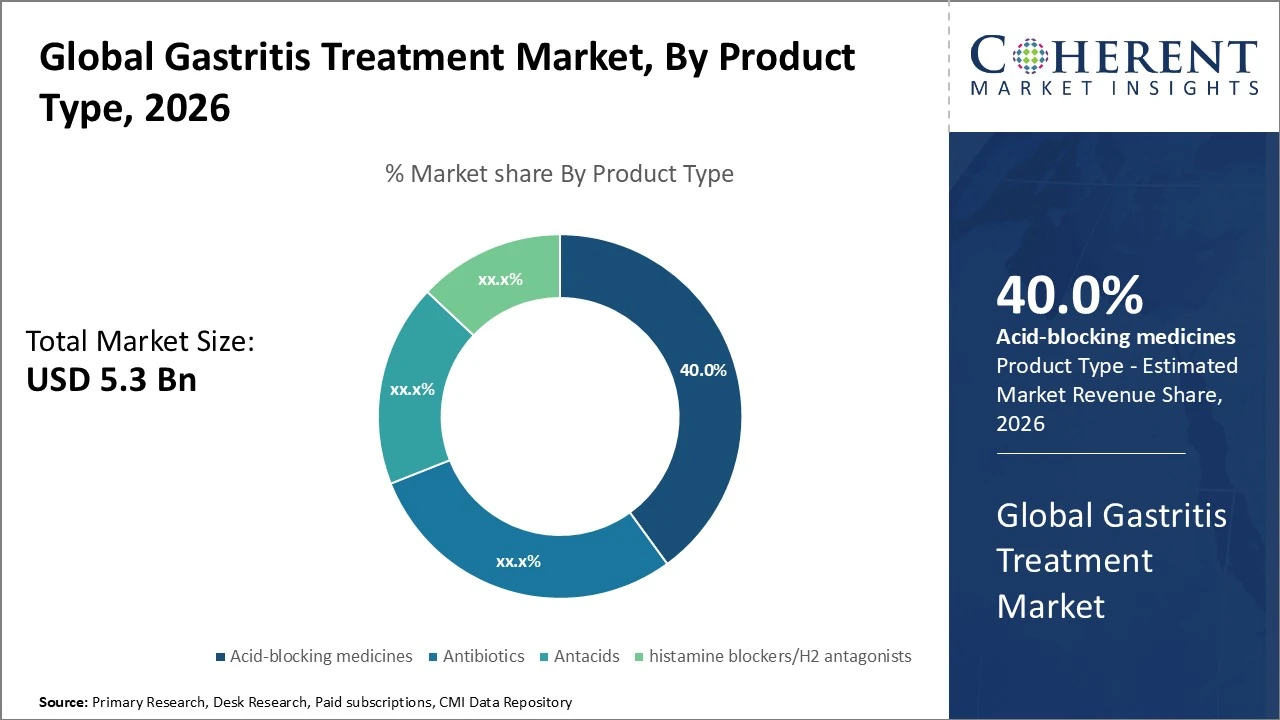
The gastritis treatment market is segmented by product type into acid-blocking medicines, antibiotics, antacids, and histamine blockers. Acid-blocking medicines lead with roughly 40% share due to their effectiveness in reducing gastric acid and broad clinical use. Antibiotics account for about 29%, driven by H. pylori eradication therapy demand. Antacids represent approximately 18%, popular for quick symptomatic relief, while histamine blockers/H2 antagonists hold around 13% of the market.
Gastritis Treatment Market Insights, By Technology
Advanced drug formulations and delivery system dominate the technology sector with 40% shares. This dominance is driven by improved drug efficacy, targeted delivery, and enhanced patient compliance. Innovations such as sustained-release formulations, combination therapies, and novel delivery mechanisms help reduce side effects and ensure better symptom control, making them a preferred choice among healthcare providers and patients.
Gastritis Treatment Market Insights, By End-User
In the gastritis treatment market, hospitals and clinics dominate end-user demand, accounting for about 75% of total market share due to comprehensive care, advanced diagnostics, and treatment services for moderate to severe cases. These facilities handle most gastritis diagnoses and pharmacological interventions, driving steady revenue. The “Others” segment (25%) includes outpatient clinics, homecare settings, and community health centers, which are growing as patients seek convenient, lower-cost care and outpatient management options.
Gastritis Treatment Market Trends
There’s a growing shift toward personalized treatment plans and fixed-dose combination therapies to improve H. pylori eradication and patient compliance.
Telemedicine, mobile health tools, and emphasis on lifestyle modifications are enhancing patient engagement, early diagnosis, and long-term management.
Advanced drug formulations like extended-release, orally disintegrating tablets, and targeted therapies are focusing on improved adherence and reduced side effects.
Gastritis Treatment Market Insights, By Geography
To learn more about this report, Download Free Sample
North America Gastritis Treatment Market Analysis and Trends
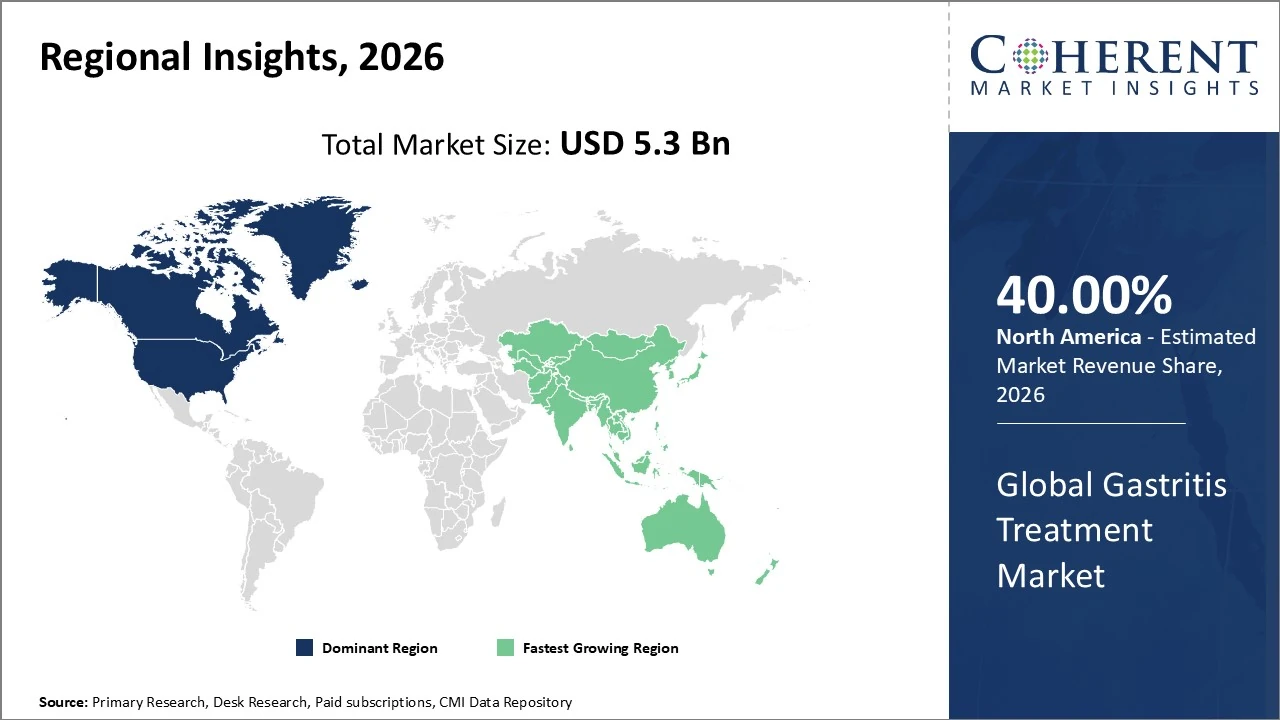
North America is the largest regional gastritis treatment market, holding approximately 40% of global share due to advanced healthcare infrastructure, high disease awareness, and early diagnostic adoption. Strong demand for proton pump inhibitors (PPIs), combination therapies, and OTC acid reducers drives growth, while the U.S. remains the primary contributor. The market also benefits from significant pharmaceutical R&D and robust reimbursement frameworks. Continued focus on digital health integration and personalized treatment options is increasing patient engagement. North America’s market is projected to grow steadily at a CAGR around 6.5% through the forecast period, reflecting mature yet evolving therapeutic demand.
Asia Pacific Gastritis Treatment Market Analysis and Trends
The Asia Pacific gastritis treatment market constitutes around 25% of global revenue and is among the fastest-growing regions due to rising H. pylori infection prevalence, expanding healthcare access, and improving medical infrastructure in China, India, and Southeast Asia. Growing urbanization, increasing disposable incomes, and higher patient awareness fuel demand for acid-reducing drugs and antibiotics. Local pharmaceutical manufacturing and affordable generics further bolster market expansion. Digital health solutions and non-invasive diagnostics are increasingly adopted.
Gastritis Treatment Market Outlook for Key Countries
USA Gastritis Treatment Market Analysis and Trends
The USA gastritis treatment market shows significant activity, with the U.S. being the largest contributor in North America. Advanced diagnostics, high healthcare expenditure, and strong adoption of therapeutic options support market strength. Treatment demand centers on PPIs, antibiotics, and antacids, while personalized care and digital health tools are emerging trends. Hospitals remain key treatment settings, and ongoing pharmaceutical innovation drives competitive dynamics.
Germany Gastritis Treatment Market Analysis and Trends
The Germany gastritis treatment market is growing rapidly. Germany holds a significant share of the broader European market, contributing roughly 17% of Europe’s gastritis treatment revenue due to high disease awareness and advanced clinical care. Treatment demand centers on PPIs, antibiotics, and antacids, while personalized medicine, telemedicine consultations, and lifestyle management trends are rising. Robust healthcare infrastructure and proactive gastrointestinal health programs further support market growth.
Analyst Opinion
Generic proton pump inhibitors (PPIs) dominate treatment demand due to low cost and wide use, significantly driving market volume.
here’s a strategic shift toward H. pylori combination therapies (PPI + antibiotics) to improve eradication rates and patient compliance.
Rising interest in probiotics and preventive care such as lifestyle modifications is influencing treatment protocols.
Innovations like AI-assisted diagnostics and personalized treatment approaches are emerging as key opportunities to tailor therapies and improve outcomes.
Concerns over long‑term PPI side effects and widespread self‑medication with OTC remedies may limit prescription uptake and adherence.
Market Scope
| Report Coverage | Details | ||
|---|---|---|---|
| Base Year: | 2025 | Market Size in 2026: | USD 5.3 billion |
| Historical Data for: | 2020 To 2024 | Forecast Period: | 2026 To 2033 |
| Forecast Period 2026 to 2033 CAGR: | 6.0% | 2033 Value Projection: | USD 8.7 billion |
| Geographies covered: |
|
||
| Segments covered: |
|
||
| Companies covered: | Pfizer Inc., AstraZeneca plc, Takeda Pharmaceutical Company Ltd., Novartis AG, Johnson & Johnson | ||
| Growth Drivers: |
|
||
Uncover macros and micros vetted on 75+ parameters: Get instant access to report
Gastritis Treatment Market Growth Factors
The gastritis treatment market is expanding due to rising prevalence of gastritis and H. pylori infections worldwide, increasing demand for effective acid‑suppressive and antibiotic therapies. Growing awareness of gastrointestinal health, coupled with early diagnosis through advanced endoscopic and non‑invasive testing, drives treatment adoption. Technological innovations, including extended‑release PPIs, combination therapies, and digital health tools for patient monitoring, improve outcomes and compliance. Urbanization, lifestyle changes, and dietary habits contribute to higher gastritis incidence, boosting market demand. Furthermore, government healthcare initiatives, reimbursement policies, and the availability of generics enhance accessibility, making the gastritis treatment market poised for steady growth globally.
Gastritis Treatment Market Development
The gastritis treatment market has witnessed significant development, driven by advances in pharmacological therapies, including proton pump inhibitors, H2-receptor antagonists, and combination regimens targeting H. pylori. Emerging drug formulations such as extended-release tablets, orally disintegrating forms, and targeted therapies improve patient compliance and efficacy. The market also benefits from digital health integration, telemedicine consultations, and AI-assisted diagnostics enabling early detection and personalized treatment. Expansion in emerging markets with rising healthcare access and growing awareness further supports growth. Strategic collaborations, mergers, and new product launches by key pharmaceutical players continue to enhance the market landscape and competitive dynamics globally.
Key Players
Leading Companies of the Market
Pfizer Inc.
AstraZeneca plc
Takeda Pharmaceutical Company Ltd.
Novartis AG
Johnson & Johnson
Key players shaping the gastritis treatment market include Pfizer, AstraZeneca, Takeda, Novartis, Johnson & Johnson. These companies drive growth through innovative therapies, combination treatments, generics, and advanced drug delivery systems, strengthening their global and regional market presence.
Gastritis Treatment Market Future Outlook
The gastritis treatment market is poised for steady global growth, driven by rising prevalence of gastritis and H. pylori infections, increasing healthcare access, and enhanced patient awareness. Innovations in drug formulations, including extended-release PPIs, combination therapies, and personalized medicine, are expected to improve treatment efficacy and compliance. Digital health tools and telemedicine will play a growing role in monitoring and managing patients remotely. Emerging markets, particularly in Asia Pacific and Latin America, present significant expansion opportunities. Strategic investments, partnerships, and new product launches by leading pharmaceutical companies will continue to shape competitive dynamics and market development through 2033.
Gastritis Treatment Market Historical Analysis
Historically, the gastritis treatment market has evolved significantly, beginning with antacids and H2-receptor antagonists in the late 20th century for symptomatic relief. The introduction of proton pump inhibitors (PPIs) in the 1980s–1990s marked a major shift, offering more effective acid suppression and driving widespread adoption. The discovery of Helicobacter pylori as a primary cause of gastritis led to combination antibiotic therapies, transforming treatment approaches. Over the past two decades, OTC availability, generics, and improved healthcare infrastructure expanded market reach globally. Early diagnostic tools and growing patient awareness further contributed to steady historical growth, laying the foundation for current innovations and market expansion.
Sources
Primary Research Interviews:
Gastroenterologists
General Physicians / Internal Medicine Doctors
Surgeons
Physician Assistants / Nurse Practitioners (in gastroenterology)
Databases:
PubMed / Medline
ClinicalTrials.gov
Embase
Journals:
Gastroenterology
American Journal of Gastroenterology
Alimentary Pharmacology & Therapeutics
Digestive Diseases and Sciences
Newspapers:
The Washington Post
The Times of India
The Guardian
The New York Times
Associations:
World Gastroenterology Organisation (WGO)
International Society for Digestive Surgery (ISDS)
American Gastroenterological Association (AGA)
American College of Gastroenterology (ACG)
Share
Share
About Author
Vipul Patil is a dynamic management consultant with 6 years of dedicated experience in the pharmaceutical industry. Known for his analytical acumen and strategic insight, Vipul has successfully partnered with pharmaceutical companies to enhance operational efficiency, cross broader expansion, and navigate the complexities of distribution in markets with high revenue potential.
Missing comfort of reading report in your local language? Find your preferred language :
Transform your Strategy with Exclusive Trending Reports :
Frequently Asked Questions

Credibility and Certifications

860519526

9001:2015
27001:2022


Need a Custom Report?
We can customize every report - free of charge - including purchasing stand-alone sections or country-level reports
Customize NowSelect a License Type
Joining thousands of companies around the world committed to making the Excellent Business Solutions.
View All Our Clients
 Schedule a meeting with report Author