Gastric Cancer Therapeutics Market Analysis & Forecast: 2026-2033
Gastric Cancer Therapeutics Market Size and Forecast – 2026 – 2033
The global gastric cancer therapeutics market is estimated to be valued at USD 9.8 billion in 2026 and is projected to reach USD 15.2 billion by 2033, growing at a compound annual growth rate (CAGR) of 6.4% from 2026 to 2033.
Global Gastric Cancer Therapeutics Market Overview
The gastric cancer therapeutics market comprises targeted therapies, chemotherapy, immunotherapy, and supportive care treatments. Targeted therapies, including HER2 inhibitors and angiogenesis blockers, address specific molecular pathways, improving efficacy and minimizing off-target effects. Supportive care products, including antiemetics and growth factors, enhance patient quality of life during treatment. Continuous innovation, biosimilars, and combination therapies are driving market expansion and therapeutic diversification globally.
Key Takeaways
• Targeted therapy dominates the therapeutic class segment, accounting for over 42% of market share, driven by advancements in monoclonal antibodies.
• Hospitals lead the end-user segment with a 56% market share, reflecting their central role in delivering gastric cancer treatment.
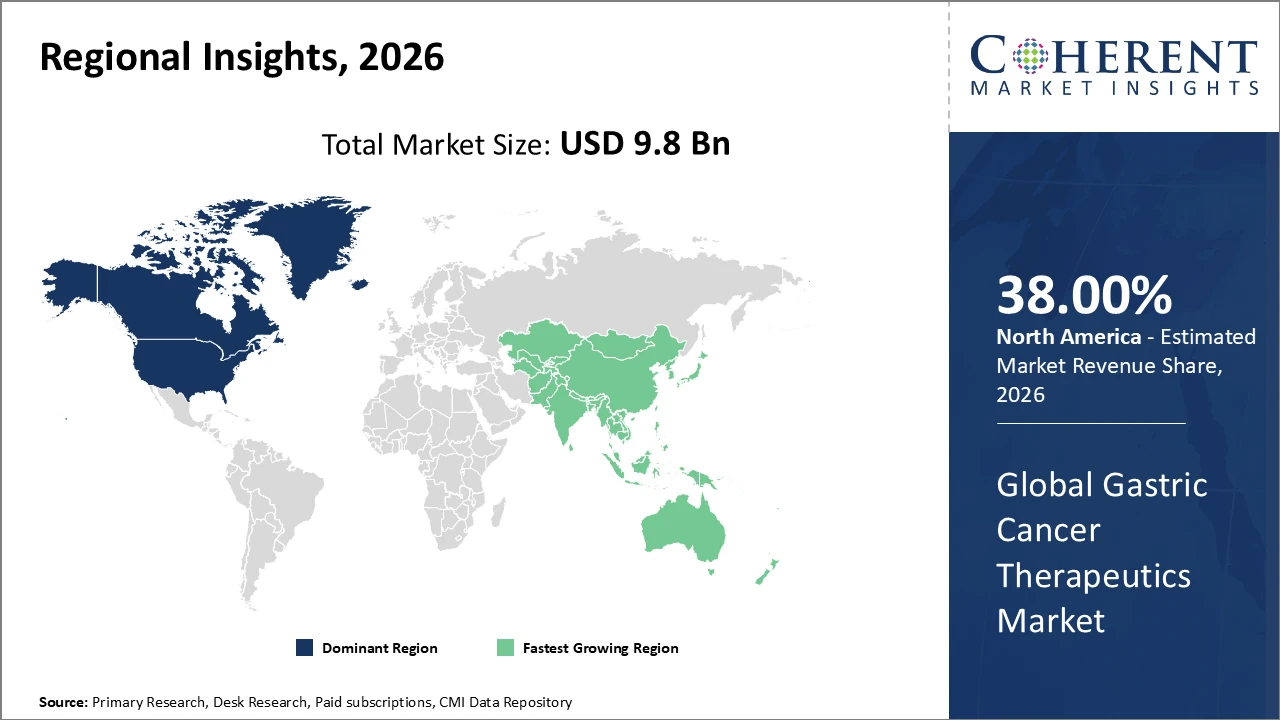
• North America holds market dominance with more than 38% of industry revenue, supported by high healthcare spending and early adoption of novel therapeutics.
• Asia Pacific is the fastest-growing region, with a CAGR exceeding 8.1%, fueled by expanding healthcare infrastructure and a rising patient population.
Gastric Cancer Therapeutics Market Segmentation Analysis
To learn more about this report, Download Free Sample
Gastric Cancer Therapeutics Market Insights, By Therapeutic Class
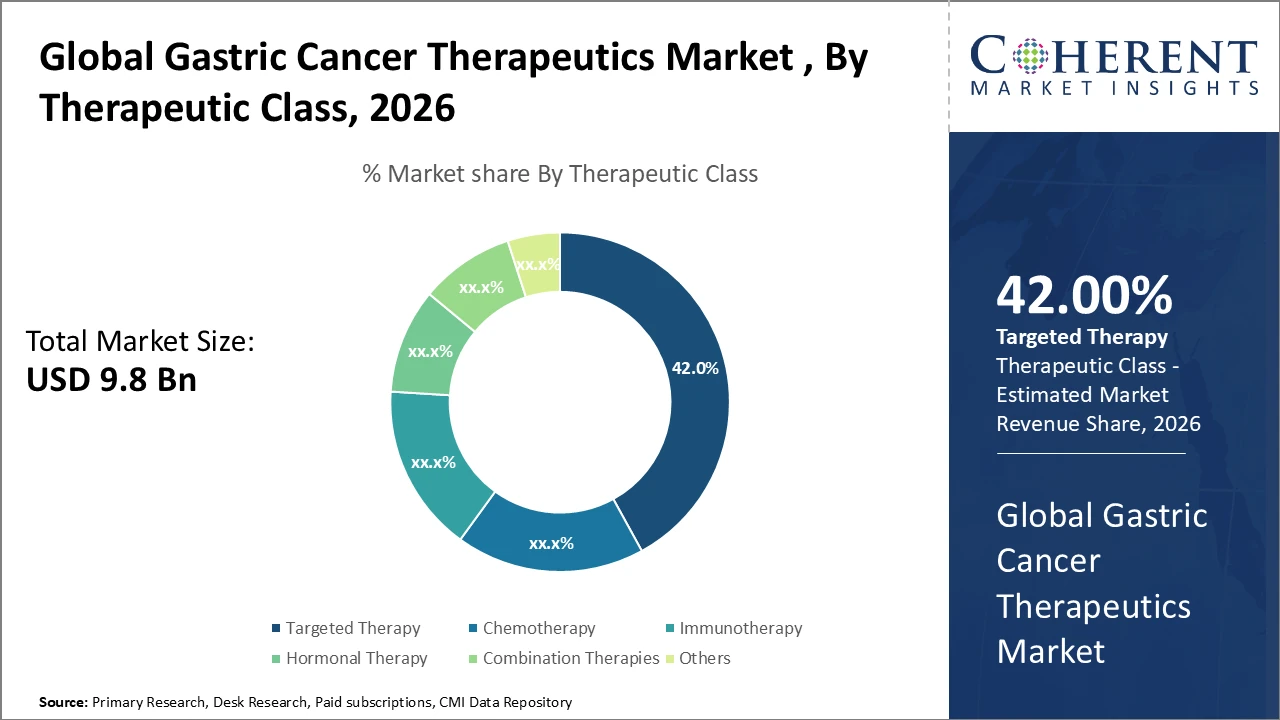
Targeted therapy leads the market with a 42.0% share, driven by high efficacy in HER2-positive gastric cancer, utilizing monoclonal antibodies and tyrosine kinase inhibitors for precision treatment with fewer adverse effects. The fastest-growing subsegment is combination therapies, which integrate immunotherapy and chemotherapy, gaining traction after post-2024 clinical successes demonstrating significant survival benefits. Chemotherapy maintains steady use, particularly in regions with limited access to advanced biologics. Immunotherapy, mainly checkpoint inhibitors, is expanding rapidly and reshaping treatment protocols. Hormonal therapy and other treatments, though smaller in share, serve niche roles for specific patient populations.
Gastric Cancer Therapeutics Market Insights, By Drug Type
Monoclonal antibodies hold the largest market share, driven by their targeted action in disrupting cancer pathways, which has boosted revenue and market demand. Immune checkpoint inhibitors are the fastest-growing drug type, reflecting a shift toward leveraging the immune system, with global sales rising significantly following 2024 approvals. Small molecule inhibitors remain widely adopted due to the convenience of oral administration, while cytotoxic drugs, representing traditional chemotherapy, continue to serve as complementary therapies. The “others” subsegment includes emerging biotech drugs and adjuvant treatments, which are evolving rapidly but currently have limited market penetration.
Gastric Cancer Therapeutics Market Insights, By End-User
Hospitals dominate the market with a 56.0% share, driven by comprehensive service offerings and advanced oncology centers. They serve as primary recipients of new drug launches, supported by integrated treatment and diagnostic platforms. Specialty clinics are the fastest-growing subsegment, benefiting from the rise in outpatient treatments and expanding clinical trial sites that enable early adoption. Cancer research institutes contribute mainly through R&D activities and early access programs, while ambulatory surgical centers play a supportive role in minimally invasive procedures and postoperative care.
Gastric Cancer Therapeutics Market Trends
• Targeted therapies and immune checkpoint inhibitors are emerging as dominant treatment options in the gastric cancer therapeutics market.
• The 2025 approval and use of trastuzumab deruxtecan boosted targeted therapy growth, contributing to a 12% increase in global market revenue.
• Digital health innovations, including AI-powered pathology, are optimizing therapeutic decisions and accelerating treatment adoption.
• The introduction of biosimilars in European markets led to a 14% increase in usage in 2026, reflecting cost-management trends influencing market dynamics.
Gastric Cancer Therapeutics Market Insights, By Geography
To learn more about this report, Download Free Sample
North America Gastric Cancer Therapeutics Market Analysis and Trends
North America holds a leading position in the gastric cancer therapeutics market, driven by well-established healthcare infrastructure, significant R&D investments, and supportive regulatory frameworks, contributing to approximately 38% of the regional market share. The United States is the primary growth driver, fueled by a high incidence of gastric cancer and rapid adoption of personalized treatment approaches. Major pharmaceutical companies, including Roche and Merck & Co., are actively introducing innovative therapies such as targeted treatments and immunotherapies, strengthening market presence. Advanced diagnostic tools and early access programs further support adoption, ensuring timely treatment and reinforcing North America’s dominance in the global gastric cancer therapeutics market.
Asia Pacific Gastric Cancer Therapeutics Market Analysis and Trends
Asia Pacific is the fastest-growing region in the gastric cancer therapeutics market, registering a CAGR exceeding 8.1%, driven by expanding healthcare access, government programs promoting cancer screening, and increasing public-private partnerships. Rapid improvements in healthcare infrastructure across countries like China and India are enhancing early diagnosis and treatment availability. Rising patient populations and growing awareness of gastric cancer contribute to higher therapy demand, while expanding pharmaceutical manufacturing capabilities support local production and distribution of advanced therapeutics. Together, these factors position Asia Pacific as a key growth engine, attracting global market players and accelerating adoption of targeted therapies and immunotherapies in the region.
Gastric Cancer Therapeutics Market Outlook for Key Countries
US Gastric Cancer Therapeutics Market Analysis and Trends
The U.S. gastric cancer therapeutics market is characterized by strong innovation, driven by leading pharmaceutical companies conducting pivotal clinical trials. Roche’s developments in HER2-targeted monoclonal antibodies and Merck’s advancements in immunotherapy have together captured over 40% of the market revenue in 2026. Supportive government policies, including incentives for orphan drugs and streamlined FDA approval processes, have facilitated faster introduction of novel therapies. These measures, combined with high adoption of personalized treatment approaches and advanced diagnostic tools, have significantly boosted market growth. The U.S. remains a key hub for innovation, shaping global trends in gastric cancer therapeutics.
Germany Gastric Cancer Therapeutics Market Analysis and Trends
Germany’s gastric cancer therapeutics market demonstrates steady growth, driven by advanced healthcare infrastructure, early adoption of innovative therapies, and strong clinical research capabilities. Targeted therapies, particularly HER2-directed monoclonal antibodies, dominate treatment, while immunotherapies such as checkpoint inhibitors are rapidly gaining traction. Hospitals remain the primary end-users, supported by integrated oncology centers and access to cutting-edge diagnostics. Government initiatives promoting cancer screening and early detection further enhance treatment uptake. Emerging biosimilars are improving affordability and expanding access. Continuous R&D activities, coupled with strategic collaborations among pharmaceutical companies, are shaping competitive dynamics, fostering innovation, and reinforcing Germany’s position as a leading European market in gastric cancer therapeutics.
Analyst Opinion
• Advancements in targeted therapy portfolios significantly impact market size, with HER2-targeted agents generating over 42% of therapeutic revenue in 2025. Clinical trial data from 2026 show a 25% improvement in progression-free survival with newer monoclonal antibodies, driving demand growth.
• Immuno-oncology drugs, including PD-1/PD-L1 checkpoint inhibitors, have boosted global market penetration. In 2024, adoption of these inhibitors in North America led to over 30% revenue growth, supported by expanding indications and improved reimbursement frameworks.
• Supply-side developments, such as increased biosimilar production, reduced targeted therapy costs by 12% in 2025, enhancing accessibility, particularly in Asia Pacific.
• Market dynamics show rising import volumes of innovative biologics into Latin America, with an 18% surge in 2026, reflecting shifting demand patterns and growing acceptance of advanced treatments in emerging economies.
Market Scope
| Report Coverage | Details | ||
|---|---|---|---|
| Base Year: | 2025 | Market Size in 2026: | USD 9.8 billion |
| Historical Data for: | 2020 To 2024 | Forecast Period: | 2026 To 2033 |
| Forecast Period 2026 to 2033 CAGR: | 6.4% | 2033 Value Projection: | USD 15.2 billion |
| Geographies covered: |
|
||
| Segments covered: |
|
||
| Companies covered: | Roche, AstraZeneca, Novartis, Merck & Co., Pfizer, Sanofi, AbbeVie, Amgen, Bayer AG, Ipsen | ||
| Growth Drivers: |
|
||
Uncover macros and micros vetted on 75+ parameters: Get instant access to report
Gastric Cancer Therapeutics Market Growth Factors
Rapid advancements in personalized medicine and targeted therapies are key growth drivers in the gastric cancer therapeutics market, enabling precise treatment and improved clinical outcomes. Increasing prevalence of gastric cancer and a growing geriatric population are boosting demand for innovative therapeutics. Regulatory incentives, including fast-track approvals granted in 2025 for breakthrough therapies, have accelerated market growth. Enhancements in healthcare infrastructure and rising health expenditures in emerging markets like India and China have expanded access to advanced treatments. Additionally, epidemiological projections indicate an 8% increase in gastric cancer cases by 2030, highlighting significant future market potential.
Gastric Cancer Therapeutics Market Development
In 2025, Roche advanced its HER2-targeted monoclonal antibody portfolio with the launch of a next-generation therapy, demonstrating improved efficacy and reduced adverse effects in clinical trials. The introduction of this therapy expanded treatment options for HER2-positive gastric cancer patients, driving higher adoption rates in hospitals and specialty oncology clinics across North America and Europe.
Key Players
Leading Companies of the Market
Roche
AstraZeneca
Novartis
Merck & Co.
Pfizer
Sanofi
AbbVie
Amgen
Bayer AG
Ipsen
Several leading companies have pursued strategic partnerships to expand and diversify their product pipelines. For example, Roche’s collaboration with multiple biotech firms on HER2 and PD-1 targeted therapies led to a 15% increase in market share in 2025. Similarly, AstraZeneca implemented focused market penetration strategies in Asia Pacific, combining strategic drug launches with localized clinical studies, resulting in a 20% revenue growth in 2026. These initiatives highlight how collaborations, regional expansion, and tailored clinical programs are driving competitive advantage and accelerating growth in the global gastric cancer therapeutics market.
Gastric Cancer Therapeutics Market Future Outlook
The gastric cancer therapeutics market is poised for robust growth, driven by advancements in targeted therapies, immuno-oncology, and personalized medicine. Rising incidence rates, particularly among aging populations, and growing awareness of early detection are fueling demand for innovative treatments. Expansion of healthcare infrastructure and increasing health expenditures in emerging markets are enhancing patient access to advanced therapies. Regulatory support, including fast-track approvals for breakthrough drugs, continues to accelerate product launches. Additionally, the adoption of combination therapies and biosimilars is improving affordability and treatment outcomes. Overall, innovation, accessibility, and precision medicine will shape the market’s growth trajectory over the coming decade.
Gastric Cancer Therapeutics Market Historical Analysis
The gastric cancer therapeutics market has experienced steady growth over the past decade, driven by rising incidence rates and increased awareness of early diagnosis and treatment. Historically, chemotherapy and cytotoxic drugs dominated therapy, particularly in regions with limited access to advanced biologics. The introduction of targeted therapies, such as HER2-directed monoclonal antibodies, and immunotherapies like checkpoint inhibitors, from the early 2010s reshaped treatment paradigms, improving survival outcomes. Hospitals remained the primary end-users, supported by specialized oncology centers. Expanding clinical research, regulatory approvals, and early adoption of innovative therapeutics laid the foundation for rapid market expansion in subsequent years.
Sources
Primary Research Interviews:
Clinical Pharmacists
Gastroenterologists
Oncologists and Hematologists
Pharmaceutical and Biotech R&D Specialists
Databases:
World Health Organization (WHO) Health Statistics
Global Cancer Observatory (GLOBOCAN)
IQVIA Oncology Data
National Cancer Institute (NCI)
OECD Health Data
Magazines:
Medscape Medical News
PharmaTimes
Oncology Times
HealthTech Magazine
Medical Device Network
Journals:
Journal of Clinical Oncology
Cancer Research
The Oncologist
Gastric Cancer Journal
Cancer Treatment Reviews
Newspapers:
The New York Times (Health)
The Guardian (Health)
Financial Times (Healthcare)
The Hindu (Health)
Reuters Health
Associations:
World Health Organization (WHO)
American Cancer Society (ACS)
National Cancer Institute (NCI)
European Society for Medical Oncology (ESMO)
Share
Share
About Author
Vipul Patil is a dynamic management consultant with 6 years of dedicated experience in the pharmaceutical industry. Known for his analytical acumen and strategic insight, Vipul has successfully partnered with pharmaceutical companies to enhance operational efficiency, cross broader expansion, and navigate the complexities of distribution in markets with high revenue potential.
Missing comfort of reading report in your local language? Find your preferred language :
Transform your Strategy with Exclusive Trending Reports :
Frequently Asked Questions

Credibility and Certifications

860519526
9001:2015
27001:2022


Need a Custom Report?
We can customize every report - free of charge - including purchasing stand-alone sections or country-level reports
Customize NowSelect a License Type
Joining thousands of companies around the world committed to making the Excellent Business Solutions.
View All Our Clients
 Schedule a meeting with report Author