Esophageal Cancer Drugs Market Analysis & Forecast: 2026-2033
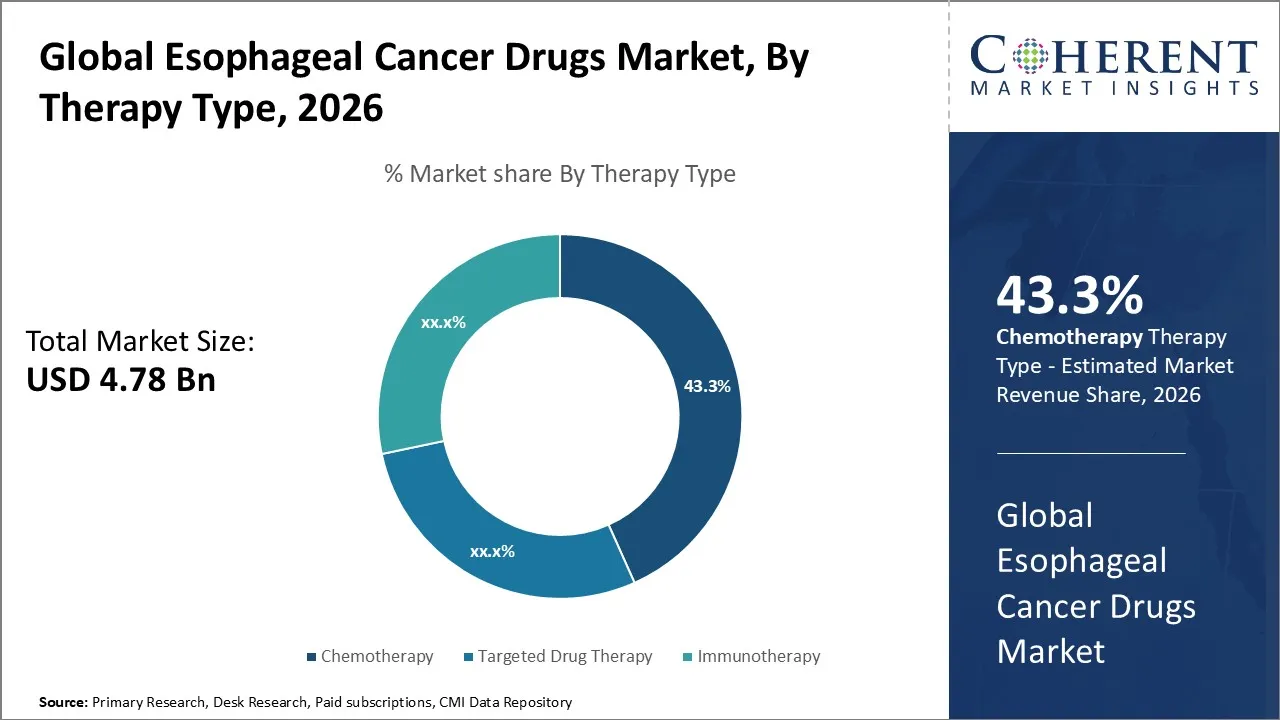
The Esophageal Cancer Drugs Market is estimated to be valued at USD 4.78 Bn in 2026 and is expected to reach USD 6.78 Bn by 2033, exhibiting a compound annual growth rate (CAGR) of 6.7% from 2026 to 2033.
The market for medications to treat esophageal cancer is growing because more people are getting the disease and more people want effective therapies. Chemotherapy, targeted therapy, and immunotherapy are all part of the market. Chemotherapy is still the main treatment for all stages of the disease. Market growth is driven by new drugs, better diagnostic tools, and more people using combination therapy. Strong healthcare systems, more awareness, and easier access to cancer services also help the industry grow around the world.
|
Current Events |
Description and its impact |
|
Regulatory and Approval Developments |
|
|
Epidemiological and Demographic Shifts |
|
|
Healthcare Infrastructure and Access Initiatives |
|
Uncover macros and micros vetted on 75+ parameters: Get instant access to report
Chemotherapy holds the largest market share of 43.3% in 2026. Chemotherapy drives the esophageal cancer drugs market by maintaining a broad clinical role and a strong position in standard treatment guidelines. Clinicians apply it extensively in neoadjuvant, adjuvant, and palliative care, both as a standalone option and in combination with radiation and surgery. Its ability to complement newer therapies, demonstrated effectiveness in advanced disease, and widespread availability of affordable generics sustain demand. Moreover, its applicability across varied patient groups strengthens its continued clinical and commercial importance.
In February 2026, ImmunityBio, Inc. launched ResQ215B, a Phase 2 study testing a chemotherapy- and lymphodepletion-free immunotherapy for patients with indolent B-cell non-Hodgkin lymphoma, including Waldenström’s Macroglobulinemia.
Carcinoid Tumors expected to hold largest market share of 34.4% in 2026. Carcinoid tumors influence the esophageal cancer drugs market by creating demand for specialized and clinically focused treatments. Advances in diagnostic tools and greater clinical awareness enable earlier and more accurate detection of esophageal neuroendocrine tumors, driving the use of targeted therapies. The requirement for tailored drug regimens, including systemic and symptom-management treatments, sustains market activity. Continued research into neuroendocrine tumor mechanisms and growing adoption of personalized therapies further support drug development for this uncommon esophageal cancer subtype. For instance, in April 2025, Sylvester Comprehensive Cancer Center at the University of Miami Miller School of Medicine started enrolling patients in a clinical trial for high-grade neuroendocrine tumors, a rare and aggressive cancer with limited treatment options beyond chemotherapy.
Hospital Pharmacy acquired the prominent market share of 45.9% in 2026. Hospital pharmacies drive the esophageal cancer drugs market by delivering complex oncology treatments safely and efficiently. They manage high patient volumes through centralized procurement, storage, and preparation of chemotherapy and immunotherapy drugs. By collaborating closely with clinical teams, they improve dosing precision, treatment monitoring, and side-effect management. Hospital pharmacies also provide access to investigational drugs in clinical trials and support both inpatient and outpatient care, establishing themselves as a key channel for distributing and administering esophageal cancer medications.
To learn more about this report, Download Free Sample
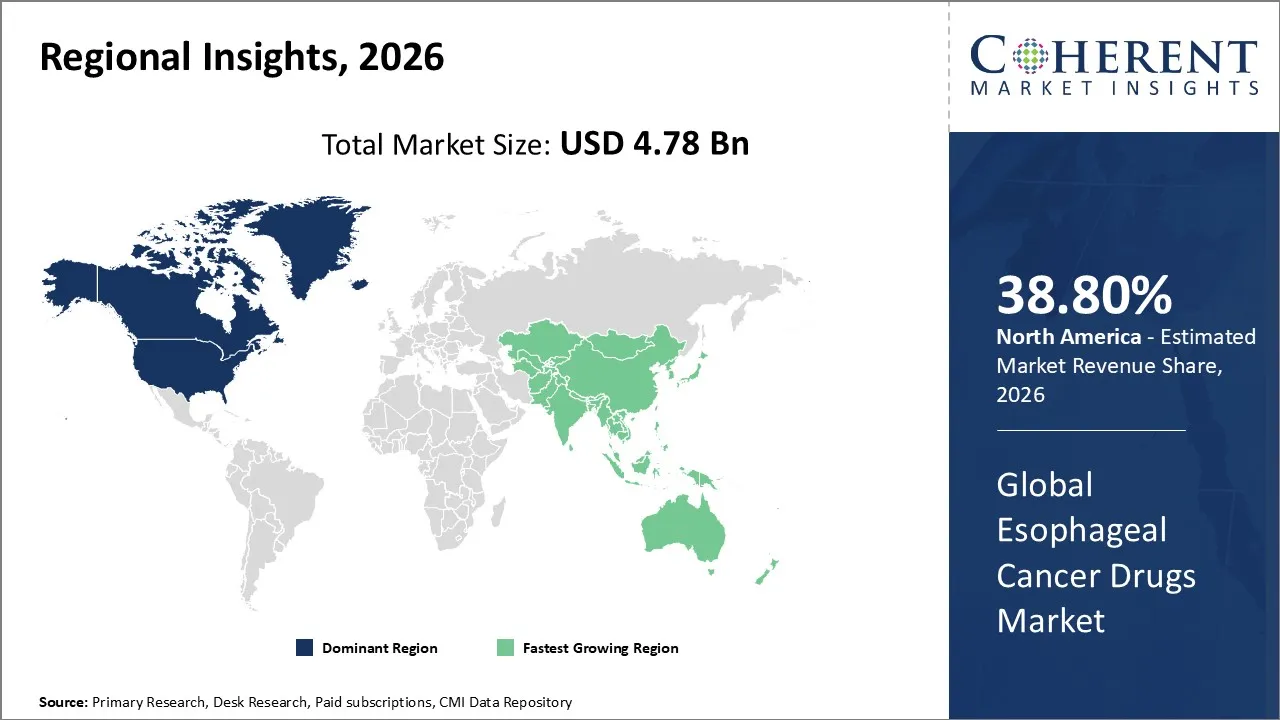
North America dominates the overall market with an estimated share of 38.8% in 2026. The North America esophageal cancer drugs market grows as healthcare providers adopt advanced therapies and leverage a strong healthcare infrastructure. Clinicians actively use combination treatments, blending chemotherapy, targeted therapy, and immunotherapy to improve patient outcomes. Expanding clinical trials and continuous drug innovation drive the launch of new therapies. High awareness, advanced diagnostic capabilities, and supportive reimbursement systems increase patient access, while leading pharmaceutical companies and specialized oncology centers influence market dynamics and reinforce North America’s leadership in the global esophageal cancer drugs market. For instance, in May 2025, Merck and Daiichi Sankyo launched the global Phase III IDeate-Esophageal01 trial (NCT06644781) testing ifinatamab deruxtecan in advanced or metastatic ESCC patients after platinum-based chemotherapy and immunotherapy.
The Asia Pacific esophageal cancer drugs market expands as rising disease prevalence and improving healthcare infrastructure drive higher treatment demand. Enhanced diagnostic facilities, increased awareness, and growing numbers of oncology centers improve early detection and access to care. Government initiatives and private sector investments ensure drug availability and affordability, while regional emphasis on clinical research and collaboration with global pharmaceutical companies fuels innovation and accelerates market development.
The United States esophageal cancer drugs market grows as healthcare providers implement innovative therapies and integrated treatment strategies. Oncologists actively combine chemotherapy, targeted therapy, and immunotherapy to improve patient outcomes. Widespread availability of advanced diagnostics, specialized cancer centers, and supportive reimbursement programs enhances early detection and treatment delivery. High participation in clinical trials and ongoing drug development bring new therapeutic options to patients. Additionally, strong investment from leading pharmaceutical companies and increasing awareness among clinicians and patients drive market growth and influence dynamics nationwide.
The India esophageal cancer drugs market grows as rising incidence rates and strengthening healthcare infrastructure drive higher treatment demand. Oncologists actively employ chemotherapy, targeted therapy, and immunotherapy to address diverse patient needs. Improved diagnostic capabilities, expanding oncology centers, and greater awareness enhance early detection and timely care. Government programs and private sector investments increase drug availability and affordability, while collaborations with global pharmaceutical companies and participation in clinical research fuel innovation, expand treatment options, and advance the overall development of India’s esophageal cancer drugs market. For instance, in June 2025, Glenmark Pharmaceuticals launched Tevimbra® in India, an immuno-oncology drug for NSCLC and ESCC, expanding access to advanced cancer treatments.
Clinicians increasingly integrate chemotherapy, targeted therapy, and immunotherapy to improve survival and treatment outcomes. Combining multiple modalities helps address advanced-stage disease, enhances response rates, and supports personalized treatment approaches, making combination therapy a key trend shaping prescribing patterns and driving demand for diverse drug portfolios in the esophageal cancer market.
Pharmaceutical innovation emphasizes targeted therapies and immunotherapies, offering more precise and effective treatment options. Drugs that focus on specific molecular pathways or immune checkpoints are gaining traction, reflecting a shift from conventional chemotherapy to therapies that improve efficacy, reduce toxicity, and meet the growing demand for precision oncology in esophageal cancer care.
The growing understanding of molecular pathways in esophageal cancer creates significant opportunities for targeted therapies and immunotherapies. Pharmaceutical companies can develop drugs that precisely act on specific tumor markers or immune checkpoints, offering higher efficacy and lower toxicity. The adoption of these therapies in combination with existing treatments can improve patient outcomes, enhance survival rates, and position companies to capture a larger share of a market increasingly focused on personalized, precision oncology solutions.
| Report Coverage | Details | ||
|---|---|---|---|
| Base Year: | 2025 | Market Size in 2026: | USD 4.78 Bn |
| Historical Data for: | 2020 To 2024 | Forecast Period: | 2026 To 2033 |
| Forecast Period 2026 to 2033 CAGR: | 6.7% | 2033 Value Projection: | USD 6.78 Bn |
| Geographies covered: |
|
||
| Segments covered: |
|
||
| Companies covered: |
Amgen Inc., Eli Lilly and Company, F. Hoffmann-La Roche, Bristol-Myers Squibb Company, Boehringer Ingelheim GmbH, Bristol-Myers Squibb, GlaxoSmithKline Plc., Novartis AG, Johnson & Johnson, Gilead Sciences, Genentech, Inc., Sanofi-Aventis, and Merck & Co. |
||
| Growth Drivers: |
|
||
| Restraints & Challenges: |
|
||
Uncover macros and micros vetted on 75+ parameters: Get instant access to report
Share
Share
About Author
Vipul Patil is a dynamic management consultant with 6 years of dedicated experience in the pharmaceutical industry. Known for his analytical acumen and strategic insight, Vipul has successfully partnered with pharmaceutical companies to enhance operational efficiency, cross broader expansion, and navigate the complexities of distribution in markets with high revenue potential.
Missing comfort of reading report in your local language? Find your preferred language :
Transform your Strategy with Exclusive Trending Reports :
Frequently Asked Questions
Joining thousands of companies around the world committed to making the Excellent Business Solutions.
View All Our Clients
 Schedule a meeting with report Author