Epidural Anesthesia Disposable Devices Market Analysis & Forecast: 2026-2033

The Epidural Anesthesia Disposable Devices Market is estimated to be valued at USD 2.23 Bn in 2026 and is expected to reach USD 3.43 Bn by 2033, exhibiting a compound annual growth rate (CAGR) of 11.2% from 2026 to 2033.
The Epidural Anesthesia Disposable Devices Market offers single-use items that allow doctors safely and effectively give epidural anesthesia during surgeries, labor, and pain management procedures. Growing surgeries, rising demand for pain control, and a focus on patient safety and infection prevention drive adoption.
Hospitals and ambulatory centers choose disposable systems to ensure sterility and improve efficiency. Technological advancements in catheters, trays, and delivery systems, combined with expanding healthcare infrastructure and increasing clinician awareness, actively propel global market growth.
|
Current Events |
Description and its impact |
|
Geopolitical and Regulatory Developments |
|
|
Macroeconomic Factors |
|
|
Competitive and Market Structure Changes |
|
Uncover macros and micros vetted on 75+ parameters: Get instant access to report
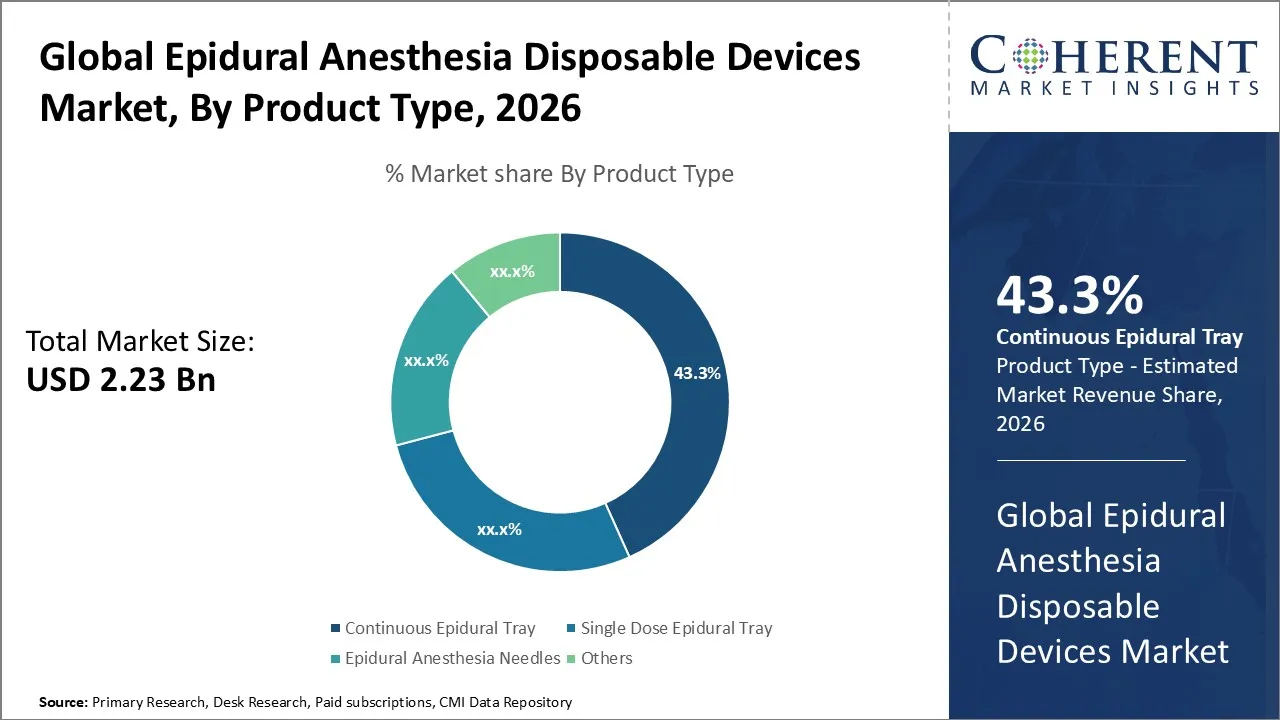
In 2026, Continuous Epidural Tray segment is projected to hold the greatest share of the market, with 43.3%. The continuous epidural tray segment grows because clinicians rely on it for procedures that require long-lasting and consistent pain relief, including labor analgesia, major surgeries, and postoperative care. By enabling uninterrupted drug delivery, it enhances patient comfort and gives anesthesiologists greater clinical control. Healthcare providers increasingly adopt standardized, pre-assembled trays to shorten setup time, reduce procedural errors, and improve workflow efficiency. Moreover, hospitals prioritize infection prevention, staff convenience, and dependable pain management solutions, which actively boosts global demand for continuous epidural trays.
Adults expected to hold largest market share of 36.6% in 2026. The adults segment of the epidural anesthesia disposable devices market expands as adults account for a large share of surgical procedures and pain management requirements. Clinicians commonly use epidural anesthesia for orthopedic, abdominal, and spinal surgeries performed on adult patients. Increasing numbers of individuals are relying on epidural approaches amid more cases of chronic pain and conditions that come with getting older. Healthcare providers also prefer safer, more targeted anesthesia that speeds up recovery. At the same time, the growing use of disposable devices to lower the risk of infection is driving up demand in adult patient care.
Hospitals acquired the prominent market share of 45.5% in 2026. Hospitals are the main drivers of the market for disposable epidural anesthesia devices considering they are the main places where complex surgeries, labor and delivery, and advanced pain management services are done. The high number of patients and the wide range of clinical uses make epidural anesthesia more common in hospitals. Strict rules for controlling infections make it more likely that single-use devices will be used to keep things clean and safe for patients. Hospitals also benefit from standardized disposable kits that make procedures easier, reduce on prep time, and help keep things running smoothly in all operating rooms and wards.
To learn more about this report, Download Free Sample
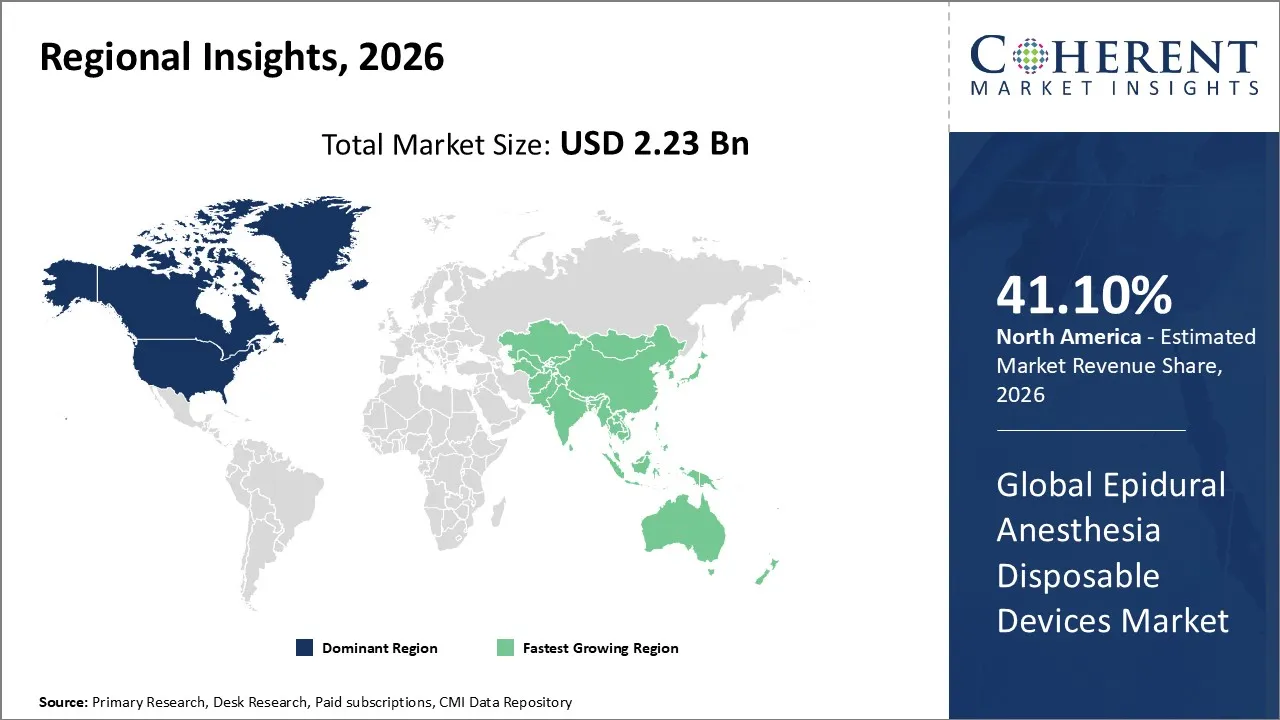
North America dominates the overall market with an estimated share of 41.10% in 2026. The North America epidural anesthesia disposable devices market continues to grow as advanced healthcare systems widely implement regional anesthesia for surgeries and labor care. Healthcare providers actively choose disposable devices to meet strict standards for safety and infection control. Manufacturers push for new ideas by making catheters and trays that are easier to use, which makes clinical work more efficient.
Strong awareness of pain management solutions among clinicians and patients, combined with steady hospital demand and robust supply networks, actively influences market trends throughout the region.
The Asia Pacific epidural anesthesia disposable devices market continues to develop as countries expand healthcare infrastructure and improve access to surgical and maternity services. Rapid urbanization and higher healthcare spending push hospitals to adopt modern anesthesia practices, including disposable epidural systems. Clinicians increasingly prefer safe, infection-controlled devices to manage rising procedure volumes. Moreover, better medical training, growing awareness of pain management, and the presence of international manufacturers offering affordable products actively influence market trends across the region.
The market for disposable epidural anesthesia devices in the United States is growing due to the are so many surgeries and epidural anesthesia is used a lot in obstetric and postoperative care. Healthcare providers are actively using single-use devices to make procedures safer for patients and more efficient. Manufacturers are always making their products better. For example, they make needles that are safer and catheter systems that are more advanced to help with clinical precision.
Strong hospital infrastructure, skilled anesthesia professionals, and a consistent focus on high-quality pain management actively shape market trends across the country.
The China epidural anesthesia disposable devices market continues to grow as hospitals and surgical centers modernize and implement advanced anesthesia practices. Healthcare providers actively use single-use epidural systems to deliver safe and efficient pain management during surgeries and labor. They increasingly focus on infection control and standardized procedures, while improved medical training and clinician awareness enhance device adoption. Moreover, international and domestic manufacturers introduce innovative, cost-effective solutions that actively drive market growth and transform anesthesia practices throughout the country.
Increasingly, hospitals and surgical centers are using disposable epidural devices to make patients safer and lower the risk of infections. Single-use trays, catheters, and needles make procedures easier, reduce the risk of cross-contamination, and make managing inventory easier. For labor, surgery, and recovery, clinicians prefer these devices. Manufacturers, on the other hand, focus on pre-assembled kits that reduce setup time and procedural errors, which makes the overall workflow more efficient in hospitals with a high number of patients.
Manufacturers are continuously innovating with ergonomic tray layouts, safety-engineered needles, and advanced catheter systems. New designs focus on accurate drug delivery, easy insertion, and simple operation. Innovations also aim to reduce problems and make patients more comfortable. Clinicians can keep pain relief steady by connecting these devices to infusion pumps and smart monitoring devices. This makes them more appealing to both hospitals and ambulatory care centers.
There is a strong potential for products that make things easier, safer, and more comfortable for patients. There are opportunities for smart catheters, pre-assembled trays that are easy to use, and drug delivery systems that are built in. Devices that reduce mistakes during procedures, make pain management easier, and streamline workflow can set brands apart. By using advanced materials, safety-engineered needles, and connecting to monitoring systems, manufacturers can meet unmet clinical needs and get hospitals, labor wards, and pain management centers to use their products more.
| Report Coverage | Details | ||
|---|---|---|---|
| Base Year: | 2025 | Market Size in 2026: | USD 2.23 Bn |
| Historical Data for: | 2020 To 2024 | Forecast Period: | 2026 To 2033 |
| Forecast Period 2026 to 2033 CAGR: | 11.2% | 2033 Value Projection: | USD 3.43 Bn |
| Geographies covered: |
|
||
| Segments covered: |
|
||
| Companies covered: |
B. Braun Melsungen AG, Becton, Dickinson and Company, Teleflex Incorporated, Smiths Medical, Sarstedt, Inc., Epimed, Egemen International, SFM Medical Devices, VOGT Medical, Vygon, and Flat Medical. |
||
| Growth Drivers: |
|
||
| Restraints & Challenges: |
|
||
Uncover macros and micros vetted on 75+ parameters: Get instant access to report
Share
Share
About Author
Komal Dighe is a Management Consultant with over 8 years of experience in market research and consulting. She excels in managing and delivering high-quality insights and solutions in Health-tech Consulting reports. Her expertise encompasses conducting both primary and secondary research, effectively addressing client requirements, and excelling in market estimation and forecast. Her comprehensive approach ensures that clients receive thorough and accurate analyses, enabling them to make informed decisions and capitalize on market opportunities.
Missing comfort of reading report in your local language? Find your preferred language :
Transform your Strategy with Exclusive Trending Reports :
Frequently Asked Questions
Joining thousands of companies around the world committed to making the Excellent Business Solutions.
View All Our Clients
 Schedule a meeting with report Author