all report title image

Electrical Stimulation Devices Market Analysis & Forecast: 2026-2033

Electrical Stimulation Devices Market, By Device Type (Spinal Cord Stimulation Devices, Deep Brain Stimulation Devices, Vagus Nerve Stimulation Devices, Sacral Nerve Stimulation Devices, Gastric Electric Stimulation Devices, Transcutaneous electrical nerve Stimulation Devices, Neuromuscular Electrical Stimulation Devices, Cranial Electrical Stimulation Device, and Other Electrical Stimulation Devices), By Application (Pain Management, Neurological and Movement Disorder Management, Musculoskeletal Disorder Management, Metabolism & GIT Management, Incontinence Management, and Others), By End User (Hospitals, Specialty Clinics, Ambulatory Centers, and Others), By Geography (North America, Latin America, Europe, Asia Pacific, Middle East, and Africa)

  • Published In : 22 Jan, 2026
  • Code : CMI2486
  • Page number :153
  • Formats :
      Excel and PDF :
  • Industry : Medical Devices
  • Historical Range : 2020 - 2024
  • Forecast Period : 2026 - 2033

Electrical Stimulation Devices Market Size and Trends: 2026-2033

Electrical stimulation devices market is estimated to be valued at USD 5,980 Mn in 2026 and is expected to reach USD 8,240 Mn by 2033, exhibiting a compound annual growth rate (CAGR) of 4.7% from 2026 to 2033.

Key Takeaways

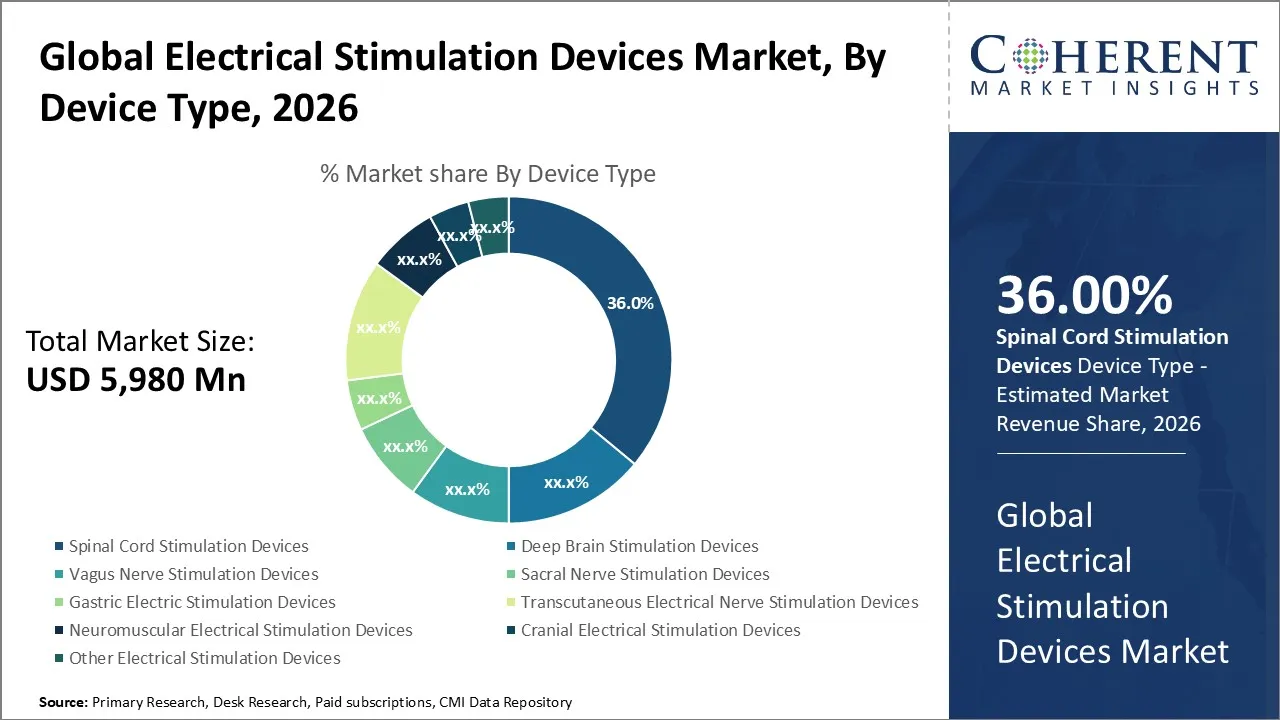
  • Based on Device Type, the Spinal Cord Stimulation Devices segment is expected to lead the market with 36% share in 2026, due to high adoption in chronic pain management and continuous technological advancements.
  • Based on Application, the Pain Management segment is expected to hold 47% share of the market in 2026, as the prevalence of chronic pain rises and non-opioid treatment options gain preference.
  • Based on End User, the Hospitals segment is projected to account for 58% share of the market in 2026, owing to the high volume of implantable procedures and availability of specialized healthcare professionals.
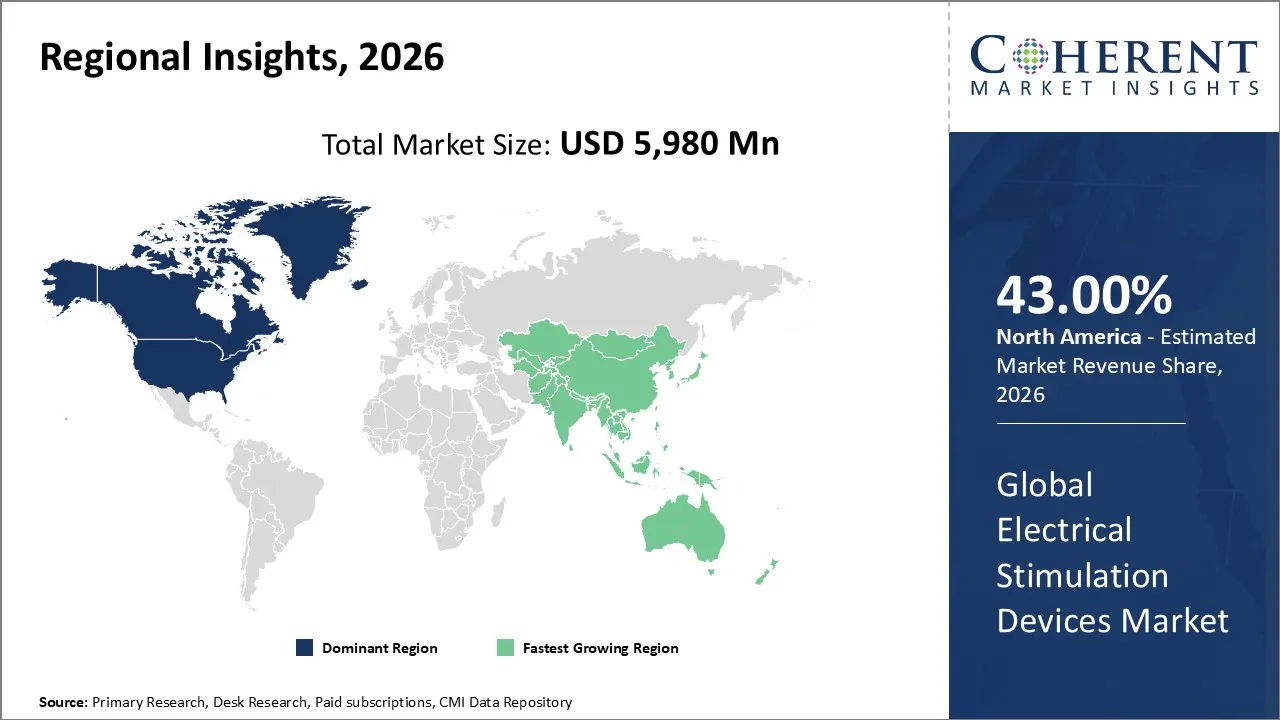
  • Based on Region, North America is set to lead the electrical stimulation devices market with 43% share in 2026. While, Asia Pacific is anticipated to be the fastest growing region.

Market Overview

The increasing prevalence of cases associated with chronic pain, neurological disorders, and musculoskeletal disorders is propelling the use of electrical stimulation devices worldwide. The growing acceptance of non-pharmacologic therapies and the shift towards the use of minimally invasive procedures have contributed to the rise in the adoption of devices such as spinal cord stimulators, deep brain stimulators, and TENS devices. The advancements in technology, including rechargeable devices, wearable devices, portable devices, and MRI-compatible devices, have also propelled the market.

Current Events and Its Impacts on the Electrical Stimulation Devices Market

Current Events

and its impact

Regulatory and Healthcare Policy Reforms

  • Description: FDA Modernization and Digital Therapeutics Approval
  • Impact: Accelerated approval processes for innovative electrical stimulation devices, expanding market opportunities for neurostimulation and pain management technologies
  • Description: European MDR Implementation Challenges
  • Impact: Increased regulatory compliance costs, making it harder to enter the market, particularly among manufacturers of electrical stimulation devices

Technological Convergence and Innovation Breakthroughs

  • Description: AI-Driven Personalized Stimulation
  • Impact: The effect of the combination of advanced machine learning capabilities, providing accurate therapy, thus bringing about competitiveness among technologically motivated manufacturers.
  • Description: Wireless and Miniaturization Advances
  • Impact: Development of implantable devices with extended battery life and remote monitoring capabilities expanding patient accessibility

Uncover macros and micros vetted on 75+ parameters: Get instant access to report

How is product innovation driving the growth in electrical stimulation devices?

  • Wearable & Portable Devices: Development of a battery-powered, portable version of a TENS or a neuromuscular stimulation device.
  • Smart and Connected Systems: Combination of application component and the Bluetooth part for observation of treatment process, control of stimulation parameters, and patient compliance.
  • Rechargeable and Long-Life Implants: Progressions in spinal cord stimulation and innovation in deep brain stimulation technology, particularly in the area of rechargeable long-life implants.
  • MRI-Compatible Devices: These will be implants of the next generation to ensure compatibility with MRI imaging. This will enhance their use in the diagnosis of images for patients.
  • Personalized therapy solutions: Personalized stimulation plans can be developed for a patient according to his conditions.
  • Non-Invasive Alternatives: Increasing demands for transcutaneous and cranial stimulation devices providing different means of therapeutic alternatives via non-surgical techniques.
  • Integration with Telemedicine: Remote patient observation as well as expert alteration for enhancing patient results while avoiding hospitalization.

Segmental Insights

Electrical Stimulation Devices Market By Device Type

To learn more about this report, Download Free Sample

Electrical Stimulation Devices Market Insights, By Device Type – Spinal Cord Stimulation Devices lead due to high adoption in chronic pain management

Based on device type, the Spinal Cord Stimulation Devices market is projected to have the largest market share of 36% in 2026. This can be attributed to the widespread usage of these devices in the treatment of pain, along with the continuous innovation that takes place in the area. These devices are used for providing focused pain relief using implantable devices that raise the efficacy of treatment while decreasing the need for the usage of opioids.

For instance, in July 2025, Boston Scientific announced U.S. FDA approval of two new Precision Plus™ SCS leads (Linear™ 3‑4 and Linear™ 3‑6 percutaneous leads), offering broader configuration options for pain management specialists and enhancing therapeutic choices within the spinal cord stimulation segment.

Electrical Stimulation Devices Market Insights, By Application – Pain Management dominates as non-opioid therapies gain preference

By application, the pain management segment is poised to account for the highest share of 47% in the market by 2026, owing to an increase in global prevalence of chronic pain disorders and rising awareness regarding the availability of non-pharmacological treatment options. There is a higher demand for electrical stimulation therapies, which are now being recommended by healthcare professionals due to their safety as minimally invasive alternatives to conventional pain medications.

For instance, in July 2025, Nalu Medical announced results from the COMFORT 2 trial showing its Peripheral Nerve Stimulation System provided significant and lasting pain relief in multiple anatomical targets and a high rate of patients receiving ≥50% pain relief, representing important developments in pain treatment using electrical neuromodulation.

Electrical Stimulation Devices Market Insights, By End User – Hospitals lead due to high procedural volumes and specialized care

Based on end user, the Hospitals segment is estimated to hold the largest market share of 58% in 2026.Implantable procedures including spinal cord and deep brain stimulation are preferred in hospitals owing to the availability of specialized healthcare professionals, advanced surgical infrastructure, and high procedural volumes. Moreover, the segment’s growth is also supported by the increasing number of chronic pain and neurological disorder cases requiring in-hospital interventions.

For instance, in July 2025, Neuros Medical announced the initial commercial procedure with its Altius Direct Electrical Nerve Stimulation System, a cutting-edge FDA-approved treatment for chronic post-amputation pain, marking a major achievement for hospitals providing innovative electrical stimulation therapy services at the Baylor Scott & White Heart & Vascular Hospital in Dallas, Texas.
Regional Insights

Electrical Stimulation Devices Market By Regional Insights

To learn more about this report, Download Free Sample

North America Electrical Stimulation Devices Market Analysis & Trends

North America is projected to remain the leading market for electrical stimulation devices in 2026, with an estimated market share of 43%. The main drivers contributing to the growth of the market in North America include the prevalence of chronic pain cases, prevalence of neurological conditions, major players operating in the market, adoption of advanced healthcare infrastructure, and favorable reimbursement policies for minimally invasive procedures.

For instance, in July 2025, Medtronic launched its Inceptiv™ closed-loop spinal cord stimulator across major U.S. hospitals, offering real-time adaptive pain management and MRI-compatible features. This launch expanded hospital-based access to advanced pain management solutions and reinforced North America’s leadership in the market.

Asia Pacific Electrical Stimulation Devices Market Analysis & Trends

The Asia Pacific region is expected to be the fastest-growing market owing to factors such as increasing healthcare awareness, growing prevalence of chronic pain and neurological disorders, rise in the population above 65 years, and advancement in hospital and clinical infrastructure in developing nations like China, India, and Japan. The availability of cost-effective and innovative electrical stimulation therapies through emerging local manufacturers and their collaborations with global players is one of the key drivers for adoption in this region.

For instance, in October 2025, ONWARD Medical introduced its ARC-EX non-invasive spinal cord stimulation system in select hospitals in India and Japan, providing an alternative to implantable systems for chronic pain patients. The launch addressed rising demand for non-invasive, hospital-based therapies and contributed to the rapid adoption of electrical stimulation devices in the region.

Electrical Stimulation Devices Market Outlook for Key Countries

Is the U.S. electrical stimulation devices market expanding due to hospital infrastructure, technological advancements, and rising chronic pain prevalence?

The U.S. electrical stimulation devices market continues to grow, owing to high adoption of advanced therapies across hospitals and specialty clinics, continuous product innovations, and an ever-growing patient population suffering from various chronic pain, neurological, and musculoskeletal disorders.

 For instance, in December 2025, The U.S. Food and Drug Administration (FDA) approved the first at‑home brain stimulation device for depression, Flow Neuroscience’s FL‑100, designed to deliver mild electrical currents to brain regions that regulate mood.

Is China’s investment in advanced healthcare and wellness driving market growth?

China’s focus on improving healthcare access, combined with rising awareness of chronic pain management and wellness, is accelerating the adoption of electrical stimulation devices. Government initiatives to modernize hospitals, growing insurance coverage, and increased consumer health consciousness are encouraging hospitals and clinics to adopt TENS, SCS, and other neuromodulation therapies.

For instance, in October 2025, China’s National Medical Products Administration (NMPA) approved the first and only Remote Electrical Neuromodulation (REN) based migraine treatment, the Nerivio® REN wearable device developed by Theranica and introduced by Pier 88 Health in Greater China.

Market Report Scope

Electrical Stimulation Devices Market Report Coverage

Report Coverage Details
Base Year: 2025 Market Size in 2025: USD 5,980 Mn
Historical Data for: 2020 To 2024 Forecast Period: 2026 To 2033
Forecast Period 2026 to 2033 CAGR: 4.7% 2033 Value Projection: USD 8,240 Mn
Geographies covered:
  • North America: U.S. and Canada
  • Latin America: Brazil, Argentina, Mexico, and Rest of Latin America
  • Europe: Germany, U.K., Spain, France, Italy, Russia, and Rest of Europe
  • Asia Pacific: China, India, Japan, Australia, South Korea, ASEAN, and Rest of Asia Pacific
  • Middle East: GCC Countries, Israel, and Rest of Middle East
  • Africa: South Africa, North Africa, and Central Africa
Segments covered:
  • By Device Type: Spinal Cord Stimulation Devices, Deep Brain Stimulation Devices, Vagus Nerve Stimulation Devices, Sacral Nerve Stimulation Devices, Gastric Electric Stimulation Devices, Transcutaneous electrical nerve stimulation Devices, Neuromuscular Electrical Stimulation Devices, Cranial Electrical Stimulation Devices, and Other Electrical Stimulation Devices
  • By Application: Pain Management, Neurological and Movement Disorder Management, Musculoskeletal Disorder Management, Metabolism & GIT Management, Incontinence Management, and Others
  • By End User: Hospitals, Specialty Clinics, Ambulatory Centers, and Others
Companies covered:

Boston Scientific Corporation, BTL Industries, Inc., Cyberonics, Inc., DJO Global, Inc., Medtronic plc., Nevro Corporation., NeuroMetrix, Inc., St. Jude Medical, Inc., Uroplasty, Inc. (Cogentix Medical), and Zynex, Inc.

Growth Drivers:
  • Rising prevalence of chronic pain and neurological disorders
  • Increasing adoption of non-invasive and minimally invasive therapies
Restraints & Challenges:
  • Innovation in device technology, including adaptive and closed-loop systems
  • Expansion of market adoption in emerging regions and home-use therapies

Uncover macros and micros vetted on 75+ parameters: Get instant access to report

Electrical Stimulation Devices Market Driver

Rising prevalence of chronic pain and neurological disorders

Rising cases of chronic pain, musculoskeletal disorders, and neurological disorders like Parkinson’s disease and epilepsy are boosting the market demand for electrical stimulation devices. Rising awareness among patients regarding the availability of non-opioid, non-invasive, and minimally invasive treatment modalities is also contributing to the surge in demand. Modern technologies, including spinal cord stimulation devices, deep brain stimulation devices, and transcutaneous electrical nerve stimulation devices, are being preferred over conventional pharmacological modalities, which is definitely propelling the market.

Electrical Stimulation Devices Market Opportunity

Innovation in device technology and expansion into emerging markets

Technological innovations, such as adaptive and closed-loop neuromodulation systems, home-use wearables, and pain management solutions powered by AI, will present significant growth opportunities. Additional opportunities lie in the expanding use of electrical stimulation therapies in emerging regions like Asia-Pacific and Latin America, along with increasing awareness and infrastructure. At the same time, more non-invasive and patient-friendly devices for conducting therapy at home may facilitate a much larger patient base, as well as better adherence to treatments, leading to overall market growth.

Analyst Opinion (Expert Opinion)

  • The electrical stimulation devices market is undergoing rapid transformations, thanks to the convergence of clinical requirements, innovation, and changing preferences. The adoption of advanced spinal cord stimulation systems and deep brain stimulation systems in hospitals and specialist centers is increasing, owing to the shift in clinical practices towards more precise delivery. The upcoming devices, such as closed-loop and adaptive systems, are setting new standards in the field, with the need for real-time personalization of the treatment protocol being favored in the opinion of physicians.
  • Patient demand is also driving changes in the market. Non-invasive and at-home electrical stimulation devices represent a growing niche, as patients look for convenient, effective alternatives to traditional therapies. The increasing focus on improving patient adherence, comfort, and ease of use is driving manufacturers to develop innovative, wearable designs and digital integration, thus creating a new segment of therapy-driven lifestyle devices.
  • In the Asia-Pacific region, approvals and pilot projects in hospitals are introducing neuromodulation and rehabilitation tools to this region. Joint ventures between foreign technology companies and local hospitals are introducing innovative therapies to different settings and progressing from research applications to mainstream treatment protocols.

Electrical Stimulation Devices Industry News

  • In October 2025, Boston Scientific announced an agreement to acquire Nalu Medical, Inc. to expand its neuromodulation and peripheral nerve stimulation offerings for chronic pain, which uses mild electrical impulses to interrupt pain signals via a miniaturized implantable system.
  • In February 2025, Medtronic earned U.S. FDA approval for its BrainSense™ Adaptive deep brain stimulation (aDBS) system, providing a new era of personalized, real‑time adaptive DBS therapy for Parkinson’s disease and other neurological disorders, marking the largest commercial launch of brain‑computer interface technology in this space.
  • In June 2025, Zynex Medical entered a strategic collaboration with MellingMedical, aiming to expand access to Zynex’s non‑invasive pain management electrical stimulation solutions to federal healthcare providers (including veterans and DoD facilities), enhancing institutional adoption of electrotherapy devices.

Market Segmentation

  • Device Type Insights (Revenue, USD Mn, 2026 - 2033)
    • Spinal Cord Stimulation Devices
    • Deep Brain Stimulation Devices
    • Vagus Nerve Stimulation Devices
    • Sacral Nerve Stimulation Devices
    • Gastric Electric Stimulation Devices
    •  Transcutaneous electrical nerve stimulation Devices
    • Neuromuscular Electrical Stimulation Devices
    •  Cranial Electrical Stimulation Devices
    •  Other Electrical Stimulation Devices
  • Application Insights (Revenue, USD Mn, 2026 - 2033)
    • Pain Management
    • Neurological and Movement Disorder Management
    •  Musculoskeletal Disorder Management
    •  Metabolism & GIT Management
    •  Incontinence Management
    •  Others
  • End User Insights (Revenue, USD Mn, 2026 - 2033)
    • Hospitals
    • Specialty Clinics
    •  Ambulatory Centers
    • Others
  • Regional Insights (Revenue, USD Mn, 2026 - 2033)
    • North America
      • U.S.
      • Canada
    • Latin America
      • Brazil
      • Argentina
      • Mexico
      • Rest of Latin America
    • Europe
      • Germany
      • U.K.
      • Spain
      • France
      • Italy
      • Russia
      • Rest of Europe
    • Asia Pacific
      • China
      • India
      • Japan
      • Australia
      • South Korea
      • ASEAN
      • Rest of Asia Pacific
    • Middle East
      • GCC Countries
      • Israel
      • Rest of Middle East
    • Africa
      • South Africa
      • North Africa
      • Central Africa
  • Key Players Insights
    • Boston Scientific Corporation
    • BTL Industries, Inc.
    • Cyberonics, Inc.
    • DJO Global, Inc.
    • Medtronic plc.
    • Nevro Corporation.
    • NeuroMetrix, Inc.
    • Jude Medical, Inc.
    • Uroplasty, Inc. (Cogentix Medical)
    • Zynex, Inc.

Sources

Primary Research Interviews

  • Electrical Stimulation Device Manufacturers & Brand Managers
  • Medical Device Product Designers & Engineers
  • Healthcare Equipment Distributors
  • Neurologists, Pain Management Specialists & Rehabilitation Experts
  • Hospital Procurement Heads & Specialty Clinic Managers
  • E-commerce & Medical Retail Platform Category Managers
  • Clinical Researchers & Physiotherapists
  • Others

Databases

  • Bloomberg Terminal
  • Thomson Reuters Eikon
  • S&P Global Market Intelligence
  • Statista
  • PitchBook
  • ClinicalTrials.gov
  • Others

Magazines

  • Medical Device & Diagnostic Industry (MD+DI)
  • Neurology Today
  • MedTech Insight
  • Biomedical Instrumentation & Technology Magazine
  • Medical Product Manufacturing News
  • Others

Journals

  • Journal of Neuromodulation
  • Neuromodulation: Technology at the Neural Interface
  • Journal of Pain Research
  • Journal of Clinical Neurophysiology
  • Frontiers in Neuroscience
  • Others

Newspapers

  • The Wall Street Journal
  • Financial Times
  • Reuters Health & Medical News
  • Bloomberg News
  • USA Today (Health Section)
  • Others

Associations

  • International Neuromodulation Society (INS)
  • American Association of Neurological Surgeons (AANS)
  • American Academy of Pain Medicine (AAPM)
  • European Pain Federation (EFIC)
  • World Federation of Neurological Societies (WFNS)
  • Others

Public Domain Sources

  • U.S. Food & Drug Administration (FDA) Reports & Approvals
  • ClinicalTrials.gov – Device Studies & Approvals
  • U.S. Census Bureau – Healthcare Expenditure Data
  • Bureau of Labor Statistics (BLS) – Medical Devices & Hospital Equipment
  • World Health Organization (WHO) – Health & Device Usage Reports
  • Others

Proprietary Elements

  • CMI Data Analytics Tool
  • Proprietary CMI Existing Repository of Information for the Last 8 Years

Share

Share

About Author

Manisha Vibhute is a consultant with over 5 years of experience in market research and consulting. With a strong understanding of market dynamics, Manisha assists clients in developing effective market access strategies. She helps medical device companies navigate pricing, reimbursement, and regulatory pathways to ensure successful product launches.

Missing comfort of reading report in your local language? Find your preferred language :

Frequently Asked Questions

The electrical stimulation devices market is estimated to be valued at USD 5,980 Mn in 2026, and is expected to reach USD 8,240 Mn by 2033.

The CAGR of the electrical stimulation devices market is projected to be 4.7% from 2026 to 2033.

Growing prevalence of chronic pain, neurological and musculoskeletal disorders, continuous technological innovation in implantable and non-invasive devices, and increasing preference for non-opioid treatment options are the major factors driving market growth.

High costs of implantable devices and procedures, limited awareness in emerging markets, and regulatory hurdles are the key factors hampering market growth.

In terms of device type, the Spinal Cord Stimulation Devices segment is estimated to dominate the market in 2026, due to high adoption in chronic pain management and continuous technological advancements.

Boston Scientific Corporation, BTL Industries, Inc., Cyberonics, Inc., DJO Global, Inc., Medtronic plc., Nevro Corporation, NeuroMetrix, Inc., St. Jude Medical, Inc., Uroplasty, Inc. (Cogentix Medical), and Zynex, Inc. are the major players.

North America is expected to lead the electrical stimulation devices market in 2026, due to high healthcare expenditure, advanced healthcare infrastructure, and adoption of implantable neuromodulation devices.

Select a License Type

EXISTING CLIENTELE

Joining thousands of companies around the world committed to making the Excellent Business Solutions.

View All Our Clients
trusted clients logo
© 2026 Coherent Market Insights Pvt Ltd. All Rights Reserved.