
Cholestasis Treatment Market Analysis & Forecast: 2026-2033
Cholestasis Treatment Market Size and Forecast – 2026 – 2033
The global cholestasis treatment market is projected to grow substantially from about USD 1.3 billion in 2026 to around USD 2.7 billion by 2033, expanding at an approximate CAGR of ~7.8% over 2026–2033.
Global Cholestasis Treatment Market Overview
Cholestasis treatment focuses on relieving symptoms, correcting the underlying cause, and preventing liver damage. Management depends on whether cholestasis is intrahepatic or extrahepatic. Medications such as ursodeoxycholic acid are commonly used to improve bile flow and reduce liver injury, while cholestyramine or antihistamines may help relieve itching. Fat-soluble vitamin supplements (A, D, E, and K) are often prescribed to address malabsorption. If bile duct obstruction is present, procedures such as endoscopic or surgical intervention may be required. Ongoing monitoring is essential to assess liver function and treatment response
Key Takeaways
By Product Type- Bile acid therapies, especially ursodeoxycholic acid, dominate with around 50% share.
In the cholestasis treatment market, small-molecule drugs currently dominate with an estimated 65% share.
Hospitals are the dominant end-user, holding roughly 52% of revenue.
The North America cholestasis treatment market is leading by accounting for approximately 40% of the global market.
Cholestasis Treatment Market Segmentation Analysis
To learn more about this report, Download Free Sample
Cholestasis Treatment Market Insights, By Product Type
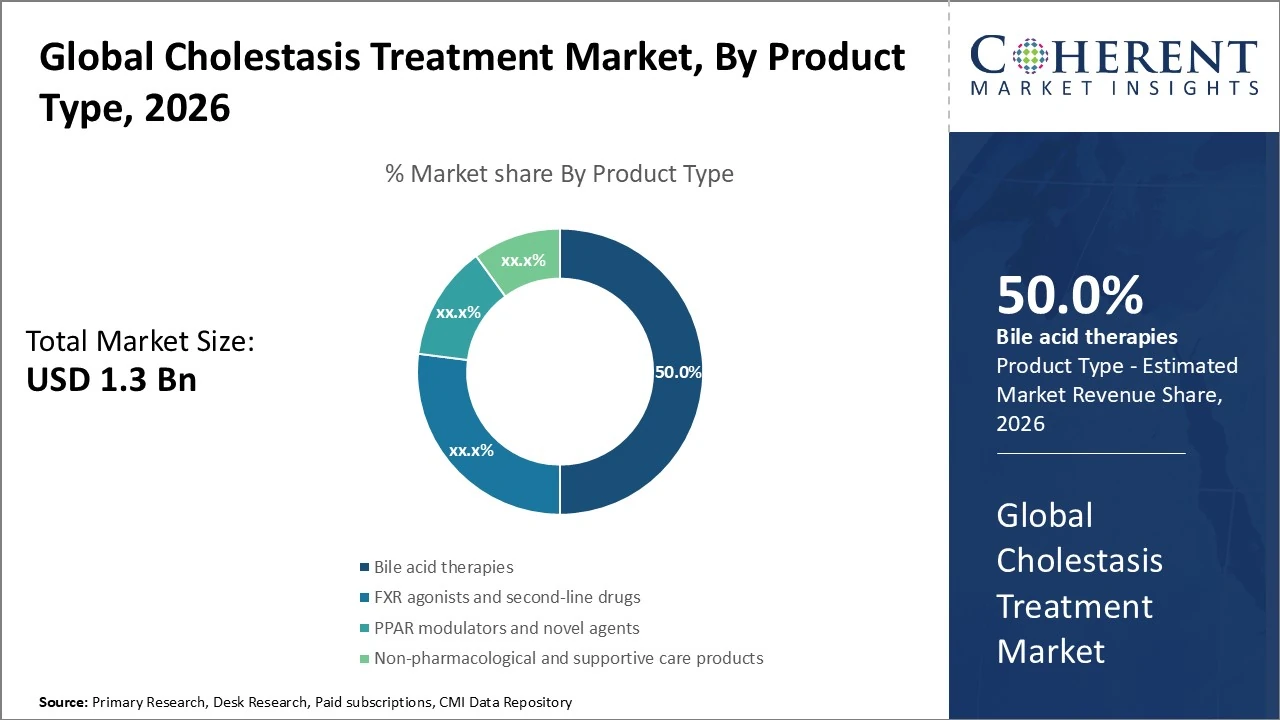
The cholestasis treatment market is segmented by product type into major drug categories. Bile acid therapies, especially ursodeoxycholic acid, dominate with around 50% share due to first-line usage and established efficacy. FXR agonists and second-line drugs like obeticholic acid account for roughly 27% of the market and are key growth drivers. Emerging PPAR modulators and novel agents contribute about 13% as they gain approval and adoption. Non-pharmacological and supportive care products make up the remaining 10%, with increasing focus on combination regimens and innovative mechanisms.
Cholestasis Treatment Market Insights, By Technology
In the cholestasis treatment market, small-molecule drugs currently dominate with an estimated 65% share, driven by established bile acid modulators and oral agents widely used in managing bile flow disorders. Biologics and advanced biopharmaceuticals account for roughly 25% and are expected to grow faster due to precision mechanisms and pipeline innovation. Emerging gene-targeted and precision medicine technologies contribute the remaining 10%, reflecting early adoption in rare cholestatic disorders.
Cholestasis Treatment Market Insights, By End-User
In the cholestasis treatment market, hospitals are the dominant end-user, holding roughly 52% of revenue due to comprehensive diagnostic services, advanced therapies, and management of complex cases. Specialty clinics account for about 28%, driven by focused outpatient hepatology care and personalized treatment plans. Homecare and other settings represent the remaining 20%, growing as remote care and chronic disease management expand. End-user trends reflect shifts toward outpatient services and decentralized care models.
Cholestasis Treatment Market Trends
Rising adoption of FXR agonists, PPAR modulators, and pipeline biologics is improving disease control beyond standard bile acid therapy.
Increased awareness, orphan drug designations, and faster approvals are driving innovation and investment.
Greater use of specialty clinics, combination therapies, and patient-specific treatment approaches is shaping care delivery.
Cholestasis Treatment Market Insights, By Geography
To learn more about this report, Download Free Sample
North America Cholestasis Treatment Market Analysis and Trends
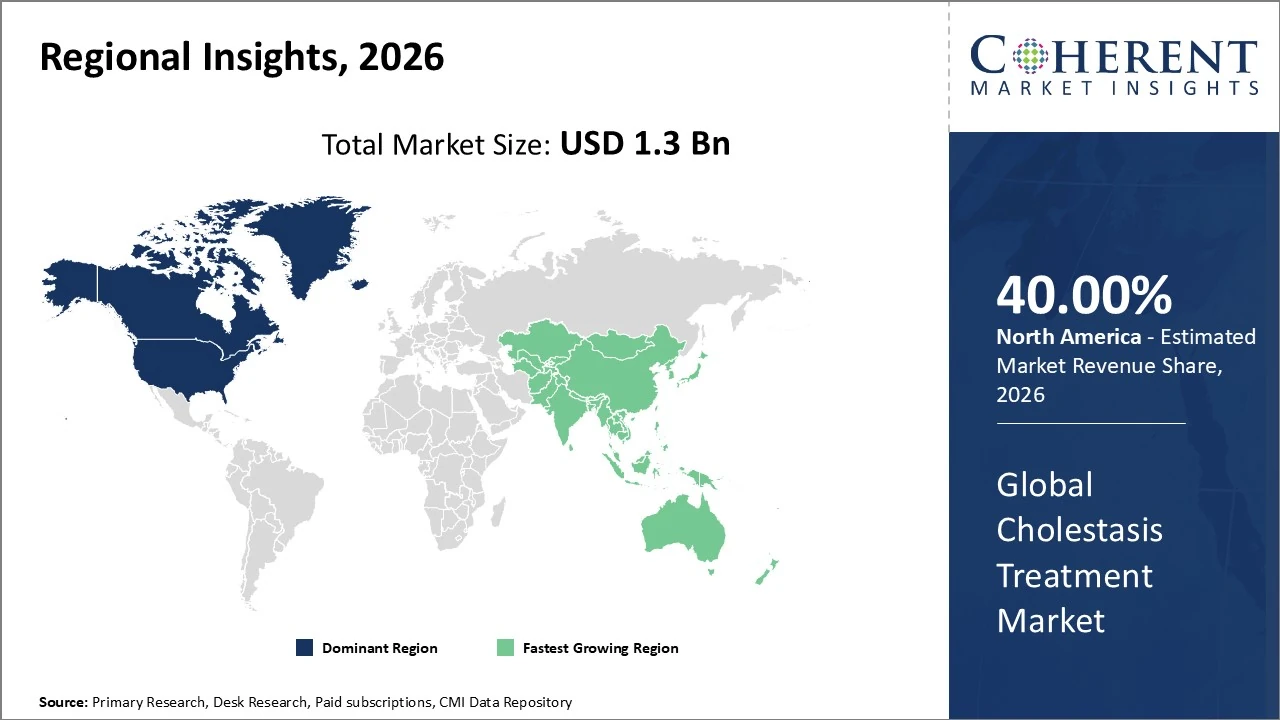
The North America cholestasis treatment market is largely driven by primary biliary cholangitis (PBC) and related cholestatic conditions which commands a substantial share, accounting for approximately 40% of the global market due to advanced healthcare infrastructure, early diagnosis, and strong pharmaceutical R&D activity. Growing adoption of targeted drugs and increased clinical trial activity are key trends, while investments in precision medicine and orphan drug approvals further strengthen growth prospects in North America.
Asia Pacific Cholestasis Treatment Market Analysis and Trends
The Asia Pacific cholestasis treatment market is one of the fastest‑growing regional segments, accounting for an estimated 23% of global revenue due to increasing liver disorder prevalence and expanding healthcare access in China, India, and Japan. Asia Pacific is projected to grow at a 9.5% CAGR through the forecast period, outpacing mature markets driven by rising patient awareness, improving diagnosis rates, and broader availability of advanced therapies. Emerging economies are investing in liver disease infrastructure and clinical trials, enhancing treatment uptake. Growth is supported by government healthcare spending and expanding specialty care services.
Cholestasis Treatment Market Outlook for Key Countries
USA Cholestasis Treatment Market Analysis and Trends
The U.S. cholestasis treatment market is primarily for primary biliary cholangitis (PBC)—holds a significant portion of the global segment, with about 46% of world revenue which is USD 610 M in 2026 and projected to exceed USD 1.25 B by 2033, growing at around 8% CAGR. This growth is driven by rising prevalence, early diagnosis, and adoption of targeted therapies like FXR agonists and second‑line treatments. Over 120,000 patients are actively treated, and clinical trial activity has increased by roughly 35%, reinforcing innovation. Trends include expanded use of novel agents, improved treatment adherence, and strong R&D investment in liver disorder therapeutics.
Germany Cholestasis Treatment Market Analysis and Trends
The Germany cholestasis treatment market is a key driver within Europe, with Germany holding the largest share among EU countries at about €88 M in 2026 and expected to grow further through 2033. Germany’s advanced healthcare system and strong diagnostic capabilities support early detection and access to both first‑line (UDCA) and emerging therapies, fueling a steady 7.5% CAGR outlook. Domestic adoption of innovative drugs and personalized medicine approaches is rising, with patients increasingly treated in hospitals and specialty clinics. Strong R&D collaborations and regulatory support attract novel therapy launches, enhancing market growth and treatment options.
Analyst Opinion
The market is expected to expand at 7.8% CAGR globally due to rising prevalence of cholestatic liver disorders and increasing awareness.
FXR agonists, PPAR modulators, and biologics are likely to capture higher market share, reducing reliance on traditional bile acid treatments.
North America and Europe dominate the market (40% share), but Asia Pacific shows fastest growth (9.5% CAGR) due to improving healthcare infrastructure.
Innovation in orphan and rare disease therapeutics is driving pipeline expansion, particularly in the U.S. and Germany.
Adoption of specialty clinics, combination regimens, and outpatient management is reshaping treatment delivery and improving adherence.
Market Scope
| Report Coverage | Details | ||
|---|---|---|---|
| Base Year: | 2025 | Market Size in 2026: | USD 1.3 billion |
| Historical Data for: | 2020 To 2024 | Forecast Period: | 2026 To 2033 |
| Forecast Period 2026 to 2033 CAGR: | 7.8% | 2033 Value Projection: | USD 2.7 billion |
| Geographies covered: |
|
||
| Segments covered: |
|
||
| Companies covered: | Novartis AG, Pfizer Inc., Bristol-Myers Squibb, Gilead Sciences, Inc., Ipsen Biopharmaceuticals, Mirum Pharmaceuticals, Dr. Falk Pharma GmbH | ||
| Growth Drivers: |
|
||
Uncover macros and micros vetted on 75+ parameters: Get instant access to report
Cholestasis Treatment Market Growth Factors
The cholestasis treatment market is expanding due to several key factors. Rising prevalence of cholestatic liver disorders, including primary biliary cholangitis (PBC) and drug-induced cholestasis, drives demand for effective therapies. Increased disease awareness and early diagnosis promote timely treatment initiation. Advances in targeted therapies, such as FXR agonists, PPAR modulators, and biologics, are attracting adoption over traditional bile acid treatments. Growing clinical trial activity and R&D investments support pipeline innovation. Additionally, healthcare infrastructure improvements in emerging regions and government support for rare disease therapeutics enhance access and affordability, collectively fueling steady global market growth.
Cholestasis Treatment Market Development
The cholestasis treatment market has evolved significantly over recent years. Initially dominated by bile acid therapies like ursodeoxycholic acid (UDCA), the market is shifting toward novel targeted therapies including FXR agonists, PPAR modulators, and biologics, offering improved efficacy and safety. Expansion of clinical research and pipeline drugs is accelerating innovation, particularly in rare cholestatic disorders. Geographic development is notable, with North America and Europe leading adoption, while Asia Pacific shows rapid growth due to rising awareness and healthcare access. Additionally, personalized and outpatient care models are influencing treatment delivery, supporting broader patient reach and improved adherence.
Key Players
Leading Companies of the Market
Novartis AG
Pfizer Inc.
Bristol-Myers Squibb
Gilead Sciences, Inc.
Ipsen Biopharmaceuticals
Mirum Pharmaceuticals
Dr. Falk Pharma GmbH
Key players driving the cholestasis treatment market include Novartis, Pfizer, Bristol-Myers Squibb, Gilead Sciences, Mirum Pharmaceuticals, Dr. Falk Pharma, Ipsen Biopharmaceuticals, etc. These companies lead through innovative drug development, pipeline expansion, and global commercialization, focusing on bile acid therapies, FXR agonists, and emerging biologics.
Cholestasis Treatment Market Future Outlook
The cholestasis treatment market is poised for robust growth over the next decade. Expansion will be driven by the adoption of targeted therapies such as FXR agonists, PPAR modulators, and novel biologics, offering improved efficacy over traditional bile acid treatments. Rising prevalence of cholestatic liver disorders, increased awareness and early diagnosis, and expanding clinical trials are key enablers. North America and Europe will maintain leadership, while Asia Pacific will emerge as a high-growth region due to improving healthcare infrastructure. Additionally, trends in personalized medicine, outpatient care, and rare disease focus will shape market dynamics and innovation.
Cholestasis Treatment Market Historical Analysis
Historically, the cholestasis treatment market was dominated by bile acid therapies, primarily ursodeoxycholic acid (UDCA), which became the standard first-line treatment for primary biliary cholangitis (PBC) and other cholestatic liver disorders. From the early 2000s, rising disease awareness and improved diagnostic methods increased treatment adoption, particularly in North America and Europe. Market growth was gradual, with limited innovation beyond UDCA and supportive care. However, the past decade has seen the emergence of targeted therapies, such as FXR agonists and PPAR modulators, signaling a shift toward mechanism-based treatments. Historical trends set the foundation for pipeline expansion and global market diversification.
Sources
Primary Research Interviews:
Pharmaceutical & Biotech Executives
Healthcare Professionals
Clinical Researchers & Academics
Regulatory Authorities
Databases:
PubMed / Medline
Embase
Cochrane Library
Journals:
Hepatology
Journal of Hepatology
Liver International
Alimentary Pharmacology & Therapeutics
Newspapers:
The Wall Street Journal
Financial Times
The Guardian
The New York Times
Associations:
American Association for the Study of Liver Diseases (AASLD)
European Association for the Study of the Liver (EASL)
International Liver Congress (ILC)
American Liver Foundation (ALF, USA)
Share
Share
About Author
Vipul Patil is a dynamic management consultant with 6 years of dedicated experience in the pharmaceutical industry. Known for his analytical acumen and strategic insight, Vipul has successfully partnered with pharmaceutical companies to enhance operational efficiency, cross broader expansion, and navigate the complexities of distribution in markets with high revenue potential.
Missing comfort of reading report in your local language? Find your preferred language :
Transform your Strategy with Exclusive Trending Reports :
Frequently Asked Questions

Credibility and Certifications

860519526
9001:2015
27001:2022

Need a Custom Report?
We can customize every report - free of charge - including purchasing stand-alone sections or country-level reports
Customize NowSelect a License Type
Joining thousands of companies around the world committed to making the Excellent Business Solutions.
View All Our Clients
 Schedule a meeting with report Author