Cell Lysis Market Analysis & Forecast: 2025-2032

The Cell Lysis Market is estimated to be valued at USD 5.2 Bn in 2026 and is expected to reach USD 9.57 Bn by 2033, growing at a compound annual growth rate (CAGR) of 9.1% from 2026 to 2033.
The Cell Lysis Market is advancing significantly with the rising demand for biopharmaceuticals and personalized medicine in the drug discovery and clinical diagnostics sectors. The growing academic focus on genomics and proteomics, coupled with a strategic shift toward high-throughput automated workflows, is expected to propel market growth over the forecast period.
Cell Lysis is a fundamental laboratory and industrial process mainly used to break open biological cells to release intracellular components. It is a vital method for the extraction of DNA, RNA, and therapeutic proteins. This makes cell lysis an essential component in modern healthcare research and vaccine development formulations.
The industry is entering a transformative period owing to the use of advanced extraction technologies, a surge in cell-based research, and the integration of specialized lysis methods in diverse industries like pharmaceuticals, forensic science, and agricultural biotechnology. These advancements enhance the efficiency, yield, and stability of extracted biomolecules. As a result, the manufacturers and researchers can utilize automated lysis systems as a high-performance botanical alternative to traditional manual methods, which assists in meeting the growing global regulatory standards for reproducibility and data integrity.
|
Current Event |
Description and the Impact |
|
Regional Healthcare Infrastructure Development
|
|
|
Expansion of Biopharmaceutical and Vaccine Industries
|
|
|
Technological Advancements in Cell Disruption Techniques
|
|
Uncover macros and micros vetted on 75+ parameters: Get instant access to report
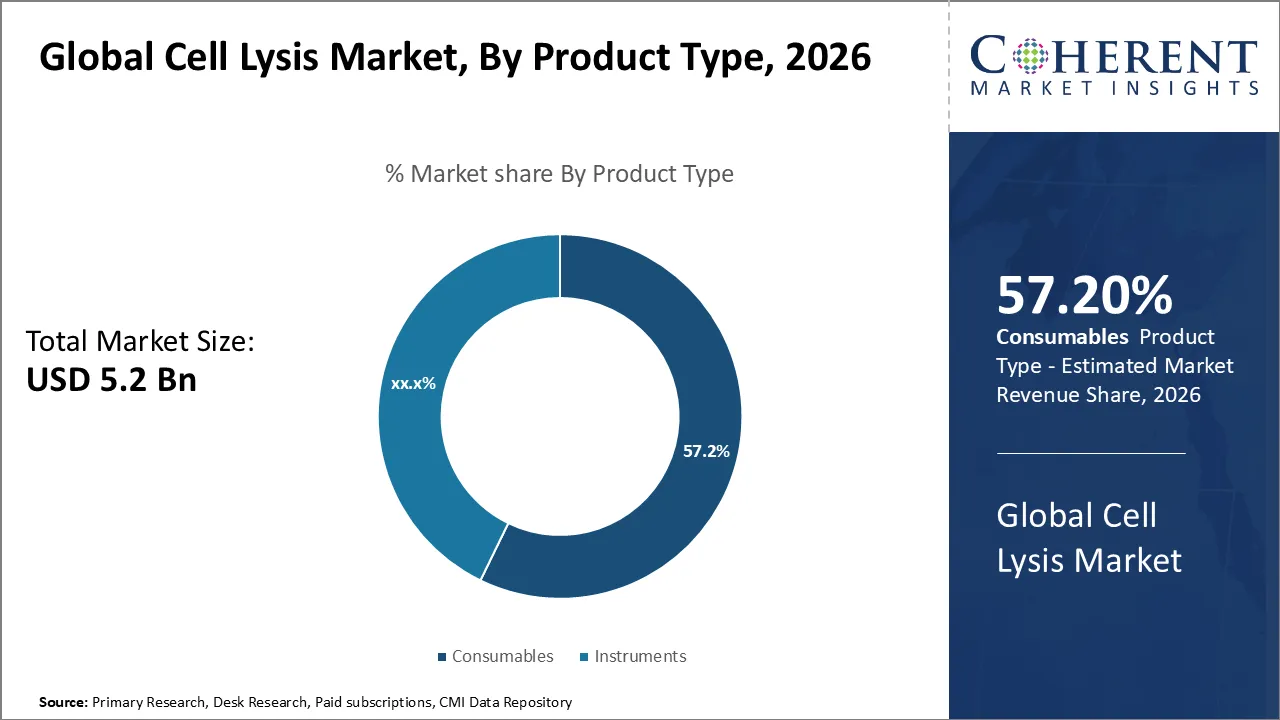
In terms of procedure type, the consumables segment contributes the highest share of 57.20% in 2026 of the market. The growth is attributable to the shift towards chemical and enzymatic lysis methods. The consumables such as lysis buffers, enzymes, and specialized reagent kits are essential for processing each sample. The increasing demand for standardization and reproducibility in laboratory settings is also constituting to the growth in the segment. Commercial lysis kits are formulated to preserve the integrity of sensitive biological molecules like proteins and nucleic acids. They can be easily damaged by the heat or shear stress associated with physical lysis. This is critical in areas like Next-Generation Sequencing (NGS) and precision medicine, where maintaining sample purity is essential. In addition, the development of lab-on-a-chip technologies and automated workstations relies on pre-packaged, disposable reagent cartridges. These consumables have become the backbone of modern molecular biology by simplifying intricate workflows and reducing the likelihood of cross-contamination.
In terms of cell type, the mammalian cells segment contributes the highest share of 49.50% in 2026 of the market. This growth is owing to the increased emphasis on human health, disease research, and the expanding biopharmaceutical industry. The rise in biopharmaceutical manufacturing serves as a primary driver of growth in this segment. Mammalian cell lines such as Chinese Hamster Ovary (CHO) cells are widely recognized as the preferred method for the production of monoclonal antibodies, vaccines, and recombinant proteins. The sophisticated and highly controlled cell lysis procedures are necessary to ensure that target molecules remain functional and uncontaminated. The volume of mammalian cell lysis conducted in industrial bioreactors continues to rise owing to the increasing global demand for biologics and biosimilars.
In terms of end user, the pharmaceutical and biotechnology companies segment contributes the highest share of 44.30% in 2026 of the market. This growth can be attributed to the large-scale drug discovery and commercial production of biologics. The industrial players operate in high-throughput environments where cell lysis is a routine step in identifying drug targets and validating therapeutic compounds. The move toward personalized medicine and targeted therapies has led to the processing of huge amounts of cellular material. This has created a steady and high demand for both automated lysis instruments and standardized reagent kits. The demand for reliable and reproducible lysis results poses a significant bottleneck. This situation requires substantial investment in high-quality, industrial-grade solutions, as pharmaceutical and biotechnology companies channel billions into their research and development pipelines.
To learn more about this report, Download Free Sample
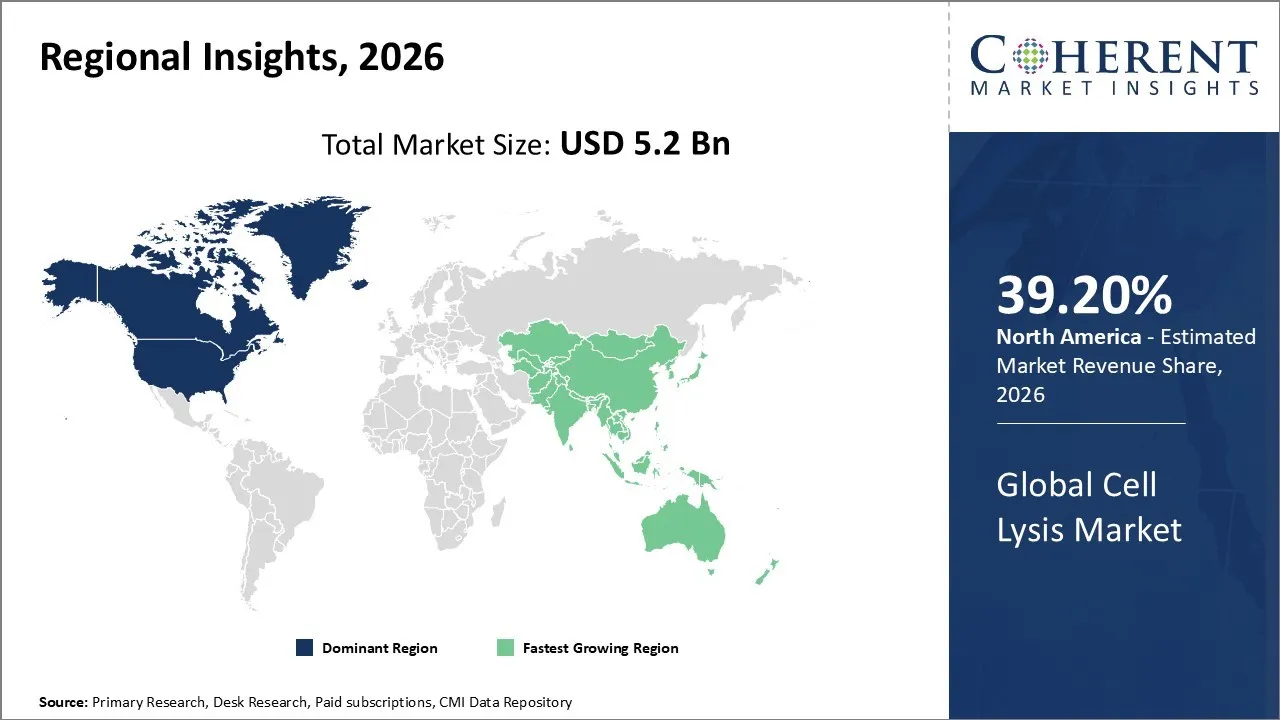
North America has remained the dominant region with 39.20% in 2026 of the global Cell Lysis Market over the past decade. The growth is owing to a sophisticated pharmaceutical infrastructure and a surge in biotechnology innovation. The market is characterized by a high demand for advanced protein expression systems and genomic research. The presence of top firms like Thermo Fisher Scientific and Bio-Rad Laboratories alongside a dense network of elite academic research institutions is also contributing to the growth of the market in the region.
The market’s growth can also be attributed to the increasing prevalence of chronic diseases which has speeded up the development of personalized medicine and targeted biologics. Since cell lysis is a fundamental step in extracting intracellular components like proteins, DNA, and RNA, its growth is intrinsically linked to the rise in biopharmaceutical R&D spending. In addition, the shift toward high-throughput screening and automated workflows has led to a substantial preference for reagent-based lysis methods over traditional physical disruption.
The Asia Pacific region is the fastest growing market for cell lysis. The growth is owing to the massive growth of biopharmaceutical manufacturing and contract research organizations (CROs) in emerging nations like China, India, and South Korea. These nations are transitioning to global hubs for biosimilars and vaccine production. This is creating a greater need for efficient and scalable cell disruption technologies, mainly in downstream processing and protein purification. A defining trend in the region is the shift toward reagent-based and enzymatic lysis methods. They are preferred for their ability to protect the integrity of delicate biological molecules used in personalized medicine.
In addition, heavy government investment in precision medicine and large-scale genomics programs like China’s biotech clusters and India’s pharmaceutical infrastructure initiatives has created a fertile environment for technological upgrades in cell analysis. The competitive landscape is a mix of established global leaders like Thermo Fisher Scientific and Merck KGaA and the increasing regional firms like HiMedia Laboratories in India and Fujifilm Holdings in Japan. These firms are adopting AI-driven automation and high-throughput systems to comply with the stringent quality standards necessary for global drug exports.
The U.S. is at the forefront of the Cell Lysis Market owing to the substantial federal investments in biotechnology and the presence of numerous pharmaceutical firms dedicated to personalized medicine and genomics. This sector shows a strong preference for reagents, as researchers place a greater emphasis on the importance of high-purity protein isolation and nucleic acid extraction. The top firms like Thermo Fisher Scientific and Merck KGaA are focusing on innovations in microfluidic and non-mechanical disruption techniques to preserve the structural integrity of sensitive organelles. This guarantees that the U.S. maintains its competitive edge in drug discovery and vaccine development.
China is the fastest-growing market for Cell Lysiss owing to the substantial expansion of domestic biopharmaceutical production and supportive government initiatives such as Made in China 2025. The market is shifting from a dependency on imported technology to high-performance domestic solutions. This growth is attributed to substantial investments in cell and gene therapies, vaccine manufacturing, and the development of monoclonal antibodies. The local businesses are gaining market share by providing cost-effective, high-throughput mechanical homogenizers and automated lysis skids. In addition, the market is witnessing a notable trend toward single-use technologies aimed at reducing contamination risks in high-volume bioprocessing.
| Report Coverage | Details | ||
|---|---|---|---|
| Base Year: | 2025 | Market Size in 2026: | USD 5.2 Bn |
| Historical Data for: | 2020 To 2024 | Forecast Period: | 2026 To 2033 |
| Forecast Period 2026 to 2033 CAGR: | 9.1% | 2033 Value Projection: | USD 9.57 Bn |
| Geographies covered: |
|
||
| Segments covered: |
|
||
| Companies covered: |
Becton, Dickinson and Company, Thermo Fisher Scientific Inc., Merck KgaA, QIAGEN, Roche Molecular Systems, Inc., Bio-Rad Laboratories, Inc., Cell Signaling Technology, Inc., and Qsonica |
||
| Growth Drivers: |
|
||
| Restraints & Challenges: |
|
||
Uncover macros and micros vetted on 75+ parameters: Get instant access to report
The growing demand for biopharmaceutical production is the primary driver of growth for the global cell lysis market toward remarkable growth. The pharmaceutical firms are transitioning from traditional chemically synthesized drugs to more complex biologics. This creates the necessity for efficient intracellular extraction. The biopharmaceuticals like monoclonal antibodies, recombinant proteins, and vaccines are produced within living host cells like E. coli, yeast, or mammalian cell lines. It is essential to accurately break down the cell membrane to extract these valuable therapeutic agents.
The emergence of personalized medicine and cell and gene therapies (CGT) is also contributing to the increasing demand in the market. These therapies require advanced lysis techniques that can enhance product yield and preserve the structural integrity and biological activity of sensitive proteins and viral vectors. The manufacturers are implementing high-throughput automated systems and single-use lysis technologies that minimize the risk of cross-contamination and reduce processing times. This industrial scaling, as well as substantial investments in downstream processing by CDMOs, ensures that cell lysis remains a critical step in overcoming bottlenecks in the modern drug manufacturing pipeline.
The Cell Lysis Market is witnessing strong growth driven by increasing adoption of advanced analytical platforms across biotechnology, pharmaceuticals, and clinical diagnostics. Cell lysis products are essential for workflows in genomics, proteomics, and metabolomics, fueling demand for high-performance reagents and instruments.
Procurement data from major research institutions show a steady rise in purchases of high-efficiency lysis solutions and automated homogenizers, reflecting a preference for technologies that minimize downstream interference and support high-throughput workflows. Automated cell lysis platforms have expanded the user base beyond academic labs into biopharmaceutical and contract research organizations, with nearly 40% of large-scale bioprocessing labs integrating such systems, according to equipment placement reports.
Regionally, North America and Europe lead in market activity, while Asia Pacific demonstrates rapid growth, supported by increasing research funding and adoption of both basic and advanced lysis technologies. Application analysis indicates proteomics and immunoassay preparation dominate usage, with standardized lysis buffers frequently utilized in next-generation sequencing workflows.
Product trends reveal single-use kits maintain higher unit sales due to ease of use and contamination control, whereas automated devices show higher value adoption. Competitive benchmarking indicates suppliers offering integrated solutions with validated protocols achieve higher repeat purchase rates. Overall, the market reflects sustained demand, technological refinement, and evolving preferences across laboratory and industrial segments.
Definition: The cell lysis market refers to the specialized global industry dedicated to the development and sales of technologies, instruments, and reagents used to break open cell membranes. This process serves as a starting point in modern molecular biology, thus facilitating the isolation and analysis of key intracellular components like nucleic acids, proteins, and organelles. The convergence of personalized medicine, vaccine innovation, and genomic research has propelled the market into a billion-dollar sector. It functions as a core enabling infrastructure for biotechnology businesses, pharmaceutical firms, and academic research institutions requiring high-purity biological samples for drug discovery and advanced disease diagnostics. The market continues to grow rapidly due to the innovations in high-throughput processing and the increasing focus on advanced biomanufacturing.
Share
Share
About Author
Abhijeet Kale is a results-driven management consultant with five years of specialized experience in the biotech and clinical diagnostics sectors. With a strong background in scientific research and business strategy, Abhijeet helps organizations identify potential revenue pockets, and in turn helping clients with market entry strategies. He assists clients in developing robust strategies for navigating FDA and EMA requirements.
Missing comfort of reading report in your local language? Find your preferred language :
Transform your Strategy with Exclusive Trending Reports :
Frequently Asked Questions
Joining thousands of companies around the world committed to making the Excellent Business Solutions.
View All Our Clients
 Schedule a meeting with report Author