

Global CAR T-cell Therapy Market Size and Forecast – 2026 To 2033
The global CAR T-cell therapy market is expected to grow from USD 4.83 Bn in 2026 to USD 18.46 Bn by 2033, registering a compound annual growth rate (CAGR) of 21.1%. The global CAR T-cell therapy market is poised for significant expansion, fueled by rising global burden of cancer, particularly hematological malignancies.
According to the Global Cancer Observatory (GLOBOCAN), there were approximately 19.3 million new cancer cases and nearly 10 million cancer-related deaths worldwide in 2022, highlighting a substantial and growing patient pool. In addition, leukemia accounted for over 470,000 new cases globally, reinforcing the increasing prevalence of blood cancers where CAR-T therapy has demonstrated strong clinical efficacy. Furthermore, GLOBOCAN estimates indicate over 53.5 million prevalent cancer cases (5-year prevalence) worldwide, reflecting a significant population living with cancer and requiring ongoing and advanced treatment solutions
(Source: Global Cancer Observatory)
Key Takeaways of the Global CAR T-cell Therapy Market
- CD19 is projected to hold 75.0 % of the global CAR T-cell therapy market share in 2026, making it the dominant targeted antigen segment, with North America dominating the segment owing to the early regulatory approvals (such as Kymriah (FDA, 2017), Yescarta (FDA, 2017), Tecartus (FDA, 2020), and Breyanzi (FDA, 2021)), and successful commercialization. The reason for the prominence of CD19 is attributed to its universal presence in B-cell cancers along with the availability of numerous U.S. FDA-approved therapies like Kymriah from Novartis and Yescarta from Gilead Sciences. These treatments have shown high remission rates in diseases such as Acute Lymphocytic Leukemia and Diffuse Large B-Cell Lymphoma, ensuring their continued use clinically. Furthermore, U.S. FDA approvals of CD19 CAR-T therapies have significantly accelerated uptake in the U.S. (Source: U.S. Food and Drug Administration)
- Hematological malignancies are projected to hold 93.0 % of the global CAR T-cell therapy market share in 2026, making it the dominant therapeutic application segment, with North America and Europe being dominant in the usage of CAR-T owing to their strong oncology network and high rate of diagnoses. The market is dominated by CAR-T treatment due to its efficacy in treating blood cancer diseases and difficulty in addressing some aspects such as the tumor microenvironment in solid cancers. For instance, National Cancer Institute highlights CAR-T as a breakthrough treatment primarily for leukemia, lymphoma, and multiple myeloma. (Source: National Cancer Institute)
- Autologous CAR T-cell therapy is projected to hold 90.0 % of the global CAR T-cell therapy market share in 2026, making it the dominant therapy type segment, with North America dominating the segment owing to its highly developed cell therapy infrastructure, strong reimbursement frameworks (such as Medicare coverage under the Inpatient Prospective Payment System (IPPS) and New Technology Add-on Payment (NTAP), as well as private payer coverage policies such as UnitedHealthcare and Aetna), and early regulatory approval. The autologous CAR T-cell therapy segment has gained a stronghold based on reduced risks of graft versus host disease (GVHD) and increased compatibility since these are made using T-cells from the patient itself. Furthermore, all CAR-T products currently approved are autologous, thereby emphasizing their dominance in the marketplace. For example, Abecma from Bristol-Myers Squibb and Kymriah from Novartis are autologous CAR-T products that have proven effective in treating multiple myeloma and leukemia, respectively.
- North America maintains dominance with an expected share of 46.0 % in 2026, driven by the large presence of accredited treatment facilities (such as, University of Texas MD Anderson Cancer Center, Memorial Sloan Kettering Cancer Center, Mayo Clinic, Dana-Farber Cancer Institute, City of Hope National Medical Center), robust clinical trials infrastructure (such as National Cancer Institute (NCI) Clinical Trials Network, SWOG Cancer Research Network, Alliance for Clinical Trials in Oncology, ECOG-ACRIN Cancer Research Group), and swift implementation of innovative cell therapies. The region is advantaged by a significant involvement in CAR-T clinical trials and inclusion in routine oncology protocols. Further, the existence of specialized treatment programs and support facilities for handling complicated cells (such as CAR-T Centers of Excellence, Blood and Marrow Transplant (BMT) Units, Cell Therapy Processing Laboratories, Apheresis Centers, FACT-accredited Cellular Therapy Programs) also augments the leading position of the market. For instance, MD Anderson Cancer Center at the University of Texas has helped thousands of people through its Cell Therapy Program and is currently carrying out several CAR-T cell therapy trials, indicating the robust connection between research, production, and application in the region. (Source: The University of Texas MD Anderson Cancer Center)
- Asia Pacific is expected to exhibit the fastest growth with an estimated contribution of 19.0 % share in 2026, with increased investment in innovation in domestic (Asia Pacific has attracted over USD 5–7 billion in cumulative investments in cell and gene therapy innovation), an increased number of clinical trials (Asia Pacific accounts for over 60% of global CAR-T clinical trials), and favorable regulatory policies. The region has witnessed tremendous growth in the pipeline of local CAR-T therapy development, especially in China, as well as availability of advanced therapies. For example, CARsgen Therapeutics is actively advancing multiple CAR-T candidates targeting solid tumors and hematological malignancies, highlighting the region’s shift toward innovation and pipeline expansion. (Source: CARsgen Therapeutics)
- Development of Allogeneic (“Off-the-Shelf”) CAR T Therapies: The allogeneic approach to CAR T-cell therapy is proving to be an important catalyst for growth since it can address some of the shortcomings associated with patient-specific manufacturing. The benefits include reduced time for treatment, better scalability, and even lower costs.
- Expansion into Solid Tumor Indications: The application of the CAR T-cell treatment in solid tumors are an underdeveloped area that offers immense potential. Developments in terms of target specificity, circumventing the immunosuppressive environment of the tumor microenvironment, and ensuring cell longevity would ensure future growth in the market.
Segmental Insights
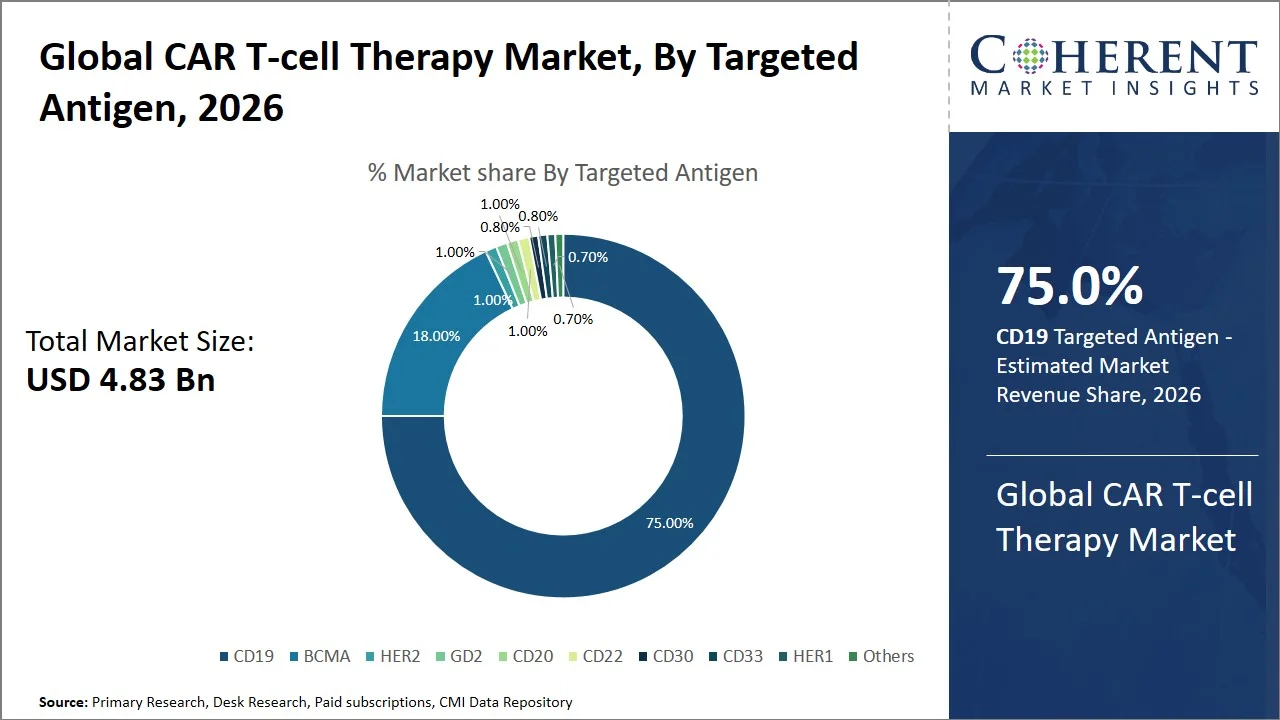
Why Does the CD19 Segment Dominate the Global CAR T-cell Therapy Market?
CD19 is projected to hold a market share of 75.0% in 2026, owing to its high and stable expression in B cell malignancies including acute lymphoblastic leukemia (ALL) and diffuse large B-cell lymphoma (DLBCL) and thus its suitability for use as an ideal and validated target. For instance, research published by National Library of Medicine in May 2025, indicated that CD19 CAR T-cell therapies yield high response rates of about 83% in B cell non-Hodgkin’s lymphoma and 90% in B cell acute lymphoblastic leukemia, which shows the high level of efficacy for the treatments. (Source: National Library of Medicine)
CAR-T therapies targeting CD19 are among first to receive U.S. Food and Drug Administration regulatory approvals, making it one of the pioneering markets in the industry. Drugs like Kymriah and Yescarta have been proven to have a higher response rate, which increases the assurance of physicians and leads to quicker adoption. Furthermore, due to active clinical testing and label expansion, the domination of this segment in the industry becomes even more pronounced.
- Current Industry Events of 2026
- Market Size Estimation
- Regional Breakdown
- Competitive Landscape
- Customer Intelligence
- Segmental Analysis
- Pricing Analysis
- Key Market Drivers, Challenges & Future Trends
- Customized Insights Section
Why are Hematological Malignancies the Most Preferred Therapeutic Application?
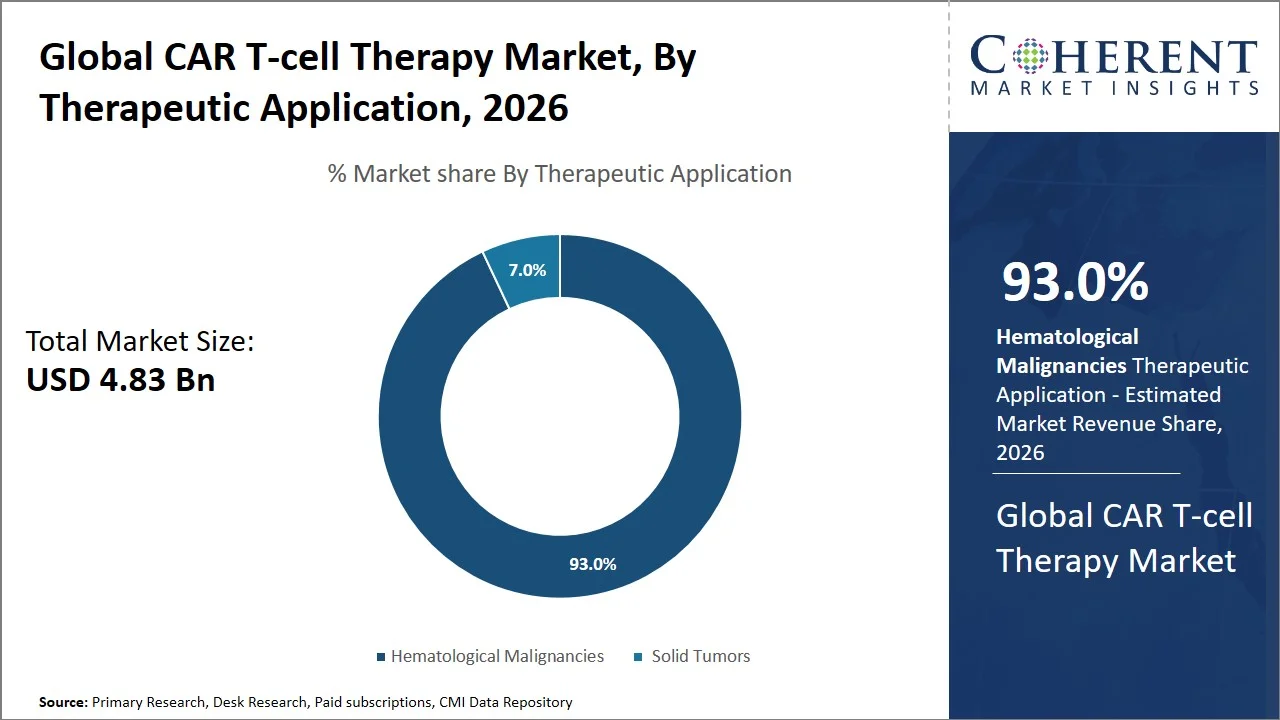
Hematological Malignancies are projected to hold a market share of 93.0% in 2026 based on its relative accessibility and well-defined antigens that can facilitate the targeted action of genetically engineered T-cells. While solid tumors have a number of physical characteristics making it difficult for the genetically engineered T-cells to access them and survive in such an environment, hematology does not possess any such challenges, thus ensuring a high success rate for the CAR T-cell therapy. Besides, the vast number of clinical trials and successful approvals associated with the use of CAR T-cell therapy in the treatment of hematology ensures that this application continues to dominate the market.
For instance, according to an August 2024 meta-analysis study published by Frontiers Media SA, the overall response rates (ORR) rate was 70–90%, while complete response (CR) was 40–60% for relapsed or refractory patients with hematologic cancer using CAR-T therapy, where a considerable number of these patients achieved a sustained response rate exceeding 12 months. (Source: Frontiers Media SA)
Autologous CAR T-cell Therapy Segment Dominates the Global CAR T-cell Therapy Market
The autologous CAR T-cell therapy segment is projected to hold a market share of 90.0% in 2026, due to its proven clinical safety and established regulatory approvals. Since this therapy involves using T-cells from the patients themselves, it greatly minimizes the risks of immune rejection such as graft-versus-host disease (GVHD), and other complications, thus contributing to better treatment results.
Moreover, autologous treatments are the first ones that have gained commercial success through effective production practices and robust clinical trial results for hematological cancers. For example, the approval and subsequent acceptance of Kymriah (2017) and Yescarta (2017), two of the first autologous chimeric antigen receptor-T cell (CAR-T) therapies have received U.S. FDA approval. These treatments showed high remission success in the treatment of relapsed or refractory B-cell cancers such as acute lymphocytic leukemia (ALL) and diffuse large B-cell lymphoma (DLBCL), resulting in their immediate use in practice and making autologous CAR-T the prevailing commercial form.
In spite of difficulties with regard to manufacturing times and costs, the effectiveness and quality of autologous treatments continue playing a crucial role in their demand. For instance, in December 2024, clinical study published by Haymarket Media, Inc. reported an overall response rate (ORR) of 72.8% and a complete response (CR) rate of 50.8% in patients with relapsed or refractory diffuse large B-cell lymphoma treated with autologous CAR-T therapy, highlighting its strong and durable clinical effectiveness. (Source: Haymarket Media, Inc.)
Currents Events and their Impact
Current Events | Description and its Impact |
Approval of First Allogeneic CAR T-Cell Therapy Clinical Advancements (Ongoing Regulatory Progress) (2023-Present) |
|
U.S. FDA Accelerated Approval Pathways for CAR T-Cell Therapies (Regulatory Shift Toward Faster Approvals) (2017-Present) |
|
(Source: U.S. Food and Drug Administration, U.S. Food and Drug Administration)
Global CAR T-cell Therapy Market Dynamics
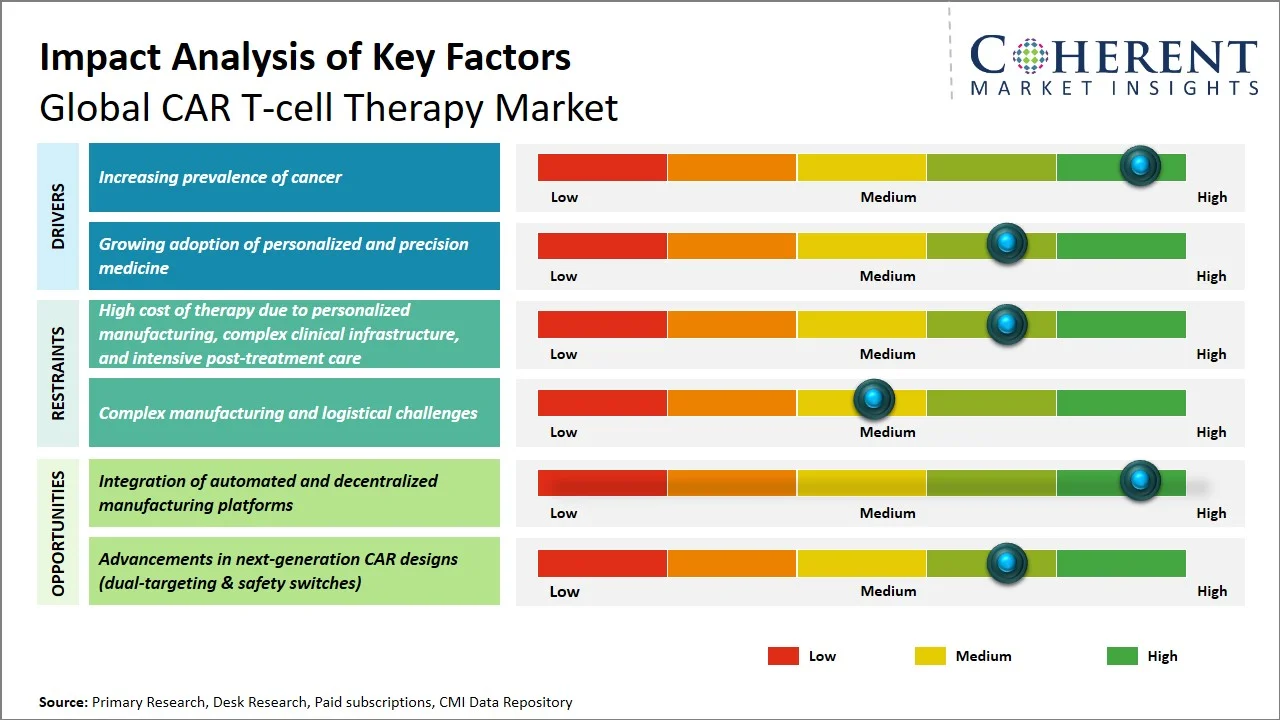
Market Drivers
- Increasing prevalence of cancer: The rising incidence of cancers around the globe is considered one of the key driving forces behind the growth of CAR T-cell therapy market. According to the World Health Organization, in 2022, there were nearly 20 million cancer cases and more than 9.7 million deaths from cancers all over the world. Approximately, 53.5 million individuals were suffering from cancer after five years since their diagnosis. About 1 in 5 people develop cancer in their lifetime, approximately 1 in 9 men and 1 in 12 women die from the disease. (Source: World Health Organization) Furthermore, International Agency for Research on Cancer indicate that new cases of cancer will reach 35 million by 2050, that is, a 77% increase from the number in 2022. (Source: International Agency for Research on Cancer) The increasing occurrence of solid and blood cancers is driving the requirement for new treatments such as CAR-T, especially among patients those having relapsing or refractory cases.
- Growing adoption of personalized and precision medicine: The growing focus towards personalized and precision medicine plays a crucial role in boosting the CAR T-cell therapy market since these kinds of therapies are patient-specific in nature and target cancer cells of each individual. Traditional therapies do not offer any such customized treatment, but in case of CAR-T cell therapies, the patients’ immune cells are engineered to attack cancer cells, thereby making them a precision oncology solution. The National Cancer Institute reveals that a growing focus towards precision medicine-based treatment options is becoming common in cancer treatments. (Source: National Cancer Institute) Additionally, the use of companion diagnostics, genomic data, and biomarker detection techniques also plays an important role in enhancing the performance of these therapies.
Emerging Trends
- Shift Toward Earlier Lines of Treatment: The CAR-T cell treatments are now being considered and authorized for use in earlier lines of therapy as opposed to only when the disease has relapsed or the body shows resistance to treatment. The rationale behind this trend is the success that the treatment is achieving clinically.
- Advancements in Safety Management and Toxicity Reduction: The emphasis is now increasingly shifting towards optimizing the safety characteristics of CAR T-cell treatments by developing methods to minimize the side effects associated with them, including cytokine release syndrome (CRS) and neurotoxicity. Some of the new developments in this regard include optimal dosing schedules, introduction of safety switches, and advanced monitoring procedures.
Regional Insights
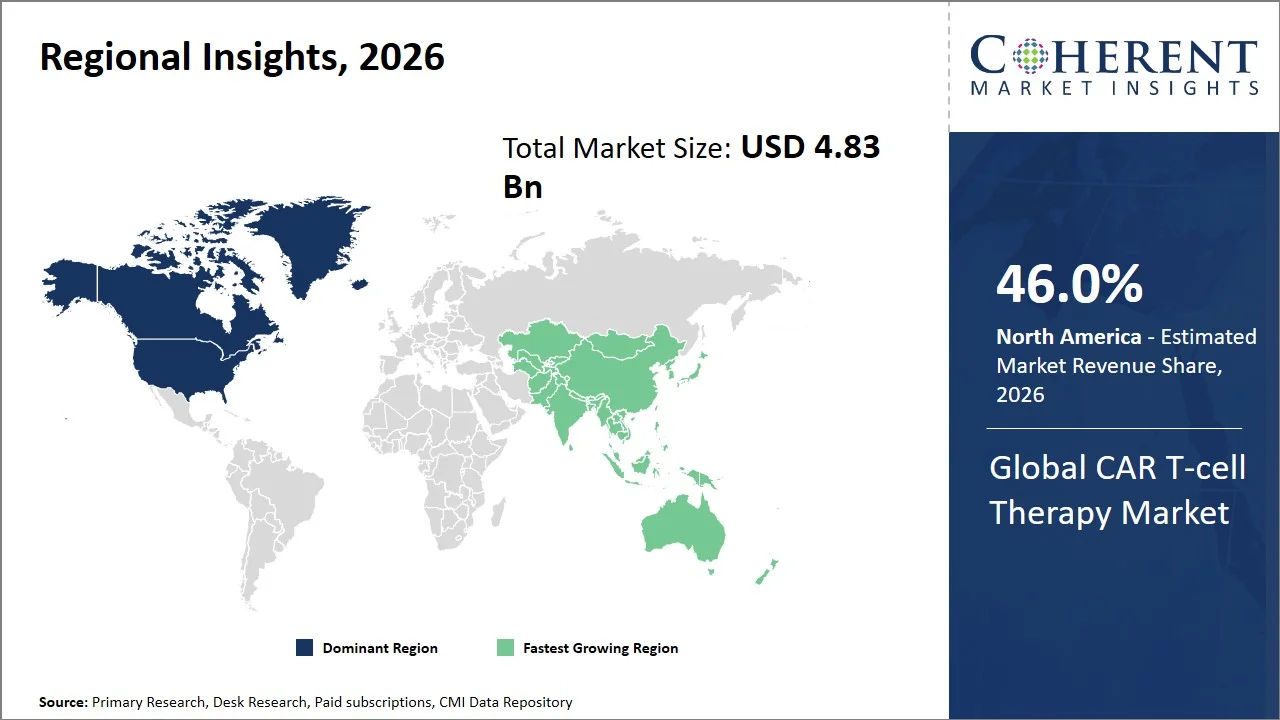
Why is North America a Strong Market for CAR T-cell Therapy?
North America leads the global CAR T-cell Therapy market, accounting for an estimated 46.0% share in 2026, attributed to the highly developed healthcare systems, established regulatory framework, and well-developed reimbursement schemes that allow rapid integration of novel therapies into practice (such as, Medicare coverage through the Inpatient Prospective Payment System (IPPS) and New Technology Add-on Payment (NTAP), as well as private payer reimbursement from UnitedHealthcare, Aetna, and Blue Cross Blue Shield). There is also an elevated frequency of hematological cancer cases within the region, coupled with an advanced infrastructure of healthcare facilities specializing in cell-based treatment. For instance, according to the National Cancer Institute (SEER Program), leukemia incidence stands at approximately 14.4 cases per 100,000 population annually, while non-Hodgkin lymphoma incidence is around 19.6 cases per 100,000 population. (Source: National Cancer Institute)
Additionally, multiple myeloma incidence is reported at approximately 7.3 cases per 100,000 population, further contributing to the regional disease burden. (Source: National Cancer Institute) Moreover, with significant investments being made into the biotechnology industry (with the National Institutes of Health (NIH) investing nearly USD 48 billion annually in biomedical research, including approximately USD 35.3 billion in research grants), alongside the presence of major pharma/biotech firms (such as, Pfizer Inc., Johnson & Johnson, Merck & Co., Bristol-Myers Squibb, Gilead Sciences, Amgen Inc., AbbVie Inc., Biogen Inc.), there is constant innovation and expansion of the product pipeline.
Why Does Asia Pacific CAR T-cell Therapy Market Exhibit High Growth?
The Asia Pacific CAR T-cell therapy market is expected to exhibit the fastest growth with an estimated contribution of 19.0% share to the market in 2026, owing to the rapid development of clinical trials, increased governmental support, and rise in cancer cases in the region. Asia Pacific has emerged itself as a global hub for oncology and CAR-T research, with countries such as China, Japan, and South Korea leading in innovation and trial participation. For instance, China has already carried out 1,006 CAR-T clinical trials, which demonstrates the potential of the region in terms of innovation. (Source: National Library of Medicine)
Moreover, the region contributes to a considerable percentage of precision oncology studies on a global scale and attracts investment due to cheaper trials and faster recruiting of patients. Furthermore, the presence of many governmental programs and favourable regulatory changes (including Japan’s Act on the Safety of Regenerative Medicine (ASRM) and Pharmaceuticals and Medical Devices Act (PMD Act), China’s National Medical Products Administration (NMPA) accelerated approval pathways and Drug Regulatory Science Action Plan, South Korea’s Advanced Regenerative Medicine and Advanced Biological Products (ARM/ABP) framework, and Singapore’s Cell, Tissue and Gene Therapy Products (CTGTP) regulations) in the sphere facilitate further developments in the market.
The U.S. is the leader in innovations and implementations within the CAR T-cell therapy market due to its robust regulatory backing and early approvals from the U.S. FDA, enabling faster commercialization of advanced therapies The country also boasts government support in terms of funding as the National Institutes of Health (NIH) spends billions of dollars each year on biotechnology and cancer studies. For instance, the National Institutes of Health invests most of its nearly USD 48 billion for medical research in fiscal year 2024, wherein a considerable chunk was dedicated to oncology and cell and gene therapy research, contributing to continued innovation in CAR-T therapy. (Source: National Institutes of Health)
Moreover, the presence of top-notch pharmaceutical and biotech firms (such as Pfizer Inc., Gilead Sciences, Inc.) coupled with a solid system of clinical trials (549 trials) helps to facilitate innovations. The country has a solid infrastructure that allows for quick adoptions, with a large number of specialized medical centers (such as MD Anderson Cancer Center, Memorial Sloan Kettering Cancer Center, Mayo Clinic, Dana-Farber Cancer Institute, City of Hope National Medical Center) and a favorable reimbursement policy (such as Medicare coverage under the Inpatient Prospective Payment System (IPPS), New Technology Add-on Payment (NTAP), and private payer coverage from UnitedHealthcare, Aetna, and Blue Cross Blue Shield) being the driving force behind this achievement.
Is U.K. a Favorable Market for CAR T-cell Therapy?
U.K. represents an ideal environment for the CAR T-cell therapy market owing to its regulatory and reimbursement framework provided by the National Health Service along with recommendations by the National Institute for Health and Care Excellence. Access to this therapy among patients can be easily achieved by utilizing managed access agreements and centralized funds for facilitating better access to expensive therapies.
Furthermore, there exists a strong research community along with specialized treatment centers within the U.K. (such as University College London Hospitals NHS Foundation Trust, The Christie NHS Foundation Trust, King’s College Hospital NHS Foundation Trust, Oxford University Hospitals NHS Foundation Trust, Manchester Royal Infirmary) which support the implementation of advanced treatments.
Is China Emerging as a Key Growth Hub for the CAR T-cell Therapy Market?
China stands out as one of the most important regions with respect to the future growth of the CAR T-cell therapy market owing to the fast growth rates that are observed in the clinical trials carried out within the country (China has already carried out 1,006 CAR-T clinical trials). The Chinese National Medical Products Administration has adopted strategies (such as Priority Review and Approval (PRA) pathway, Breakthrough Therapy Designation (BTD), Conditional Approval pathway, and the Drug Regulatory Science Action Plan) that will ensure faster approval processes for innovations.
Further, the existence of local biotechnology firms (such as CARsgen Therapeutics, Legend Biotech, JW Therapeutics, Gracell Biotechnologies, IASO Biotherapeutics) and improved manufacturing capabilities makes its even stronger.
Germany emerges as a leader in the Europe CAR T-cell therapy market, as it offers state-of-the-art health care infrastructure along with favorable reimbursement policies (such as German Diagnosis-Related Group (G-DRG) system, NUB (Neue Untersuchungs- und Behandlungsmethoden) reimbursement pathway, AMNOG (Arzneimittelmarkt-Neuordnungsgesetz) pricing and reimbursement framework) and early adoption of innovative therapies. Germany enjoys the advantage of having efficient hospitals and specialized centers (such as University Hospital Heidelberg, Charité – Universitätsmedizin Berlin, University Hospital Munich (LMU Klinikum), University Hospital Frankfurt, University Hospital Cologne) that can provide the latest therapies in terms of cell-based treatments. Moreover, the Diagnosis-Related Group (DRG) based reimbursement system makes it easy to fund expensive drugs such as CAR-T treatments, thus making them easily available to patients.
The market for CAR-T cell therapy in Japan is witnessing growth due to its robust regulatory framework and increasing acceptance of such innovative therapies. Several CAR-T cell therapies have been approved in Japan for the treatment of hematological malignancies (such as Kymriah, Yescarta, Tecartus, Breyanzi, Abecma), suggesting the trend towards commercialization of innovative products. Furthermore, the regulatory framework of Japan, particularly those pertaining to the Pharmaceuticals and Medical Devices Act (PMD Act) and Act on the Safety of Regenerative Medicine (ASRM), enable conditional and accelerated approvals of cell and gene-based products, thereby aiding product innovation.
Regulatory Landscape Governing the Global CAR T-cell Therapy Market
Region | Key Regulatory Bodies | Guidelines | Key Highlights |
North America | U.S. Food and Drug Administration (FDA), Health Canada | U.S. FDA Center for Biologics Evaluation and Research (CBER), Regenerative Medicine Advanced Therapy (RMAT) designation | Strong regulatory support with expedited pathways (RMAT, Breakthrough Therapy); well-defined approval process for cell and gene therapies; robust post-market surveillance |
Europe | European Medicines Agency (EMA), National Competent Authorities | Advanced Therapy Medicinal Products (ATMP) Regulation (EC No. 1394/2007) | Centralized approval process; stringent quality, safety, and efficacy requirements; strong focus on pharmacovigilance and long-term follow-up |
Asia Pacific | PMDA (Japan), NMPA (China), CDSCO (India) | Japan’s Act on the Safety of Regenerative Medicine; China’s cell therapy guidelines; India’s National Guidelines for Stem Cell Research | Rapidly evolving regulatory landscape; accelerated approvals in Japan; increasing clinical trial activity in China; supportive government policies |
Latin America | ANVISA (Brazil), COFEPRIS (Mexico) | National biologics and advanced therapy regulations | Emerging regulatory framework; improving approval timelines; increasing adoption of advanced therapies with evolving guidelines |
Middle East & Africa | Saudi FDA (SFDA), South African Health Products Regulatory Authority (SAHPRA) | National regulatory frameworks for biologics and gene therapies | Nascent but developing regulatory ecosystem; growing focus on advanced therapeutics; increasing investments in healthcare infrastructure |
How is the integration of automated and decentralized manufacturing platforms creating new growth opportunities in the global CAR T-cell therapy market?
The adoption of automation and decentralization of manufacturing systems is creating ample growth opportunities in the CAR-T cell therapy market by overcoming one of its major limitations which is the process of manufacturing that requires significant time and investment. For example, systems such as the automated closed-systems, like the CliniMACS Prodigy, make it possible for CAR-T cells to be processed from start to finish in one machine. Decentralized manufacturing approaches, on the other hand, permit the manufacture of the CAR-T products closer or even in hospital facilities, hence greatly reducing the vein-to-vein duration of the process. (Source: Miltenyi Biotec) In addition, these developments allow corporations to extend their geographical reach, improve logistics management, and better utilize their resources, leading to faster deployment of CAR-T treatments worldwide.
Market Players, Key Development, and Competitive Intelligence
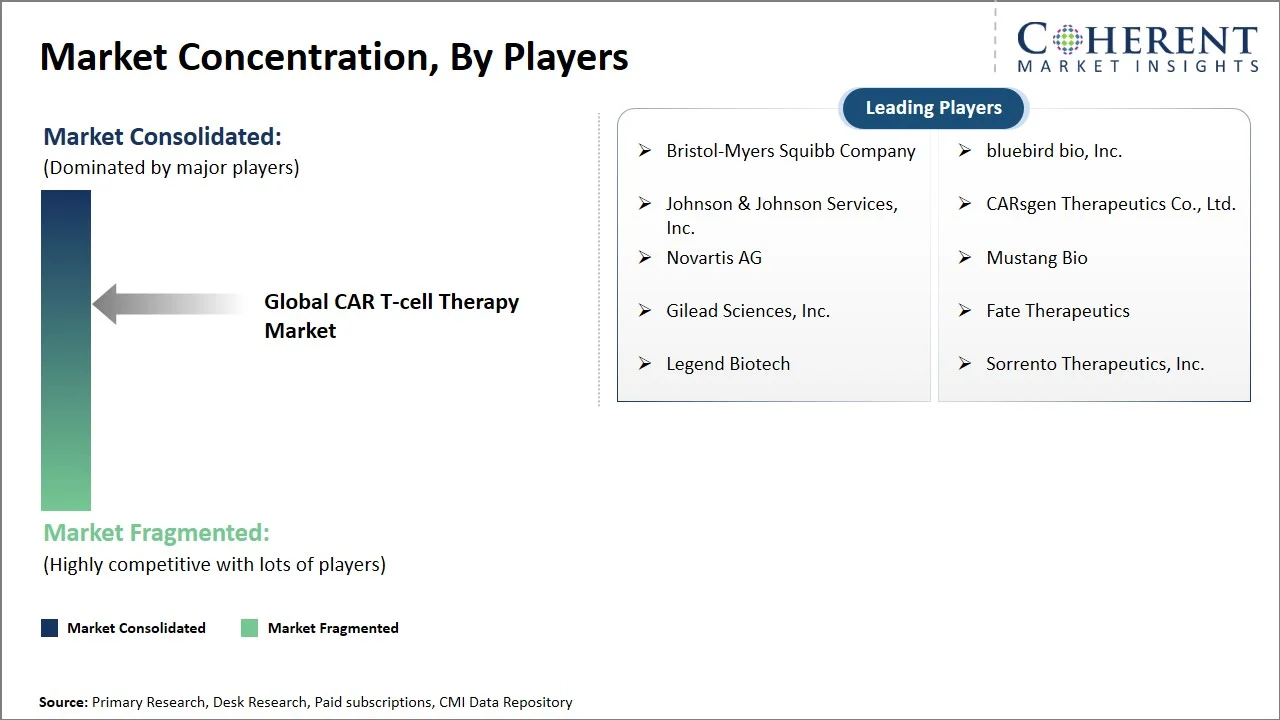
Key Developments
- On April 20, 2026, Eli Lilly and Company made a strategic decision to acquire Kelonia Therapeutics in order to enhance its portfolio with respect to the in vivo CAR-T cells therapy. The company's intent is to utilize the advanced proprietary technology of Kelonia that allows for in vivo manipulation of cells, thus avoiding the need to perform complicated ex vivo manufacturing processes.
- In April 2024, The U.S. Food and Drug Administration granted an extended approval to Ciltacabtagene Autoleucel, a CAR T-cell therapy that targets BCMA and is used for treating patients with multiple myeloma. The drug received its approval due to the positive outcomes observed during clinical trials, which included high response rates and durable remissions.
Competitive Landscape
The global CAR T-cell therapy market is highly competitive yet moderately consolidated, with few well-known companies dominating the market for commercialized therapies, while a number of new biotech companies are making the competition in the pipeline even stronger. The market is driven by ongoing improvements in cell engineering, strong clinical pipelines, and more regulatory approvals. Companies are working hard to expand their indications beyond blood cancers to solid tumors. Companies that have advanced manufacturing capabilities and have invested in allogeneic (off-the-shelf) platforms are in a better position to get ahead of the competition. Key focus areas include:
- Advancement in next-generation CAR-T technologies
- Expansion of allogeneic CAR-T platforms
- Enhancement of manufacturing and supply chain capabilities
- Strategic collaborations and pipeline diversification
Market Report Scope
CAR T-cell Therapy Market Report Coverage
| Report Coverage | Details | ||
|---|---|---|---|
| Base Year: | 2025 | Market Size in 2026: | USD 4.83 Bn |
| Historical Data for: | 2020 To 2024 | Forecast Period: | 2026 To 2033 |
| Forecast Period 2026 to 2033 CAGR: | 21.1% | 2033 Value Projection: | USD 18.46 Bn |
| Geographies covered: |
| ||
| Segments covered: |
| ||
| Companies covered: | Bristol-Myers Squibb Company, Johnson & Johnson Services, Inc., Novartis AG, Gilead Sciences, Inc., Legend Biotech, bluebird bio, Inc., CARsgen Therapeutics Co., Ltd., Mustang Bio, Fate Therapeutics, and Sorrento Therapeutics, Inc. | ||
| Growth Drivers: |
| ||
| Restraints & Challenges: |
| ||
Analyst Opinion (Expert Opinion)
- The future of CAR T-cell therapy will mainly be driven by the evolution of applications for use in the field of oncology beyond niche applications within hematologic conditions. Even with the current growth based on autologous treatments for CD19 and BCMA, there are plans to move towards an allogeneic or “off-the-shelf” treatment approach because they allow for faster production at a cheaper cost. Gene editing techniques as well as combination strategies will play a significant role in addressing the shortcomings, such as antigen escape and tumor microenvironment.
- Based on the opportunity assessment, the most attractive area of future growth will be allogeneic CAR-T treatment of solid tumors in the Asia Pacific region, specifically countries like China and Japan. In this region, there is a rapid increase in clinical trial activity, government encouragement, and innovation within the country. Also, areas where there is little competition, such as treatment of pancreatic cancers, glioblastoma, and colorectal cancer, offer great potential for next generation CAR-T companies.
- Companies in the market need to invest in innovative ways of manufacturing, collaboration, and diversification of the pipeline to have competitive advantages over their competitors. Collaboration with universities and biotechnology firms will help in developing new products faster. Investments in automation and decentralized manufacturing processes are other key areas that can help companies to lower costs and reduce time taken during production. Geographical expansion into new emerging markets also offers competitive advantages.
Speak to the analyst
Want personalized insights?
Take the findings above to one of our principal consultants, or have the report rebuilt around the segments, geographies and competitors you actually track.
Market Segmentation
- Targeted Antigen Insights (Revenue, USD Bn, 2021 - 2033)
- CD19
- BCMA
- HER2
- GD2
- CD20
- CD22
- CD30
- CD33
- HER1
- Others
- Therapeutic Application Insights (Revenue, USD Bn, 2021 - 2033)
- Hematological Malignancies
- Solid Tumors
- Therapy Type Insights (Revenue, USD Bn, 2021 - 2033)
- Autologous CAR T-cell Therapy
- Allogeneic CAR T-cell Therapy
- End User Insights (Revenue, USD Bn, 2021 - 2033)
- Hospitals
- Cancer Treatment Centers
- Academic and Research Institutes
- Others
- Regional Insights (Revenue, USD Bn, 2021 - 2033)
- North America
- U.S.
- Canada
- Latin America
- Brazil
- Argentina
- Mexico
- Rest of Latin America
- Europe
- Germany
- U.K.
- Spain
- France
- Italy
- Russia
- Rest of Europe
- Asia Pacific
- China
- India
- Japan
- Australia
- South Korea
- ASEAN
- Rest of Asia Pacific
- Middle East
- GCC Countries
- Israel
- Rest of Middle East
- Africa
- South Africa
- North Africa
- Central Africa
- North America
- Key Players Insights
- Bristol-Myers Squibb Company
- Johnson & Johnson Services, Inc.
- Novartis AG
- Gilead Sciences, Inc.
- Legend Biotech
- bluebird bio, Inc.
- CARsgen Therapeutics Co., Ltd.
- Mustang Bio
- Fate Therapeutics
- Sorrento Therapeutics, Inc.
Sources
Primary Research Interviews
- CAR T-cell therapy manufacturers and developers
- Pharmaceutical & biotechnology companies engaged in cell and gene therapy
- Hospitals and accredited CAR-T treatment centers
- Clinical research organizations (CROs) and oncology specialists
- Regulatory and reimbursement experts
Stakeholders
- CAR-T therapy developers
- End-use Sectors
- Hospitals & Cancer Treatment Centers
- Academic & Research Institutes
- CROs
- Payers & Insurance Providers
- Regulatory & Health Bodies: U.S. Food and Drug Administration, European Medicines Agency, World Health Organization
Databases
- ClinicalTrials.gov – CAR-T clinical trials database
- Global Cancer Observatory (GLOBOCAN) – cancer incidence & prevalence
- World Health Organization (WHO) – global cancer burden
- World Bank – healthcare expenditure
- OECD Health Statistics
Magazines
- BioPharma Dive – Cell & gene therapy developments, CAR-T approvals and partnerships
- Fierce Biotech – CAR-T pipeline updates, clinical trial results, M&A activity
- Endpoints News – Biotech deal-making, FDA decisions, CAR-T innovations
- PharmaTech Outlook – Manufacturing trends and commercialization of CAR-T therapies
- GEN (Genetic Engineering & Biotechnology News) – Cell therapy research and technology advancements
Journals
- Nature Medicine – cell and gene therapy advancements
- The Lancet Oncology – clinical oncology studies
- Journal of Clinical Oncology (JCO) – CAR-T clinical outcomes
- Blood (American Society of Hematology) – hematologic malignancies research
Newspapers
- The Wall Street Journal – Biopharma investments, CAR-T commercialization trends
- Financial Times – Global pharmaceutical strategies and cell therapy market expansion
- The Economic Times – Emerging markets (India/APAC) biotech investments and policy support
Associations
- American Society of Hematology (ASH)
- American Society of Clinical Oncology (ASCO)
- Alliance for Regenerative Medicine (ARM)
- Biotechnology Innovation Organization (BIO)
Public Domain Sources
- U.S. FDA – CAR-T approvals and regulatory framework
- European Medicines Agency (EMA) – approvals and guidelines
- National Institutes of Health (NIH) – CAR-T research initiatives
- National Cancer Institute (NCI) – CAR-T clinical insights
Proprietary Elements
- CMI Data Analytics Tool, Proprietary CMI Existing Repository of information for last 10 years.
Get access to 250+ pages report
Every segment, forecast, competitor profile and data table behind the analysis above — available for instant download.
- ESOMAR Member
- ISO 9001:2015 Certified
- D-U-N-S Registered
- GDPR & CCPA Compliant
Missing comfort of reading report in your local language? Find your preferred language:
Transform your Strategy with Exclusive Trending Reports
Frequently Asked Questions
The global CAR T-cell therapy market is estimated to be valued at USD 4.83 Bn in 2026 and is expected to reach USD 18.46 Bn by 2033.
CD19 dominate due to its high and consistent expression on B-cell malignancies, strong clinical success rates, and the majority of approved CAR T-cell therapies targeting CD19 in leukemia and lymphoma.
CAR T-cell therapy is a personalized immunotherapy that modifies a patient’s T-cells to recognize and destroy cancer cells.
The CAGR of global CAR T-cell therapy market is projected to be 21.1% from 2026 to 2033.
Increasing prevalence of cancer and growing adoption of personalized and precision medicine are the major factors driving the growth of the global CAR T-cell therapy market.
High cost of therapy due to personalized manufacturing, complex clinical infrastructure, and intensive post-treatment care and complex manufacturing and logistical challenges are the major factors hampering the growth of the global CAR T-cell therapy market.
CAR T-cells are produced by extracting a patient’s T-cells, genetically modifying them in a laboratory, expanding them, and reinfusing them into the patient.