Attention Bias Modification Treatment App Market Analysis & Forecast: 2026-2033

Attention Bias Modification Treatment App Market Size and Forecast – 2026 – 2033
The Global Attention Bias Modification Treatment App Market size is estimated to be valued at USD 485 million in 2026 and is expected to reach USD 1250 million by 2033, exhibiting a compound annual growth rate (CAGR) of 14.7% from 2026 to 2033.
Global Attention Bias Modification Treatment App Market Overview
Attention bias modification treatment apps are digital therapeutic products designed to help manage anxiety, depression, and stress-related disorders. These apps use cognitive training exercises and gamified tasks to retrain a user’s attention away from negative or threatening stimuli. Delivered via smartphones or tablets, the apps provide structured therapy sessions that can be used independently or alongside clinical treatment. Product features focus on usability, personalization, data tracking, and evidence-based psychological frameworks.
Key Takeaways
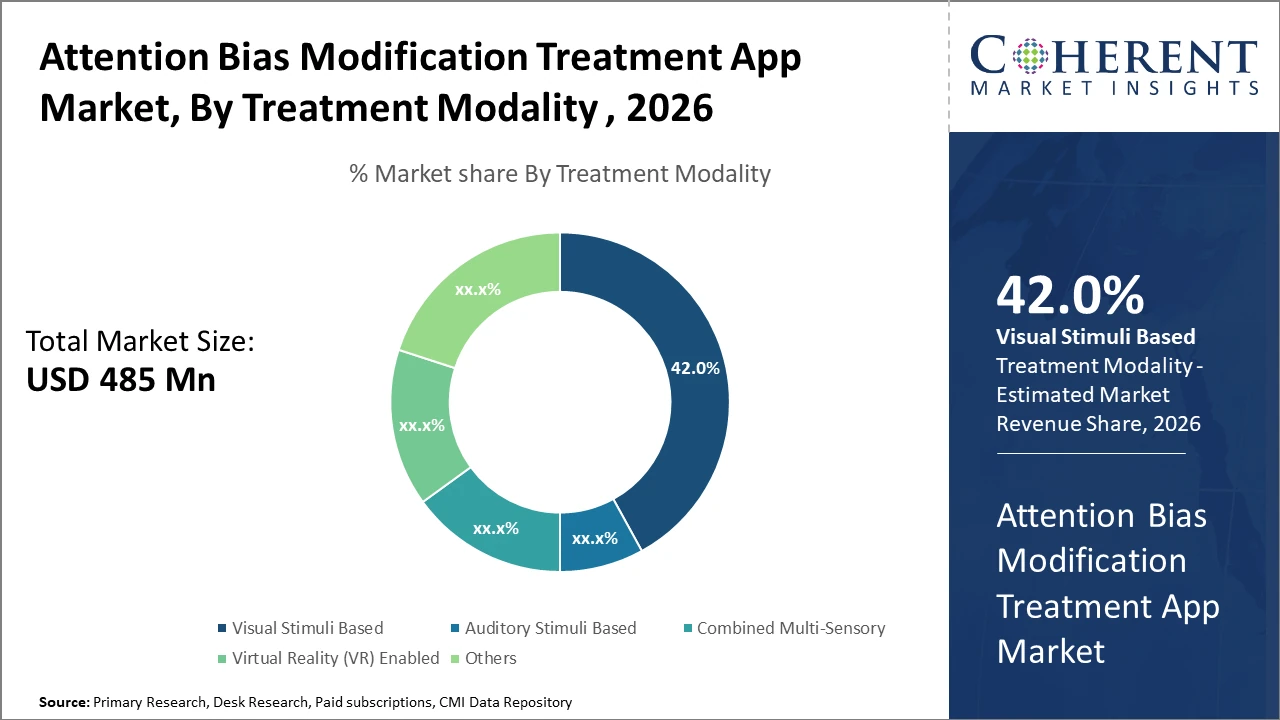
Visual Stimuli-Based treatment leads with 42% market share, driven by ease of use and established efficacy, while VR-enabled options are the fastest-growing, owing to technological advancements and higher patient immersion levels.
Delivery platforms show smartphone apps dominate with 68% industry share, capitalizing on convenience and accessibility; yet, wearable device compatibility is emerging rapidly alongside IoT health trends.
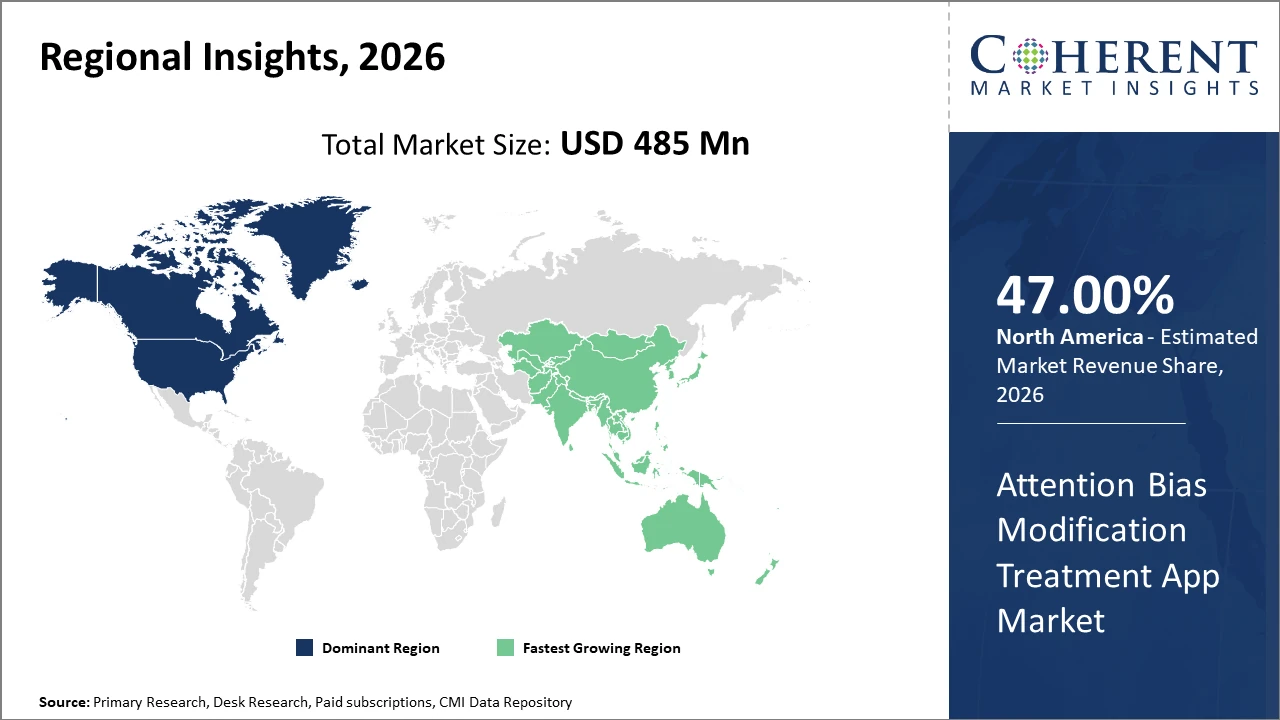
Regionally, North America commands about 47% of market revenue due to advanced healthcare infrastructure and reimbursement frameworks. Asia Pacific presents the fastest CAGR at 16.5% backed by smartphone penetration and growing mental health initiatives.
Clinical settings represent a significant end-user segment, but home-use applications have grown considerably by 52%, reflecting a trend towards decentralized, patient-controlled care models.
Attention Bias Modification Treatment App Market Segmentation Analysis
To learn more about this report, Download Free Sample
Attention Bias Modification Treatment App Market Insights, By Treatment Modality
Visual stimuli-based dominates the market share with 42%, owing to its established efficacy and ease of deployment across apps. Visual stimuli apps primarily use image recognition and selective attention tasks that are well-validated in clinical studies. The fastest-growing subsegment is Virtual Reality Enabled, which benefits from advancements in immersive technology, delivering highly engaging and realistic cognitive retraining environments that significantly improve patient engagement and outcomes. Auditory Stimuli-Based approaches usually involve sound-based cues helping to recalibrate attention biases, occupying a moderate market share thanks to growing interest in less visually intensive therapies.
Attention Bias Modification Treatment App Market Insights, By Delivery Platform
Smartphone Apps dominate with a 68% market share, driven by ubiquitous device access and user familiarity. This platform benefits from fast-paced innovation cycles and integration with real-time data analytics, enabling effective personalized treatment. The fastest-growing segment is Wearable Device Compatible apps, as wearables collect physiological data that enhances attention bias modification by offering biofeedback during therapy. Tablet Apps hold stable relevance in clinical settings, while Web-based Platforms support broader access in resource-restricted environments.
Attention Bias Modification Treatment App Market Insights, By End-User
Home Use dominates 52% of the market share as patients increasingly prefer convenient, stigma-free access to treatment outside traditional clinical environments. This subsegment growth is propelled by improved app interfaces and flexible usage patterns. The fastest-growing category is Corporate Wellness, with employers integrating ABM apps into stress management programs to boost workforce productivity and well-being. Clinical Settings remain critical for medically supervised therapy and research trials, while Educational Institutions provide preventive mental health interventions to younger populations.
Attention Bias Modification Treatment App Market Trends
The Attention Bias Modification Treatment App market is rapidly pivoting towards greater technological integration and personalized care.
The growing adoption of AI-enabled adaptive algorithms allows for real-time stimulus adjustment, enhancing treatment efficacy and resulting in improved patient adherence rates by over 30% as seen in recent clinical pilot programs.
Additionally, virtual reality adoption is gaining momentum as VR-enabled ABM apps provide immersive therapy environments that increase treatment engagement and responsiveness, evidenced by a 25% better outcome rate in trial populations during 2024.
A third important trend is the fusion of ABM apps within telehealth platforms which facilitated a 33% rise in digital therapeutic visits featuring ABM between 2023 and 2024 in North America.
These evolving technological and delivery models redefine market dynamics and broaden use cases across multiple healthcare ecosystems.
Attention Bias Modification Treatment App Market Insights, By Geography
To learn more about this report, Download Free Sample
North America Attention Bias Modification Treatment App Market Analysis and Trends
In North America, the dominance in the Attention Bias Modification Treatment App market is underpinned by strong healthcare infrastructure, high digital health adoption, and reimbursement policy support, collectively contributing to 47% of the industry share. U.S. government initiatives like the 2024 National Mental Health Strategy have incorporated digital therapeutics, catalyzing investment and broader consumer acceptance. Additionally, leading companies headquartered in this region actively innovate and collaborate with clinical institutions, further cementing their position.
Asia Pacific Attention Bias Modification Treatment App Market Analysis and Trends
Meanwhile, the Asia Pacific exhibits the fastest growth, with a CAGR of 16.5%, fueled by expanding smartphone adoption, increasing mental health awareness, and supportive telemedicine regulations in India, China, and Australia. Regional governments are launching public health campaigns promoting digital interventions, driving business growth especially in home-use applications. Early entrants like BioBeats and WOEBOT have gained notable market traction through localized app versions catering to diverse linguistic groups.
Attention Bias Modification Treatment App Market Outlook for Key Countries
USA Attention Bias Modification Treatment App Market Analysis and Trends
The USA’s market is the largest contributor to the Attention Bias Modification Treatment App industry, supported by high consumer readiness and robust clinical acceptance. In 2024, U.S.-based telehealth platforms integrated ABM treatments in over 40% of their mental health offerings, indicating rapid clinical diffusion. Major players like Headspace Health and Pear Therapeutics have launched FDA-approved ABM modules, facilitating insurance reimbursements and broader deployment. The country’s advanced smartphone penetration (~85%) and growing workplace mental health programs further sustain demand, consolidating its market share dominance.
India Attention Bias Modification Treatment App Market Analysis and Trends
India’s expanding Attention Bias Modification Treatment App market reflects increased government focus on digital health, with the Digital India initiative laying infrastructure foundations. Smartphone penetration exceeding 60% in urban areas alongside rising consumer willingness to adopt mental wellness solutions accelerates growth. Although regulatory frameworks are still evolving, startups in India integrate regional languages and culturally sensitive content, thereby growing the user base rapidly. Collaborative efforts between local digital health firms and international ABM providers leverage combined expertise, propelling a competitive yet burgeoning market environment.
Analyst Opinion
The growing prevalence of anxiety and mood disorders worldwide has directly influenced demand-side dynamics for attention bias modification treatment apps. For instance, the World Health Organization estimated a 25% increase in reported anxiety cases from 2022 to 2024, contributing to a 22% rise in app downloads in 2024 alone. This demand-side surge underpins market revenue growth, reflecting broader healthcare digitization trends.
Supply-side capacity enhancements, particularly the integration of AI-driven adaptive algorithms in ABM apps, have increased treatment efficacy and personalized care options. Companies deploying machine learning-based stimulus calibration reported a 35% improvement in patient adherence rates during trials conducted in 2023, directly influencing market share distribution among technology-forward players.
Geographic import-export flows indicate North America’s dominance, with a 47% market share by revenue in 2026, propelled by substantial investments in digital mental health infrastructure. Conversely, Asia Pacific is emerging as a fast-growing region, with a 16.5% CAGR fostered by increasing smartphone penetration and supportive regulatory frameworks in countries like India and China.
Market Scope
| Report Coverage | Details | ||
|---|---|---|---|
| Base Year: | 2025 | Market Size in 2026: | USD 485 million |
| Historical Data for: | 2020 To 2024 | Forecast Period: | 2026 To 2033 |
| Forecast Period 2026 to 2033 CAGR: | 14.7% | 2033 Value Projection: | USD 1250 million |
| Geographies covered: |
|
||
| Segments covered: |
|
||
| Companies covered: | Headspace Health, Mindstrong Health, Happify Health, BioBeats, Woebot Labs, Pear Therapeutics, Big Health Ltd., Cogstate Ltd., Limbix, SilverCloud Health. | ||
| Growth Drivers: |
|
||
Uncover macros and micros vetted on 75+ parameters: Get instant access to report
Attention Bias Modification Treatment App Market Growth Factors
The market's expansion is driven chiefly by four key factors. First, rising global mental health awareness and destigmatization efforts have catalyzed business growth, noted notably in campaigns across Europe in 2024 which saw a 30% uptick in mental health app engagement. Second, advances in mobile technology, particularly AI and VR integration, are enhancing app effectiveness and user interaction—one VR-enabled ABM app saw a 25% improvement in treatment outcomes during clinical trials last year. Apart from this, increased smartphone proliferation in emerging economies like India and Brazil is expanding market scope, supported by government digital health initiatives. Lastly, shifts in healthcare reimbursement policies to include digital therapeutics have encouraged adoption within clinical settings, exemplified by U.S. Medicaid pilot programs reimbursing select ABM interventions since early 2025.
Attention Bias Modification Treatment App Market Development
In December 2024, Headspace Inc. launched a new Attention Bias Modification Therapy (ABMT) program focused on anxiety management. The digital program uses evidence-based cognitive training techniques to help users retrain automatic attention patterns away from threat-related stimuli, supporting reductions in anxiety symptoms. This launch marked Headspace’s expansion beyond mindfulness into clinically informed mental health interventions delivered through scalable digital platforms.
In November 2024, Pear Therapeutics announced a partnership to integrate ABMT-based applications into structured therapy programs, strengthening the clinical adoption of digital therapeutics for anxiety and related disorders. By embedding ABMT tools alongside traditional behavioral health treatments, the collaboration aimed to improve treatment personalization, enhance patient engagement, and reinforce Pear’s strategy of combining software-driven interventions with evidence-based mental health care.
Key Players
Leading Companies of the Market
Headspace Health
Mindstrong Health
Happify Health
BioBeats
Woebot Labs
Pear Therapeutics
Big Health Ltd.
Cogstate Ltd.
Limbix
SilverCloud Health
Strategic collaborations have been notable; for example, Pear Therapeutics partnered with healthcare providers in 2024 to integrate ABM apps with telepsychiatry services, which increased their user base by 28% in six months. Headspace Health expanded their platform in 2025 by acquiring a niche ABM startup specializing in auditory stimulus technology, resulting in a 19% spike in market share in North America.
Attention Bias Modification Treatment App Market Future Outlook
The future of this market is expected to benefit from the global shift toward digital mental healthcare and remote therapy solutions. Advances in artificial intelligence, behavioral analytics, and personalization algorithms will improve treatment effectiveness and long-term engagement. Regulatory frameworks for digital therapeutics are likely to mature, enhancing clinical credibility and reimbursement potential. Integration with wearable devices, telehealth platforms, and employer wellness programs will expand use cases.
As mental health services increasingly adopt hybrid care models, attention bias modification apps are expected to become a complementary component of comprehensive mental health treatment strategies.
Attention Bias Modification Treatment App Market Historical Analysis
The attention bias modification treatment app market originated from psychological research identifying attention bias as a key contributor to anxiety and mood disorders. Early interventions were delivered through computer-based programs in laboratory or clinical settings, limiting reach and scalability. With the rapid expansion of smartphones and mobile health platforms, these interventions transitioned into app-based solutions, enabling broader accessibility. Early market growth was driven by academic institutions, mental health researchers, and early adopters seeking low-cost, non-pharmacological therapies.
However, adoption was uneven due to limited regulatory oversight, inconsistent clinical outcomes, and skepticism from healthcare professionals. User engagement challenges and a lack of standardized validation further constrained early commercialization. Over time, growing acceptance of digital therapeutics and rising mental health awareness helped establish a more stable market foundation.
Sources
Primary Research Interviews:
Clinical psychologists
Psychiatrists
Digital therapeutics developers
Behavioral scientists
Databases:
NIH Mental Health Data
WHO Mental Health Atlas
PsycINFO
App Annie Health Data
Magazines:
Psychology Today
Digital Health Today
HealthTech Magazine
Mind Matters
Behavioral Health News
Journals:
Journal of Anxiety Disorders
Behaviour Research and Therapy
Journal of Medical Internet Research
Cognitive Therapy and Research
Frontiers in Psychology
Newspapers:
The Guardian (Mental Health)
Financial Times (Health Tech)
The New York Times (Wellness)
Reuters Health
Washington Post (Science)
Associations:
American Psychological Association
Digital Therapeutics Alliance
International Society for Research on Emotion
Association for Behavioral and Cognitive Therapies
Mental Health America
Share
Share
About Author
Manisha Vibhute is a consultant with over 5 years of experience in market research and consulting. With a strong understanding of market dynamics, Manisha assists clients in developing effective market access strategies. She helps medical device companies navigate pricing, reimbursement, and regulatory pathways to ensure successful product launches.
Missing comfort of reading report in your local language? Find your preferred language :
Transform your Strategy with Exclusive Trending Reports :
Frequently Asked Questions

Credibility and Certifications

860519526

9001:2015
27001:2022


Need a Custom Report?
We can customize every report - free of charge - including purchasing stand-alone sections or country-level reports
Customize NowSelect a License Type
Joining thousands of companies around the world committed to making the Excellent Business Solutions.
View All Our Clients
 Schedule a meeting with report Author