Assistive Reproductive Technology Market Analysis & Forecast: 2026-2033

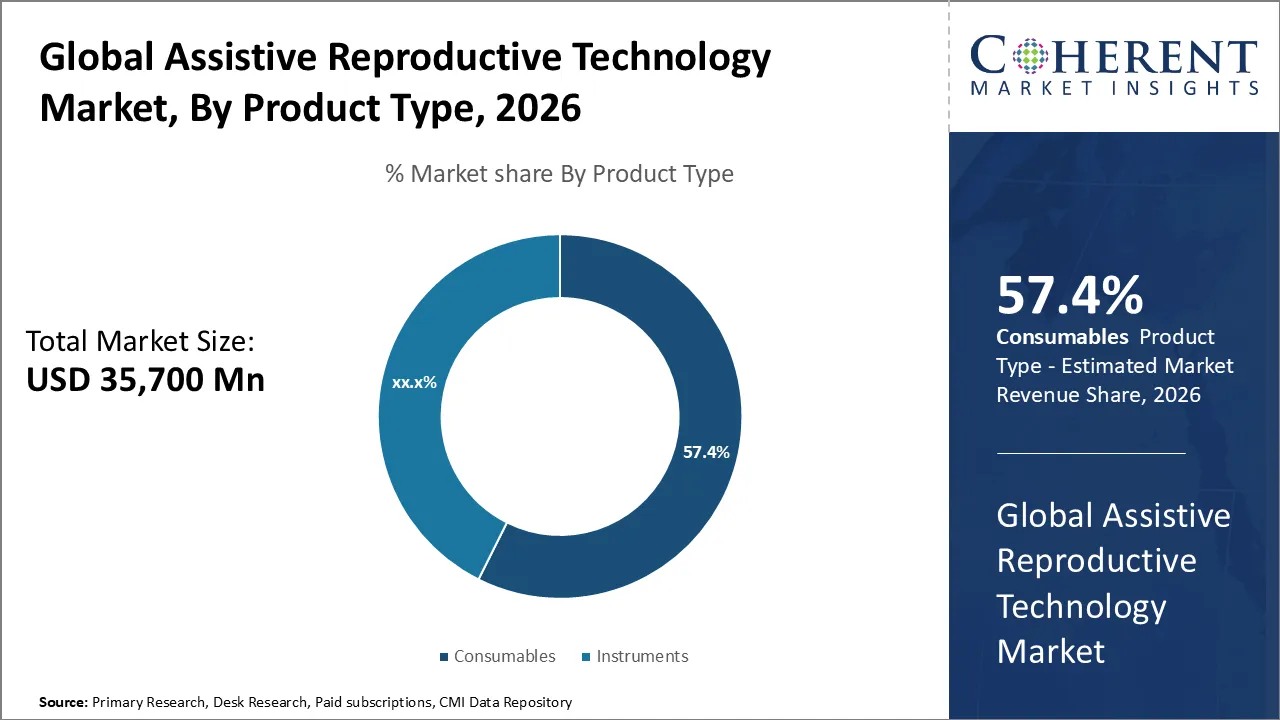
Assistive reproductive technology market is estimated to be valued at USD 35,700 Mn in 2026 and is expected to reach USD 51,200 Mn in 2033, exhibiting a compound annual growth rate (CAGR) of 5.3% from 2026 to 2033.
Assisted reproductive technology (ART) are the medical procedures used for infertility treatment, in which eggs are surgically removed from the ovaries and are combined with the sperms in a laboratory. These eggs are then mixed with sperms to form embryos. ART procedure sometimes uses donor eggs, donor sperm, or previously frozen embryos. It may involve a surrogate or gestational carrier.
|
Current Event |
Description and its Impact |
|
Regulatory and Legal Framework Evolution |
|
|
Technological Breakthrough Integration |
|
Uncover macros and micros vetted on 75+ parameters: Get instant access to report
|
Region |
Estimated IVF Births (Cumulative since 1978) |
Key Trends |
|
Europe |
~4.5–5 million |
Europe pioneered IVF (first birth in 1978, UK). High ART usage in countries like Denmark, Spain, and France. IVF accounts for 4–6% of births in some nations. |
|
North America (U.S. & Canada) |
~2.5–3 million |
U.S. reported 95,860 IVF babies in 2023, making up 2.6% of all births. Canada also has strong ART adoption, though smaller in scale. |
|
Asia-Pacific |
~4–4.5 million |
Rapid growth in India, China, Japan, and Korea. India is expanding ART centres (AIIMS Nagpur, HanaHealth). Singapore and Korea lead in AI-driven ART innovations. |
|
Latin America |
~0.5–0.7 million |
Brazil, Argentina, and Mexico are major IVF hubs. Growth driven by private clinics and rising infertility awareness. |
|
Middle East |
~0.3–0.5 million |
UAE, Israel, and Iran are leaders. Israel has one of the highest per capita IVF usage rates globally. |
|
Africa |
~0.1–0.2 million |
Still limited due to cost and infrastructure, but South Africa, Nigeria, and Egypt are expanding ART services. |
Uncover macros and micros vetted on 75+ parameters: Get instant access to report
In terms of product type, the consumables segment is expected to hold 57.4% share in 2026, because they are needed for every procedure, such as culture media, reagents, and disposables. Since people use them regularly, there is always a steady demand for them. Consumables are the backbone of ART revenue considering that they are used so often. This leads to growth through high patient volumes and repeated cycles around the world.
For instance, in February 2025, Allwin Medical Devices and Esco Lifesciences worked together to make Esco's Assisted Reproductive Technology portfolio stronger. The partnership brings together Esco's IVF tools and Allwin's IVF supplies to make a full workflow solution for fertility clinics. This strategic move increases Esco's presence in India, which is a rapidly growing ART market, and boosts demand for recurring consumables.
In terms of technology, the IVF with Intracytoplasmic Sperm Injection (ICSI) subsegment, under In-vitro fertilization segment is expected to lead the market with 77.9% share in 2026, as it is the best option for treating male infertility and increasing the chances of successful fertilization. It is now the most popular method in the world, making up most of the IVF cycles. By 2026, it will be the most popular technology in ART considering it is accurate, dependable, and widely used.
For instance, in April 2025, Conceivable Life Sciences and Hope IVF Mexico worked together to create the world's first baby using a fully automated Intracytoplasmic Sperm Injection (ICSI) system. This breakthrough automates the delicate process of injecting sperm during IVF, making it more accurate, faster, and easier to get to. It is a major step forward in Assisted Reproductive Technology.
In terms of procedures, the fresh nondonor cycles segment is projected to account for 42.1% share in 2026. Patients prefer using their own gametes, which lowers ethical concerns and costs related to donors, making fresh nondonor cycles popular. Improvements in ovarian stimulation and embryo transfer methods have made them more prevalent as they have higher success rates. This type of procedure is still the most common, which shows that patients prefer it and that it is the most efficient for doctors.
In terms of end user, the fertility clinics segment is projected to capture 59% share of the market in 2026, since they are specialized centers that offer a full range of reproductive services. They get most of their patients mainly because they have more experience, better technology, and higher success rates than hospitals. They continue to be the most important end-user group in 2026 because they focus on personalized care, counseling, and hiring specialized staff.
For instance, in January 2026, the Karnataka government agreed to add Assisted Reproductive Technology procedures to the Arogya Karnataka health insurance plan. This change directly helps fertility clinics by making treatments like IVF less expensive, making them more accessible to patients, and increasing the need for specialized reproductive services throughout the state's healthcare system.
To learn more about this report, Download Free Sample
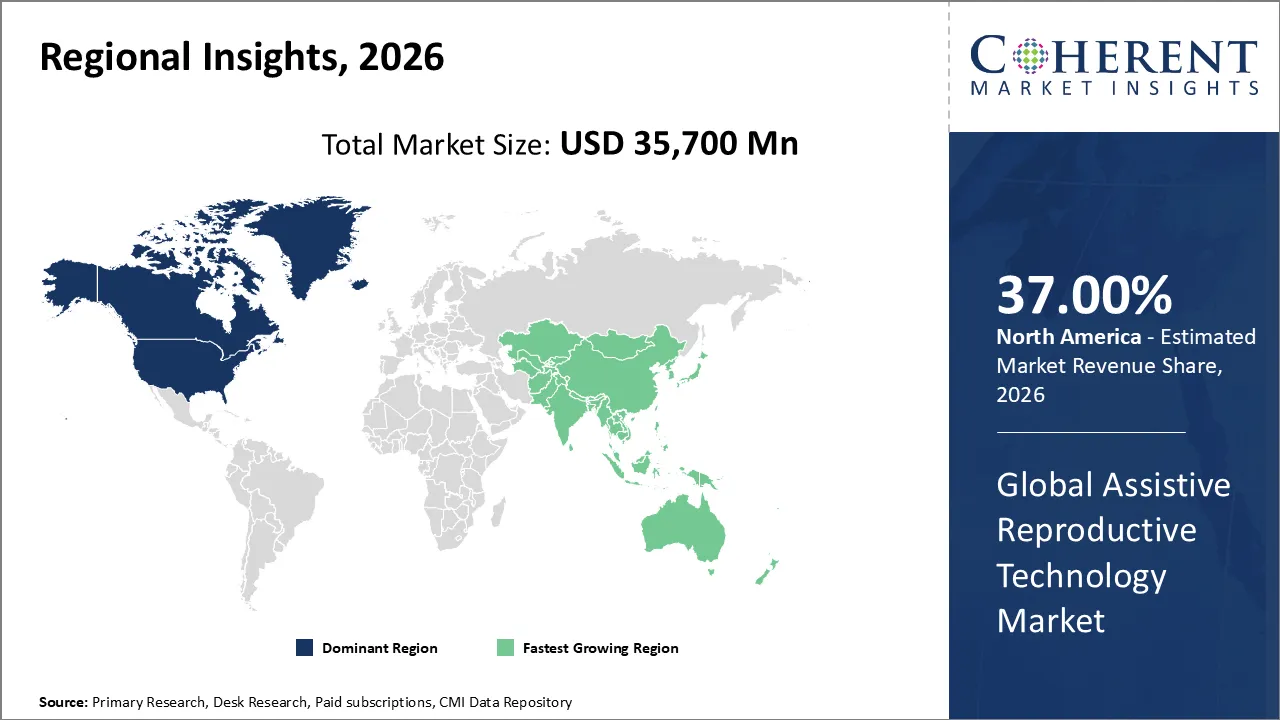
North America is expected to lead the assistive reproductive technology market with 37% share in 2026, due to greater numbers of individuals are having trouble getting pregnant, people are waiting longer to have kids, IVF technologies are getting better, and insurance coverage is good. High awareness, established fertility clinics, and supportive laws all help the region's market position stay strong and grow.
For instance, in December 2025, IVI RMA North America has made its way into the New York City market by teaming up with Island Reproductive Services. This growth makes it an even larger player in Assisted Reproductive Technology, where it offers cutting-edge fertility treatments like IVF. The partnership makes it easier for patients to get specialized reproductive care and expands ART services in the area.
Asia Pacific is expected to exhibit the fastest growth, due to rising infertility rate, lifestyles are changing, and they have medical conditions like PCOS. Affordable IVF treatments, more people traveling to India and Thailand for medical care, and government programs that help people get care all help the region grow quickly, making it the fastest-growing in the world.
For instance, in November 2025, At the NUS-CHA Reproductive Medicine Symposium, researchers from NUS Medicine in Singapore and CHA University in Korea discussed about new developments in Assisted Reproductive Technology. They unveiled AI-powered tests for male infertility and a new treatment, MIT-001, that can reverse the decline in fertility that comes with aging. This is an important milestone forward in reproductive medicine across the Asia-Pacific region.
The U.S. market for assistive reproductive technology is strong in 2026 since more people are having trouble getting pregnant, postponing having kids, and dealing with conditions like obesity and PCOS that are linked to their lifestyles. The U.S. is the world's biggest ART market for the reason of advanced IVF technologies, good insurance coverage, and widespread awareness drive adoption.
For instance, in October 2026, the U.S. government and EMD Serono have made a deal to make IVF treatments more available. The goal of this partnership is to make fertility treatments more affordable and widely available. It will also improve the infrastructure for Assisted Reproductive Technology and make it easier for patients to get advanced reproductive care all over the United States.
The Assistive Reproductive Technology Market in India is going to be active in 2026 due to affordable IVF treatments, numerous of new fertility clinics, and a wide range of medical tourism draw patients from all over the world. Government programs to deal with falling birth rates are also driving strong market growth.
For instance, in November 2025, AIIMS Nagpur opened a new Assisted Reproductive Technology (ART) Center to improve reproductive health care in Central India. The facility will offer advanced fertility treatments, such as IVF, which will make ART services easier to get. This program is an important progression toward getting more specialized reproductive care through a government-supported institution.
| Report Coverage | Details | ||
|---|---|---|---|
| Base Year: | 2025 | Market Size in 2026: | USD 35,700 Mn |
| Historical Data for: | 2020 To 2024 | Forecast Period: | 2026 To 2033 |
| Forecast Period 2026 to 2033 CAGR: | 7.8% | 2033 Value Projection: | USD 51,200 Mn |
| Geographies covered: |
|
||
| Segments covered: |
|
||
| Companies covered: |
Cooper Surgical Inc., Hamilton Thorne, Inc., FUJIFILM Irvine Scientific, Inc., Merck KGaA, Nidacon International AB, Vitrolife AB, EMD Serono, Inc., INVO Bioscience, IVFtech ApS, Gonagen Medikal, Cook Medical LLC., and CellCura ASA. |
||
| Growth Drivers: |
|
||
| Restraints & Challenges: |
|
||
Uncover macros and micros vetted on 75+ parameters: Get instant access to report
Infertility is on the rise around the world due to things like stress, obesity, smoking, and pollution in the environment. These concerns, along with health issues like PCOS and endometriosis, are making more couples want to get fertility treatments. As more people learn about it, the assistive reproductive technology market share keeps growing, and IVF and similar procedures are becoming more common. The rising number of people who are infertile is not only making it more urgent for doctors to help, but it is also creating huge business opportunities for ART providers around the world.
Couples are postponing having kids as they are focused on their careers and living in cities. This often happens until they are in their late 30s or 40s. Older mothers are less likely to get pregnant naturally, so they have to rely more on IVF, egg freezing, and other ART procedures. This change has led to a rise in assistive reproductive technology market demand, as more people look for medical help to become parents later in life. The trend of putting off family planning is likely to continue to be among the primary explanations that ART is used around the world.
Artificial intelligence is changing the way embryos are chosen by looking at vast quantities of data to find the ones that are most likely to implant. When used with advanced genetic testing, this technology lowers the risk of inherited disorders and raises the success rates of IVF. Clinics that use these new ideas are getting better results and patients are feeling more confident. As precision medicine becomes more important in fertility care, assistive reproductive technology market forecast is expected to grow rapidly via AI-powered decision-making and personalized treatment plans.
The assisted reproductive technology (ART) market is growing in terms of procedures and technology use, which is in line with changes in fertility care around the world. In-vitro fertilization (IVF) is still the most widely performed procedure, making up a large part of ART treatments around the world and supporting the market size and clinical importance. Published industry reports say that millions of IVF cycles start every year, which is a big part of ART use around the world. IVF is becoming more popular because of the number of births that can be traced back to ART. Estimation suggests that almost 17 million babies have been born through IVF procedures around the world since it started.
Data from various regions indicate a dynamic evolution in the adoption of treatments and the diversity of ART procedures. Technologies like preimplantation genetic testing and advanced embryo selection methods are becoming more common in clinical practice. They help improve outcomes and make fertility care more personalized. Telehealth consultations and digital patient engagement platforms have also grown, showing that there is a growing need for remote fertility management and better information support.
Regional patterns show strong activity in North America and Europe, while emerging markets in Asia-Pacific are seeing faster service expansion and clinic network growth. Most of the time, end users are specialized fertility clinics, but hospitals are starting to offer ART services to provide full reproductive health care. Advanced procedures like freezing eggs, donor egg cycles, and embryo banking are making ART more useful for a wider range of patients, including single parents and same-sex couples.
Overall, the ART market is growing given more people are becoming infertile, more people are waiting longer to have children, and new technologies are making treatments more accurate and improving the patient experience.
Share
Share
About Author
Nikhilesh Ravindra Patel is a Senior Consultant with over 8 years of consulting experience. He excels in market estimations, market insights, and identifying trends and opportunities. His deep understanding of the market dynamics and ability to pinpoint growth areas make him an invaluable asset in guiding clients toward informed business decisions. He plays a instrumental role in providing market intelligence, business intelligence, and competitive intelligence services through the reports.
Missing comfort of reading report in your local language? Find your preferred language :
Transform your Strategy with Exclusive Trending Reports :
Frequently Asked Questions
Joining thousands of companies around the world committed to making the Excellent Business Solutions.
View All Our Clients
 Schedule a meeting with report Author