

Protein Ingredients Market Size and Trends Forecast: 2026 - 2033
The protein ingredients market is estimated to be valued at USD 99.02 Bn in 2026 and is expected to reach USD 153.88 Bn by 2033, exhibiting a compound annual growth rate (CAGR) of 6.5% from 2026 to 2033.
Key Takeaways of the Protein Ingredients Market
- By product type, the animal-based protein ingredients segment is expected to contribute the highest share of the protein ingredients market with 60.1% in 2026.
- By application, the food and beverages segment is expected to contribute the highest share of the protein ingredients market with 66.9% in 2026.
- By form, the dry segment is expected to contribute the highest share of the protein ingredients market with 74.9% in 2026.
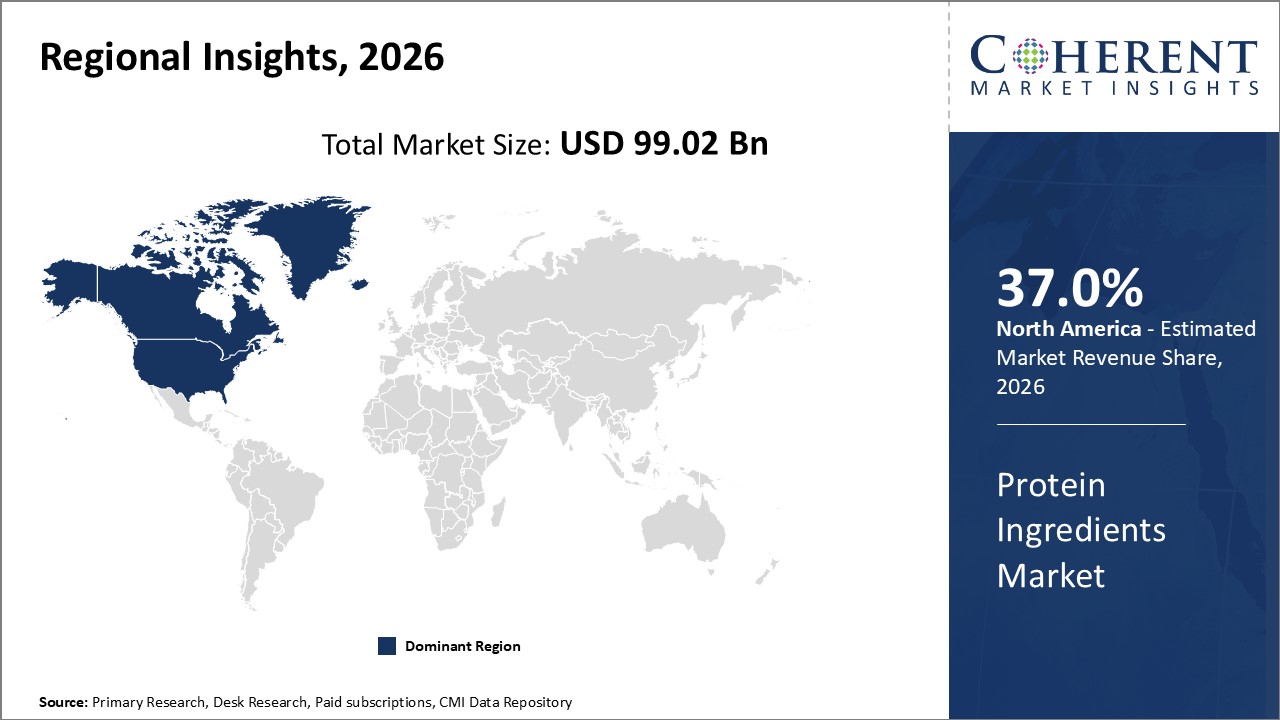
- North America is expected to be the largest market for protein ingredients during the forecast period, accounting for over 37.0% of the market share in 2026.
Market Overview
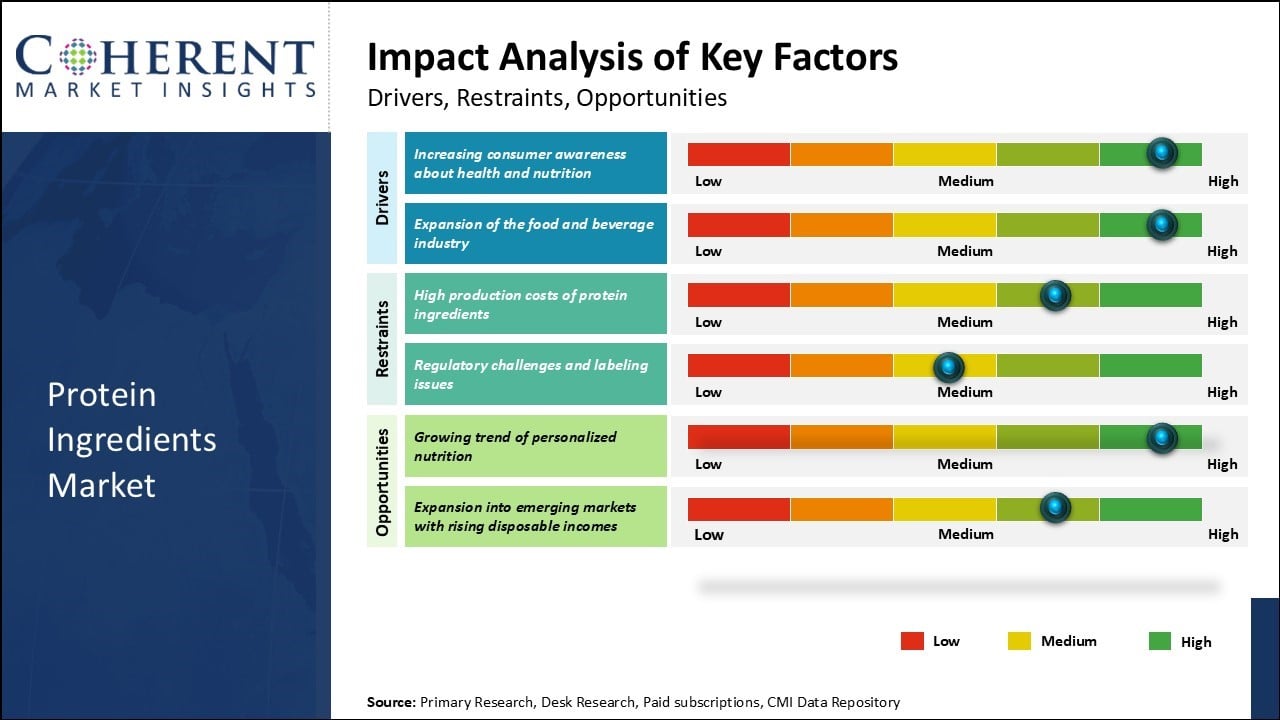
Increasing demand for protein ingredients from various end-use industries, such as food and beverages, animal feed, and nutraceuticals, is expected to drive the market growth during the forecast period. The protein ingredients market is witnessing significant trends such as rising demand for plant-based protein and clean label and organic protein ingredients. The growing health and wellness trend has been increasing the demand for plant-based protein sources.
However, managing raw material price volatility remains a constant challenge for players operating in the protein ingredients market.
Market Concentration and Competitive Landscape
Current Events and their Impact on the Protein Ingredients Market
Current Events | Description and its impact |
Global Supply Chain Disruptions and Agricultural Commodity Volatility |
|
Rising Health Consciousness and Regulatory Changes in Food Safety |
|
- Current Industry Events of 2026
- Market Size Estimation
- Regional Breakdown
- Competitive Landscape
- Customer Intelligence
- Segmental Analysis
- Pricing Analysis
- Key Market Drivers, Challenges & Future Trends
- Customized Insights Section
Market Trends
Rising Health Consciousness and Demand for High-Protein Diets
The global shift toward health-conscious living has fundamentally transformed consumer dietary preferences, creating unprecedented demand for protein-enriched foods and beverages. This behavioral evolution stems from increased awareness about the role of protein in muscle development, weight management, immune system support, and overall wellness.
For instance, according to survey by the Center for a Livable Future in February 2025, 71% of Americans were trying to consume protein, with an increase from 67% in 2023 and 59% in 2022. With the help of social media, consumers have become more creative in finding ways to increase their protein intake.
Segmental Insights
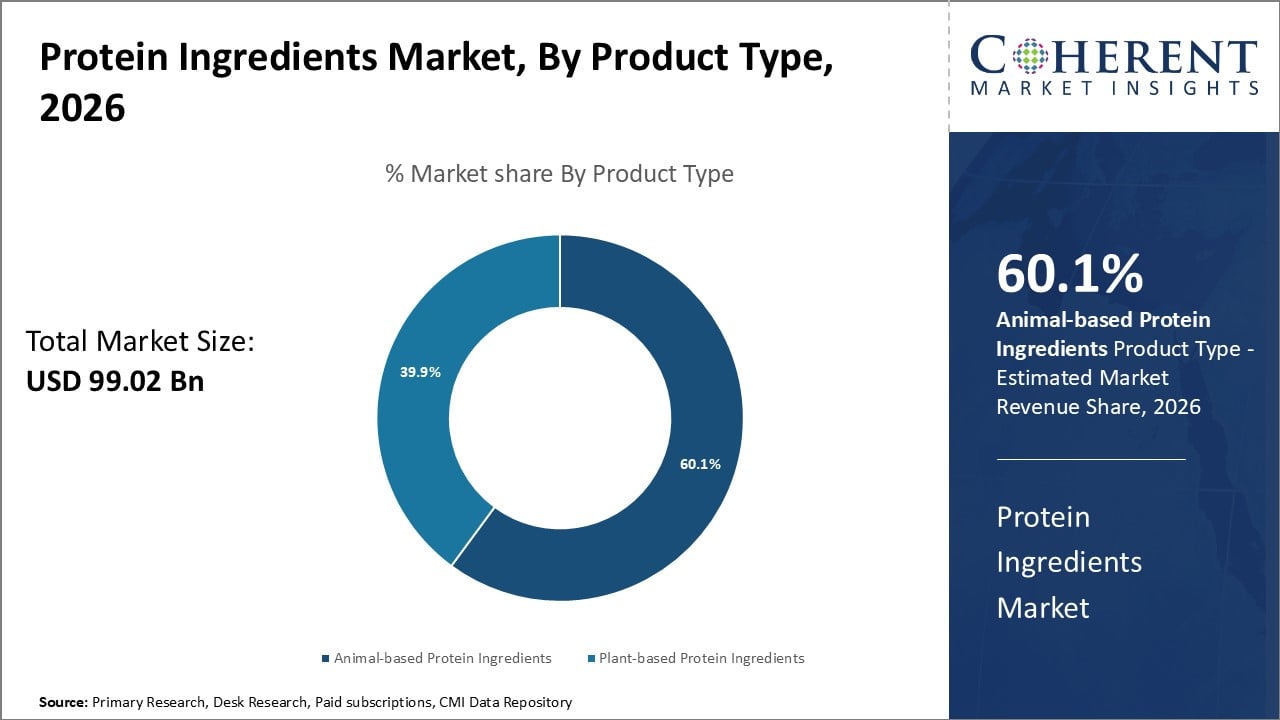
Protein Ingredients Market Insights, By Product Type: Dietary Preferences Drive the Demand for Animal-based Protein Ingredients
In terms of product type, the animal-based protein ingredients segment is expected to contribute 60.1% share of the market in 2026, owing to well-established dietary preferences. Meat and dairy products have long been staples in the diets of many cultures and regions.
In developed nations, meat consumption remains elevated due to factors like food tradition and high availability. Animal meat and organs provide complete protein profiles containing all essential amino acids. This balanced composition makes animal proteins easy for the human body to assimilate. Cultural norms also influence dietary choices. In many societies, meat is seen as a sign of social status and protein source.
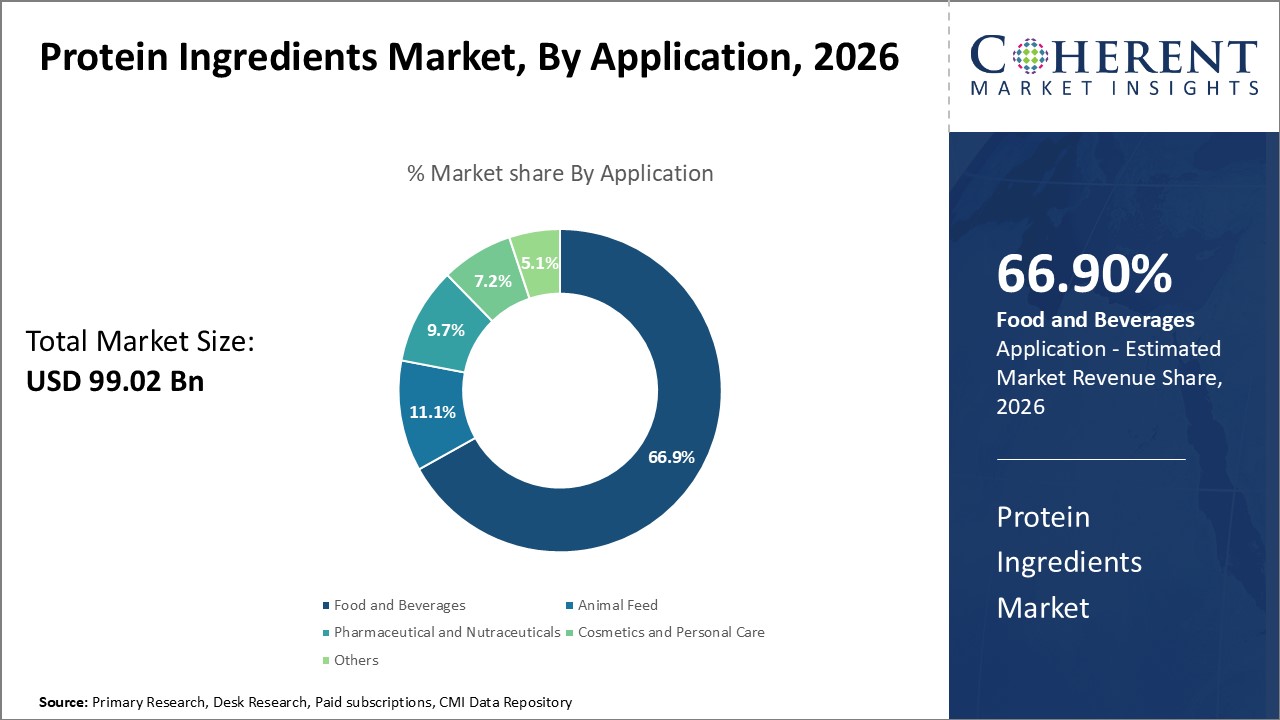
Protein Ingredients Market Insights, By Application: Growing Demand for Prepared Meals Boosts the Food and Beverages Segment Growth
In terms of application, the food and beverages segment is expected to contribute 66.9% share of the market in 2026, due to the rising demand for protein-fortified prepared foods and drinks. Protein is increasingly added to snack foods, baked goods, beverages, and ready meals to cater to health-conscious consumers.
Protein-fortified versions of popular products allow for incremental protein intake without significantly altering habitual diets. Additionally, protein-rich ready meals satisfy twin demands for convenience and more nutritious options from time-pressed households. Applications in meal replacement shakes and protein-enriched sports nutrition products are also growing rapidly. Companies utilize diverse protein ingredients from various animal and plant sources to formulate products aligned with changing consumer needs.
Protein Ingredients Market Insights, By Form: Dry Protein Ingredients Dominate due to Storage and Supply Chain Advantages
In terms of form, dry is expected to contribute 74.9% of the market share in 2026, owing to the benefits of a dry format across storage, handling, and supply chain. Dehydrated powders such as whey, caseinates, and isolates have longer shelf lives than liquid concentrates due to their lack of moisture content.
Dry proteins remain stable without refrigeration, facilitating multi-month stocking at manufacturing sites and retail outlets. Their durable powder form also protects protein quality during shipment, reducing the risk of supply chain losses from spillage or temperature fluctuations. From a production standpoint, drying protein streams into concentrated powders allows for more compact storage and transport.
Emerging Innovations in the Protein Ingredients Market
- The Shift Towards Plant-Based and Alternative Proteins
- This shift has been enabled by advancements in extraction technologies, enzymatic processing, and protein isolation methods. Traditional protein sources like whey and soy continue to dominate; however, increased consumer demand for sustainability, allergen-free products, and vegan-friendly options is pushing companies to innovate in extracting proteins from pulses (peas, lentils), nuts, seeds, algae, and emerging sources like fungi and insect proteins.
- Electrostatic Separation and Membrane Filtration Technologies
- Electrostatic separation and membrane filtration technologies, such as ultrafiltration and microfiltration, have refined the ability to isolate purer and more functional protein fractions. These technological improvements result in proteins with enhanced techno-functional properties like improved solubility, emulsification, gelation, and foaming ability. The market sees these proteins being employed in high-protein beverages, meat analogues, bakery products, and dairy alternatives, impacting product texture, taste, and nutritional profile positively.
Impacts of Artificial Intelligence (AI) on the Protein Ingredients Market
As consumer demand for sustainable, high-quality protein sources continues to rise, companies in this sector are leveraging AI to optimize processes, enhance product innovation, and improve market responsiveness.
- Cargill, a major player in the protein ingredients market, has incorporated AI-driven predictive analytics into its operations. By leveraging AI, Cargill can forecast raw material availability and optimize production schedules, reducing waste and improving overall efficiency. This integration underscores how AI is becoming central to strategic decision-making within the protein ingredients sector.
- Ingredion, a global ingredient solutions provider, utilizes AI to fine-tune the texture, flavor, and nutritional profile of its plant-based protein products. Through machine learning models that analyze consumer preference data and ingredient interaction patterns, Ingredion can rapidly develop protein blends that meet specific market demands. This application not only accelerates product development cycles but also enhances the functionality and consumer appeal of protein ingredients.
Regional Insights
North America Protein Ingredients Market Analysis and Trends
North America has established itself as the dominant region in the global protein ingredients market. The region is expected to account for 37.0% of the market share in 2026. With a strong dietary supplements and functional food industry, the demand for high-quality protein ingredients is immense. Leading food manufacturers rely on North America as a major sourcing hub given the region's large production capacities and sophisticated supply chains. Companies benefit from North America's advanced processing technologies that allow for the development of novel protein formats and formats.
For instance, as per April 2026 Cargill report, more consumers are eating more protein, with 61% increasing their intake in 2024 due to its taste, health benefits and nutritional value.
Protein Ingredients Market Outlook for Key Countries
U.S. Protein Ingredients Market Analysis and Trends
The U.S. leads the global protein ingredients market, driven by a strong focus on health and wellness. Consumers increasingly seek protein-enriched foods and beverages, such as snacks, energy bars, and cold cereals, to support active lifestyles. Companies like Mead Johnson and Cargill have introduced innovative products like Enfamil Human Milk Fortifier Liquid High Protein to meet this demand.
Germany Protein Ingredients Market Analysis and Trends
Germany's protein ingredients market is influenced by its aging population, leading to a higher demand for functional nutrition products that support muscle maintenance and overall health. Medical nutritional products aiding in bone and muscle health have seen increased demand, positively impacting the market.
India Protein Ingredients Market Analysis and Trends
In India, rising health consciousness and dietary shifts are driving the demand for protein ingredients. The growing middle class and urbanization contribute to the increased consumption of protein-rich foods and dietary supplements. The adoption of plant-based diets is also on the rise, further boosting the market for alternative protein sources.
China Protein Ingredients Market Analysis and Trends
China's protein ingredients market is characterized by a mix of traditional sources like soy and emerging alternatives such as pea and plant-based proteins. The country's large population and rapid urbanization contribute to increased demand for protein-rich foods. Companies like Whole Perfect Food are investing in plant-based meat products to cater to this growing demand.
Pricing Analysis of the Protein Ingredients Market
Premium Brands | Price Range |
Hilmar Ingredients Whey Protein Isolate 90% | USD 8.50-USD 10.20 per kg (bulk industrial) |
Glanbia Nutritionals Optipep Series | USD 9.80-USD 12.50 per kg |
Arla Foods Lacprodan WPI-90 | USD 10.20-USD 11.80 per kg |
Market Report Scope
Protein Ingredients Market Report Coverage
| Report Coverage | Details | ||
|---|---|---|---|
| Base Year: | 2025 | Market Size in 2026: | USD 99.02 Bn |
| Historical Data for: | 2020 To 2024 | Forecast Period: | 2026 To 2033 |
| Forecast Period 2026 to 2033 CAGR: | 6.5% | 2033 Value Projection: | USD 153.88 Bn |
| Geographies covered: |
| ||
| Segments covered: |
| ||
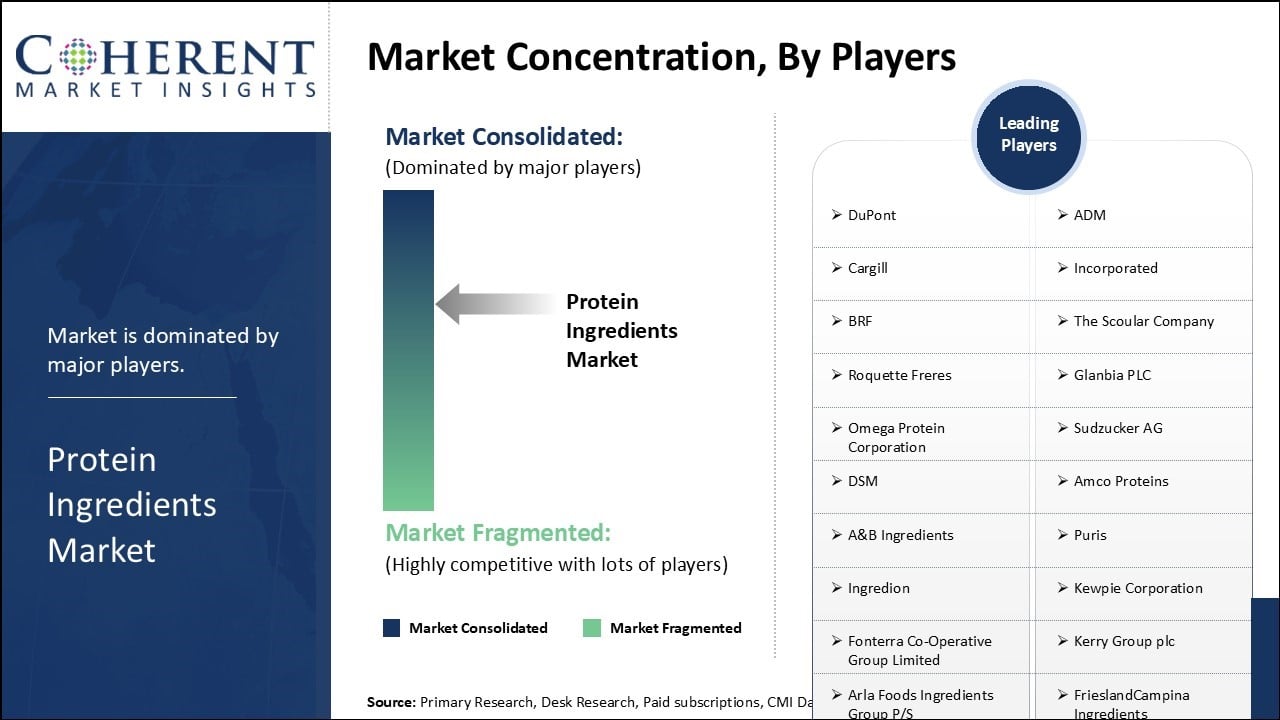
| Companies covered: | DuPont, ADM, Cargill, Incorporated, BRF, The Scoular Company, Roquette Freres, Glanbia PLC, Omega Protein Corporation, Sudzucker AG, DSM, Amco Proteins, A&B Ingredients, Inc, Puris, Ingredion, Kewpie Corporation, Fonterra Co-Operative Group Limited, Kerry Group plc, Arla Foods Ingredients Group P/S, FrieslandCampina Ingredients, and Gelita AG | ||
| Growth Drivers: |
| ||
| Restraints & Challenges: |
| ||
Protein Ingredients Industry News
- In July 2025, ADM unveiled its latest proprietary research examining protein consumption and innovation, with a specific look at consumer motivations with novel sources spurring new protein product development.
- In June 2025, Roquette strengthened its NUTRALYS plant protein portfolio with two new textured solutions – marking the company’s entry into textured wheat and reinforcing its commitment to next-generation food innovation. The new ingredients – NUTRALYS T WHEAT 600L textured wheat protein and NUTRALYS T PEA 700XC textured pea protein – are designed to help food manufacturers meet growing demand for nutritious, affordable, and sustainable proteins.
- In June 2025, Univar Solutions Belgium N.V. ("Univar Solutions") introduced an expansion of the partnership between their Foodology by Univar Solutions business and Ingredion Incorporated, a leading global provider of ingredients for the food and beverage industry, to distribute in the Benelux region.
- In February 2025, Burcon NutraScience Corporation announced its entrance into an agreement with its alliance partner, RE ProMan, LLC, for the purchase and operation of a protein production facility in North America.
Analyst View
- The protein ingredients market is witnessing notable evolution driven by advancements in targeted therapies and increasing prevalence of bone malignancies. A key driver fueling market expansion is the rising incidence of primary and metastatic bone cancers, coupled with enhanced diagnostic capabilities that enable earlier detection and treatment initiation.
- Furthermore, growing investment in oncology research has led to the development of novel agents that improve patient outcomes and minimize side effects, thereby broadening therapeutic options.
- However, the high cost of these specialized drugs and stringent regulatory approvals remain significant restraints affecting market penetration, especially in emerging economies.
- Opportunities lie in the integration of precision medicine and immunotherapy approaches, which hold promise for more effective and personalized treatment regimens. Additionally, expanding healthcare infrastructure in developing regions presents untapped potential for market growth.
- Geographically, North America dominates the protein ingredients market, attributable to robust healthcare systems, substantial R&D investments, and a favorable reimbursement environment.
- Overall, the protein ingredients market is poised for progressive transformation, underpinned by technological advancements and evolving clinical practices. Market players focusing on innovation, strategic collaborations, and expanding presence in underserved regions are likely to gain competitive advantage.
Market Segmentation
- Product Type Insights (Revenue, USD Bn, 2021 - 2033)
- Animal-based Protein Ingredients
- Milk Protein
- Egg Protein
- Meat and Poultry Protein
- Others
- Plant-based Protein Ingredients
- Soy Protein
- Wheat Protein
- Pea Protein
- Rice Protein
- Others
- Application Insights (Revenue, USD Bn, 2021 - 2033)
- Food and Beverages
- Bakery and Confectionery
- Dairy Products
- Meat and Poultry Products
- Others
- Animal Feed
- Pharmaceutical and Nutraceuticals
- Cosmetics and Personal Care
- Others
- Form Insights (Revenue, USD Bn, 2021 - 2033)
- Dry
- Liquid
- Regional Insights (Revenue, USD Bn, 2021 - 2033)
- North America
- U.S.
- Canada
- Latin America
- Brazil
- Argentina
- Mexico
- Rest of Latin America
- Europe
- Germany
- U.K.
- Spain
- France
- Italy
- Russia
- Rest of Europe
- Asia Pacific
- China
- India
- Japan
- Australia
- South Korea
- ASEAN
- Rest of Asia Pacific
- Middle East
- GCC Countries
- Israel
- Rest of Middle East
- Middle East
- South Africa
- North Africa
- Central Africa
- Key Players Insights
- DuPont
- ADM
- Cargill, Incorporated
- BRF
- The Scoular Company
- Roquette Freres
- Glanbia PLC
- Omega Protein Corporation
- Sudzucker AG
- DSM
- Amco Proteins
- A&B Ingredients, Inc.
- Puris
- Ingredion
- Kewpie Corporation
- Fonterra Co-Operative Group Limited
- Kerry Group plc
- Arla Foods Ingredients Group P/S
- FrieslandCampina Ingredients
- Gelita AG
Sources
Primary Research Interviews
- Protein ingredient manufacturers and suppliers
- Food and beverage industry executives
- Nutritional supplement companies
- Sports nutrition brand managers
- Others
Magazines
- Food Processing Magazine
- Nutritional Outlook
- Food Business Magazine
- Protein Foods and Nutrition Development Association Magazine
- Others
Journals
- Journal of Food Science and Technology
- Food and Nutrition Sciences
- International Journal of Food Properties
- Others
Newspapers
- Food Business Daily
- Nutraceuticals World News
- Food Navigator
- Nutritional Industry Executive
- Others
Associations
- Protein Foods and Nutrition Development Association (PFNDA)
- International Food Information Council (IFIC)
- Natural Products Association (NPA)
- Council for Responsible Nutrition (CRN)
- Others
Public Domain Sources
- Food and Drug Administration (FDA) Regulatory Guidelines and Approvals
- United States Department of Agriculture (USDA) Agricultural Statistics
- World Health Organization (WHO) Nutrition and Food Safety Reports
- European Food Safety Authority (EFSA) publications
- Others
Proprietary Elements
- CMI Data Analytics Tool – Protein Ingredients Market
- CMI Existing Repository of Information for the Last 8 Years
*Definition: The protein ingredients market consists of various types of ingredients extracted from plants and animals that are rich sources of proteins. This includes wheat and soy proteins, milk proteins such as casein and whey, egg proteins, gelatin, and proteins from meat. These ingredients are used in food and beverage products, pharmaceuticals, animal feed, and personal care products to increase the protein content and provide nutritional value. The rising demand for protein-rich foods is driving the market growth.
Get access to 250+ pages report
Every segment, forecast, competitor profile and data table behind the analysis above — available for instant download.
- ESOMAR Member
- ISO 9001:2015 Certified
- D-U-N-S Registered
- GDPR & CCPA Compliant
Missing comfort of reading report in your local language? Find your preferred language:
Transform your Strategy with Exclusive Trending Reports
Frequently Asked Questions
The protein ingredients market is estimated to be valued at USD 99.02 Bn in 2026 and is expected to reach USD 153.88 Bn by 2033.
The CAGR of the protein ingredients market is projected to be 6.5% from 2026 to 2033.
Health and wellness trends and convenience and customization are the major factors driving the growth of the global protein ingredients market.
Price volatility of raw materials and stringent government regulations are the major factors hampering the growth of the global protein ingredients market.
In terms of product type, animal-based protein ingredients segment is estimated to dominate the market revenue share in 2026.
Major players operating in the protein ingredients market are DuPont, ADM, Cargill, Incorporated, BRF, The Scoular Company, Roquette Freres, Glanbia PLC, Omega Protein Corporation, Sudzucker AG, DSM, Amco Proteins, A&B Ingredients, Inc, Puris, Ingredion, Kewpie Corporation, Fonterra Co-Operative Group Limited, Kerry Group plc, Arla Foods Ingredients Group P/S, FrieslandCampina Ingredients, and Gelita AG.
North America is expected to lead the Protein Ingredients market in 2026.